 Society
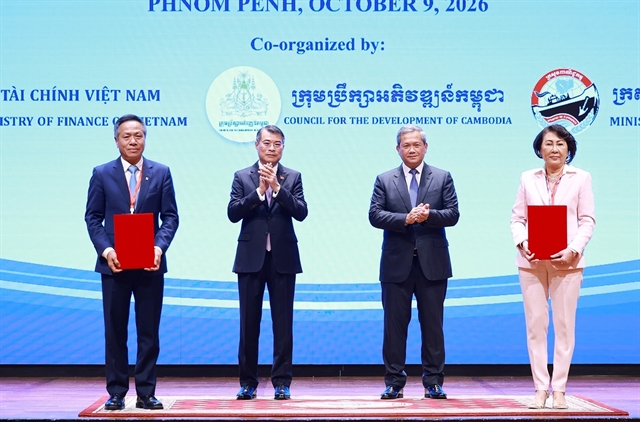
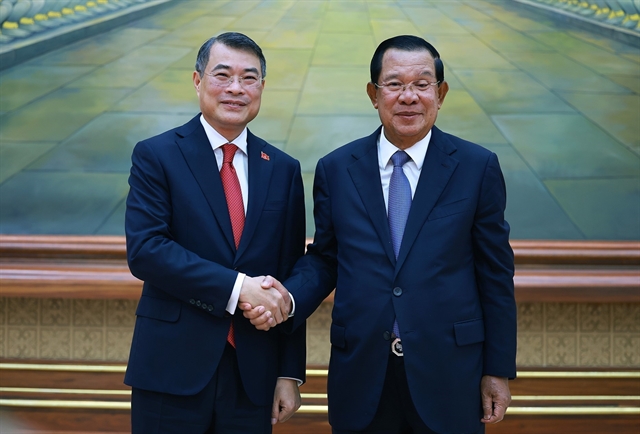
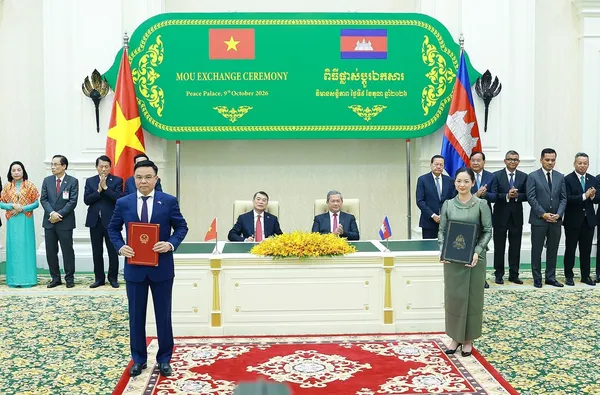
Vietnamese Prime Minister meets Cambodian National Assembly President
1.
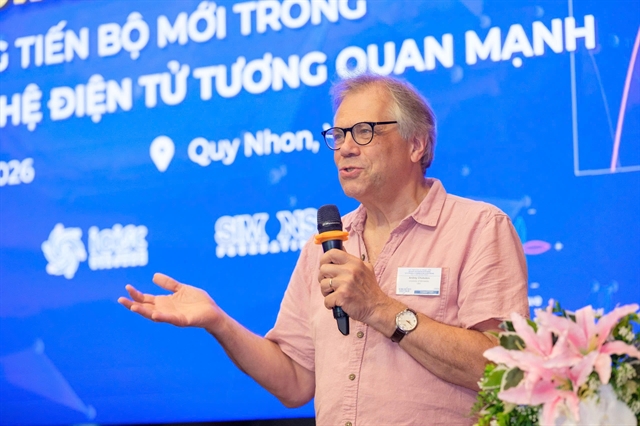 |
| Prof. Andrey V. Chubukov, University of Minnesota, the US, takes the floor. |
GIA LAI — The international conference "Recent Advances in Studies of Strongly Correlated Electrons" officially opened in Quy Nhơn, Gia Lai Province on Monday, bringing together more than 40 eminent delegates from 11 countries and territories.
The five-day event features participants from Việt Nam, Brazil, mainland China, the United States, Germany, India, Egypt, Japan, Singapore, South Korea, and Taiwan (China).
Running from June 1–5, 2026, the symposium is jointly organised by Rencontres du Vietnam and the International Centre for Interdisciplinary Science and Education (ICISE), in collaboration with the Fine Theoretical Physics Institute (FTPI).
According to the organizing committee, the gathering features some of the world’s most distinguished figures in condensed matter physics, including the renowned Professor Subir Sachdev of Harvard University (2015 and 2018 Dirac Medal); Prof. Charles Kane, University of Pennsylvania (2012 Dirac Medal); Prof. Philip W. Phillips, University of Illinois Urbana-Champaign; Prof. Haruki Watanabe, Hong Kong University of Science and Technology; Prof. Andrey V. Chubukov, University of Minnesota; and Prof. Đàm Thanh Sơn, University of Chicago (2018 Dirac Medal); among others.
The workshop was organised to provide a forum for world-leading experts to review the latest theoretical and experimental advancements, discuss key open questions, and chart the course for breakthrough research in the field of strongly correlated quantum physics.
By facilitating synergy between diverse approaches, ranging from numerical simulations and topological field theory to advanced experimental techniques, the workshop aims to deepen the collective understanding of complex electronic behavior in quantum materials while fostering new international research collaborations.
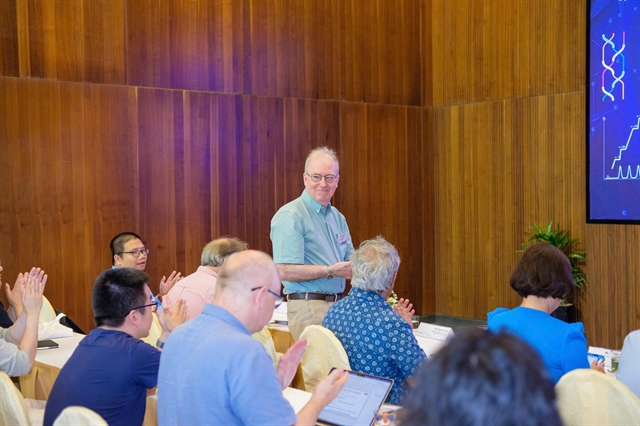 |
| Prof. Charles Kane, University of Pennsylvania, the US (2012 Dirac Medal) |
Delivering remarks at the opening of the conference on Monday morning, Deputy Director of Gia Lai Province Department of Science and Technology, Dr. Nguyễn Hữu Hà emphasised that the workshop serves as a significant academic forum, facilitating the exchange of research findings among domestic and international scientists while providing a platform to discuss emerging scientific issues and expand future cooperation.
“It also represents a valuable opportunity to strengthen the ties between the Vietnamese scientific community and the global stage,” said Hà.
“I am confident that this gathering will be a practical and effective academic forum—a place where new ideas are shared, partnerships are forged, and pivotal research directions are charted.
“In doing so, it will contribute to the advancement of condensed matter physics and elevate ASEAN’s standing on the global scientific map.”
The scientific programme features 30 presentations covering a broad spectrum of cutting-edge topics. Key focus areas include: 2D bosonisation and diamagnetism via bosonisation; novel superconductivity in the strong coupling regime; emergent phenomena in strongly interacting electron-phonon systems; and the anomalous behavior of the structure factor in interacting fermions and its connection to topology.
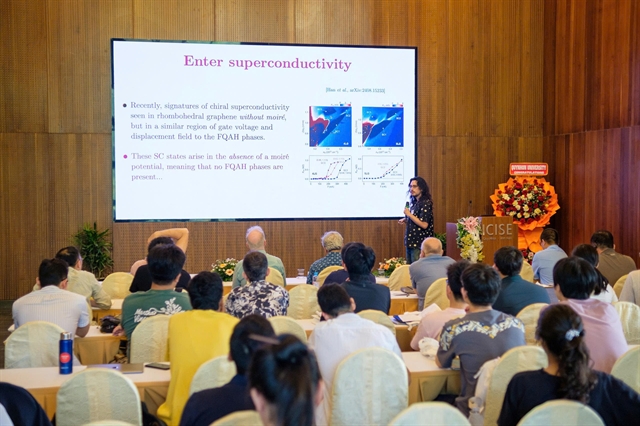 |
| The scientific programme features 30 presentations covering a broad spectrum of cutting-edge topics. Photos ICISE |
Additionally, the programme highlights advancements in numerical methods such as Monte Carlo techniques; the physics of the fractional quantum Hall effect, fractional Chern insulators, the fractional quantum anomalous Hall effect, and anyon superconductivity; as well as non-conventional ordered states and their competition with superconducting phases, and generalised symmetries and their applications in condensed matter physics.
The workshop pursues three core objectives: creating a space for academic exchange and strengthening ties between world-renowned scientists, young researchers, and PhD students; fostering multi-dimensional scientific dialogue on major open problems in the field; and initiating new international research partnerships with the active participation of the Vietnamese physics community. VNS
Society
 Society
 Society
 Society
 Society
 Society
 Society
 Society
 Society
 Society
 Society
 Society
.jfif) Society
Society
 Society
 Society