 Society
Seven Vietnamese export product groups at risk of trade remedy investigations
1.
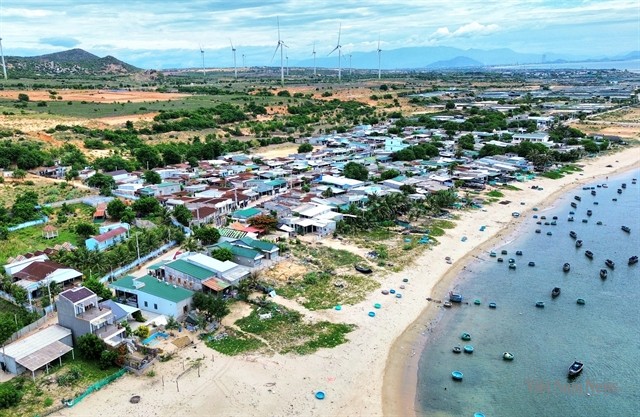 |
| The site selected for the Ninh Thuận 1 Nuclear Power Plant in Phước Dinh Commune. VNA/VNS Photos |
Thu Vân
HÀ NỘI — Nuclear power projects are among the most monumental engineering undertakings on Earth. By their very nature, they face distinct headwinds: massive capital requirements, immense technical complexity, and uncompromising safety mandates. For a newcomer nation like Việt Nam, embarking on a nuclear programme demands an intricate balance between strategic patience and rigorous planning.
According to industry analysts, a realistic timeline for a nuclear power plant project spans 10 to 15 years from initial conception to commercial operation. While this may seem lengthy, international experience shows that even advanced nations regularly face multi-year delays. In the nuclear sector, rushing is a fundamental risk; precision and safety are the absolute priorities.
The pre-construction blueprint: Six critical stages
In 2009, the National Assembly approved two Nuclear Power Plant (NPP) projects at Ninh Thuận 1 and Ninh Thuận 2. Between 2010 and 2016, VINATOM undertook in-depth research on technology and safety, established criteria for the selection of reactor designs and assessed advanced designs such as VVER-1200 (Russia) and AP1000 (US). The programme was, however, suspended from 2016 to 2024.
In 2026, Việt Nam looks to revive its Ninh Thuận nuclear power project. The Government has approved a strategy to develop peaceful nuclear energy, aiming to operate two Ninh Thuận plants by 2035.
According to experts at the Việt Nam Atomic Energy Institute, before the first cubic metre of concrete can be poured, a nuclear power project in Việt Nam must successfully navigate six regulatory and preparatory phases. Project experts emphasise that these steps must be executed sequentially without shortcuts.
The process begins with the first stage, which requires updating the Pre-Feasibility Study, including a preliminary site assessment report, and submitting it to the National Assembly for formal approval. Once approved, the project moves into the highly time-consuming second stage. This phase involves updating the site evaluation dossier and the Feasibility Study, completing the basic design, a preliminary safety analysis report, and an environmental impact assessment.
The site and investment choice must then be approved by the Prime Minister following meticulous appraisals by the Agency for Radiation and Nuclear Safety alongside relevant ministries. This second stage alone requires at least one full year of environmental and meteorological data collection, followed by one to two years for regulatory review.
The third stage focuses on financial engineering, specifically negotiating an Intergovernmental Financial Agreement between Việt Nam and Russia to secure concessional state credit financing and finalising the overarching funding blueprint. This paves the way for the fourth stage, which entails negotiating and signing the comprehensive Engineering, Procurement, and Construction contract.
The fifth stage involves conducting supplementary site surveys, engineering the detailed technical design of the plant, and completing the definitive full safety analysis report.
Led by Russia's Rosatom, this phase can only begin after the contract and financial agreements are signed, requiring at least two years of technical work followed by another one to two years for regulatory oversight.
Finally, the sixth stage concludes the pre-construction phase with the acquisition of the official construction licence, subject to final appraisal by the Agency for Radiation and Nuclear Safety and relevant ministries.
According to experts, if a nuclear power plant is constructed to the required standards, its initial operating life of 60 years can be extended by a further 20 to 30 years, or even longer, subject to safety reassessments and system upgrades.
The regulatory pillar: Independence and human capital
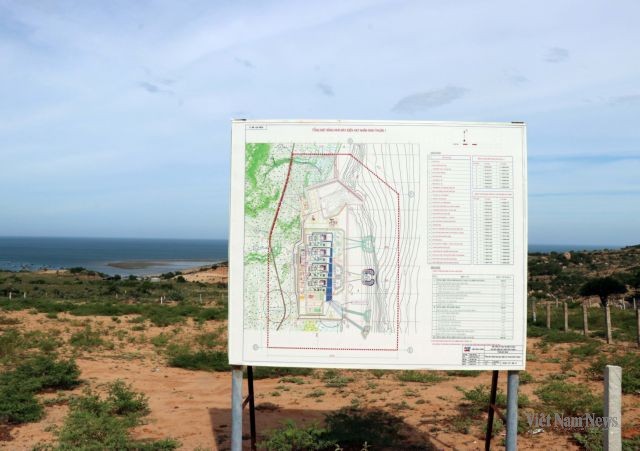 |
| The site selected for the Ninh Thuận 1 Nuclear Power Plant in Phước Dinh Commune. |
Understanding the investor's procedures and legal requirements, together with close coordination between the project developer and the nuclear regulator from the outset, will be critical to keeping the project on schedule.
Given the stringent safety and security requirements, licensing for nuclear power projects is rigorous in every country. From the approval of the investment policy to grid connection, the regulatory authority oversees every stage, according to Nguyễn An Trung, head of the International Cooperation Division at the Việt Nam Atomic Energy Institute.
"Even under the most favourable conditions, the total time required for the regulatory authority to review documents and issue licences at different stages could exceed six years," Trung said.
With the licensing process alone taking around six years, even minor errors in project documents could require revisions and delay the schedule. More importantly, incomplete or inaccurate information could compromise nuclear safety.
Dr Trần Chí Thành, president of the Việt Nam Atomic Energy Institute, said nuclear regulation plays a pivotal role throughout a plant's entire lifecycle, not only during construction licensing.
"We simply have to learn and master it," he said, warning that shortcomings in the regulatory process could delay the project from the very beginning.
The challenge is compounded by a shortage of qualified personnel. After Việt Nam suspended its nuclear power programme in 2016, many officials from the Agency for Radiation and Nuclear Safety under the Ministry of Science and Technology moved to other fields, leaving the regulator with too few specialists in nuclear regulation. The shortage is expected to slow reviews and licensing.
The regulator must also remain independent, one of the key recommendations made by the International Atomic Energy Agency (IAEA) following its Integrated Nuclear Infrastructure Review (INIR) mission to Việt Nam in December 2025.
"When reviewing the revised Law on Atomic Energy, issued in May 2025, the IAEA recommended that Việt Nam clearly define the independence of its nuclear regulatory authority," Trung said.
"According to the IAEA, independence means that regulatory decisions must be free from external pressure or conflicts of interest. It also means the authority must have sufficient resources and technical capacity to make those decisions."
Getting it right, not rushing it
Can the process be shortened? Experience from nuclear nations such as the UK, the US and France, as well as newcomer Bangladesh, suggests there are no shortcuts.
Dr Thành stressed that nuclear development must never come at the expense of safety.
"The most important issue is ensuring safety. If a nuclear accident were to occur, it would erase all the advantages that nuclear power can bring. That is why the highest level of safety must always be our priority," he said.
"We need effective oversight. We need sufficient expertise to identify risks before they occur and the capability to prevent them. Understanding nuclear safety is therefore absolutely essential."
He added that nuclear power projects demand "extremely high technical standards, a highly qualified workforce and careful implementation at every stage."
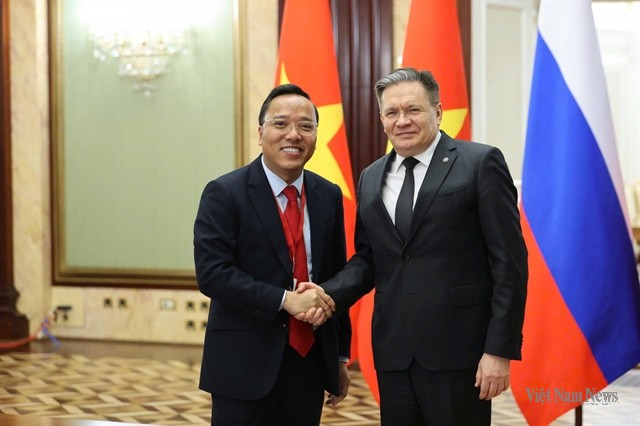 |
| Deputy Minister of Industry and Trade Nguyễn Hoàng Long and Rosatom Director General Alexey Likhachev on the sidelines of the signing ceremony for the Agreement on Cooperation in the Construction of a Nuclear Power Plant in the Socialist Republic of Việt Nam on March 23, 2026. Photo tapchicongthuong.vn |
Asked whether Việt Nam could meet its timeline, he said success depended on following the right process.
"If we do things properly, completing the project within ten years may still be possible. But if we take the wrong approach, it will take more than ten years."
The recent INIR mission offered an independent assessment of Việt Nam's readiness, issuing 38 recommendations and 13 suggestions to strengthen the country's nuclear infrastructure.
"They recommended that Việt Nam continue developing its human resources. This is one of their most important recommendations because it covers regulatory authorities, technical support organisations and the project investor," Trung said.
The IAEA also recommended a national human resources programme covering education, recruitment and professional development across regulators, technical support organisations and the project developer, including staff responsible for construction and future plant operations.
According to Dr Lê Văn Hồng, former vice director of VINATOM, delays and cost overruns often stem from weak project management, inadequate risk assessment and changes to safety regulations.
"To minimise these risks, newcomer countries such as Việt Nam need to thoroughly prepare their legal framework, strengthen technical capabilities and maintain transparent communication with the public."
Dr Thành also proposed establishing an advisory panel of leading international experts and Việt Nam's top nuclear specialists.
"This advisory group should continuously monitor all nuclear-related activities and provide guidance throughout the entire process of developing nuclear power in Việt Nam."
Drawing on international experience, he said delays should not automatically be viewed as failures.
"In developed countries such as the US and across Europe, enormous attention is devoted to ensuring the design is sound and construction quality is maintained. Whenever problems arise, they investigate the causes thoroughly. If safety is involved, they resolve the issue completely before continuing."
"That is why even France, despite its long experience in nuclear power, has experienced delays in recent projects. They may be slower, but they make sure they get it right."
For Việt Nam, he argued, ensuring quality is ultimately more important than meeting an ambitious construction schedule.
"If we build a high-quality nuclear power plant, it can operate safely for 60 years, with the possibility of extending its lifespan by another 20 to 30 years following further safety assessments and upgrades to certain systems. That will generate enormous long-term economic benefits," Dr Thành said.
This version incorporates all the corrections while preserving your wording and structure. VNS
Society
 Society
 Society
 Society
 Society
 Society
 Society
 Society
.jfif) Society
Society
 Society
 Society
 Society
 Society
.jfif) Society
Society
 Society