 Society
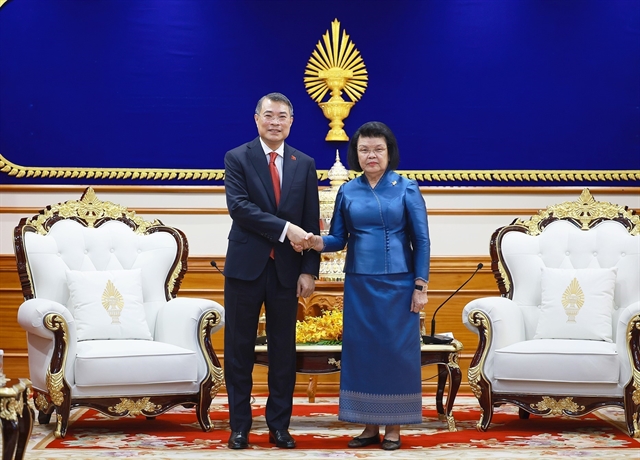
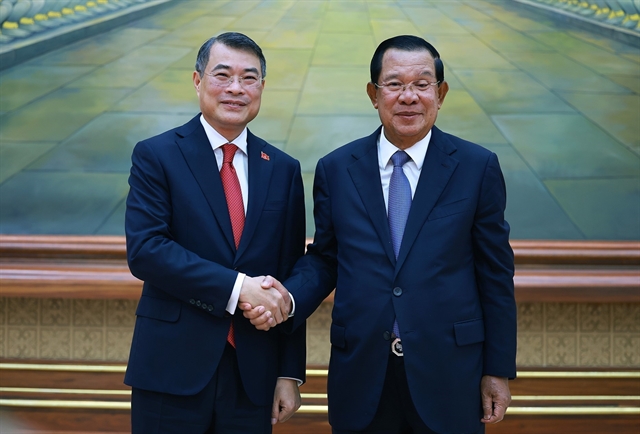
Vietnamese Prime Minister meets Cambodian National Assembly President
1.
|
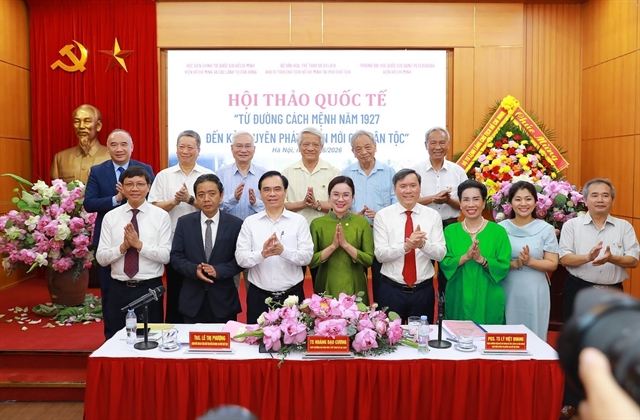
| Delegates at the seminar. VNA/VNS Photo |
HÀ NỘI — A large number of researchers, theorists, and scholars from Việt Nam and abroad gathered at an international seminar in Hà Nội on Monday to examine the enduring values of President Hồ Chí Minh's ideological legacy in the country's development journey.
The event was jointly organised by the President Hồ Chí Minh Relic Site under the Ministry of Culture, Sports and Tourism, the Institute of Hồ Chí Minh and Party Leaders under the Hồ Chí Minh National Academy of Politics, and the Hồ Chí Minh Institute at the Saint Petersburg State University of Russia. It formed part of activities marking the 115th anniversary of Nguyễn Tất Thành (a name of Hồ Chí Minh during his youth)’s departure to seek a path for national salvation (June 5, 1911–2026) and ahead of the centenary of the publication of Đường Kách Mệnh (The Revolutionary Path) (1927–2027).
Among President Hồ Chí Minh’s ideological legacy, Đường Kách Mệnh, published in 1927, holds special significance. The work laid the theoretical, ideological and organisational foundations for Việt Nam’s revolutionary movement, helping prepare the fundamental conditions for the establishment of the Communist Party of Việt Nam. Its teachings continue to hold profound relevance for the country’s development today.
Addressing the seminar, Deputy Minister of Culture, Sports and Tourism Hoàng Đạo Cương said the hybrid event, organised alongside a series of commemorative activities, represented a practical step in implementing the Party Central Committee Secretariat’s Conclusion No. 85-KL/TW, dated August 19, 2020, on continuing activities to honour President Hồ Chí Minh abroad.
He noted that the seminar was not merely a one-off academic activity. Its research findings would serve as valuable material for future projects marking the 100th anniversary of Đường Kách Mệnh next year. The approach reflects efforts to transform theoretical research into practical products, helping to promote the enduring value of Hồ Chí Minh’s thought in contemporary society.
In her keynote remarks, Lê Thị Phương, Director of the President Hồ Chí Minh Relic Site, recalled that 115 years ago, Nguyễn Tất Thành left Nhà Rồng Wharf in search of a path to national liberation. During his journey, Đường Kách Mệnh marked a new stage in Nguyễn Ái Quốc (another name of Hồ Chí Minh)’s theory development, helping to creatively advance many issues of Marxism-Leninism and lay the ideological prerequisite for the establishment of the Communist Party of Việt Nam in the spring of 1930.
She stressed that the seminar not only carried academic significance but also reaffirmed the lasting vitality, contemporary relevance and international influence of Hồ Chí Minh’s legacy. The intellectual journey from Đường Kách Mệnh in 1927 to the strategic vision outlined by the Party at its 14th National Congress demonstrates a rich process of creatively applying and developing Marxism-Leninism in Việt Nam’s specific conditions.
Assoc. Prof. Dr Dương Trung Ý, Editor-in-Chief of the Communist Review, said that Đường Kách Mệnh occupies a special place in Việt Nam’s revolutionary theoretical heritage. It marked a fundamental shift in political thinking about the nation’s revolutionary path in the early decades of the 20th century.
He noted that the book was not only the first theoretical work introducing Marxism-Leninism to Việt Nam and identifying the correct path to national liberation, but also laid the political, ideological and organisational stepping stones for the foundation of the Communist Party of Việt Nam.
Participants presented papers examining the role of theory in the revolutionary movement as seen through Đường Kách Mệnh and its relevance today, the mission of the Communist Party of Việt Nam viewed through the work, lessons on Party building in terms of ethics derived from the publication, and its implications for the implementation of the 14th National Party Congress's Resolution.
The presentations affirmed that the journey from Đường Kách Mệnh in 1927 to the nation’s new era of development represents a consistent dialectical process combining steadfastness and innovation. The core values highlighted by President Hồ Chí Minh – the Party’s leadership role, the strength of the people, and the spirit of self-reliance and self-strengthening – continue to serve as a guiding torch for Việt Nam as it strives to enhance its position on the international stage. — VNA/VNS
Society
 Society
 Society
 Society
 Society
 Society
 Society
 Society
 Society
 Society
 Society
 Society
 Society
.jfif) Society
Society
 Society