 Opinion
LOAN Foundation awards scholarships to disadvantaged students on 10th anniversary
1.
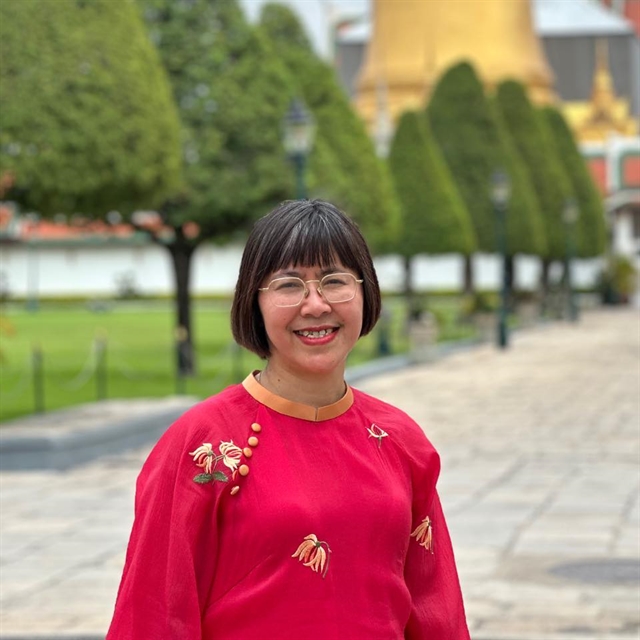 |
| Dr Hoàng Tú Anh, director of the Center for Creative Initiatives in Health and Population. Photo courtesy of the expert |
Việt Nam News reporter Khánh Dương speaks to Dr Hoàng Tú Anh, director of the Center for Creative Initiatives in Health and Population and chair of Gender-Based Violence Prevention and Response Network in Việt Nam, about the increasing proportion of female candidates in this year’s general election and its significance.
According to statistics, women account for over 40 per cent of candidates in the election for the 16th National Assembly (NA) and local people’s councils for the 2026–31 term. How do you assess the rising proportion of female candidates in recent electoral terms and what policy and institutional factors have contributed to promoting women’s participation in politics?
I believe that having more than 40 per cent female candidates is a very positive sign. It not only reflects structural requirements but also demonstrates the progress in the capacity and confidence of Vietnamese women in participating in political life.
In the election of the 15th National Assembly in 2021, women accounted for about 45.28 per cent of the candidate list.
The election results brought the proportion of female NA deputies to 30.26 per cent, the highest level in recent NA terms.
This figure is also higher than the global average, which was about 26.7 per cent in 2023 according to the Inter-Parliamentary Union (IPU).
This year, women account for 45.37 per cent of NA candidates.
With the higher proportion of female candidates in this term, we have reason to believe that more qualified women will join the NA and people’s councils.
For example, at the polling station in my residential area, three out of five candidates are women.
This increase results from many policy and institutional factors. For instance, the Law on the Election of NA and People’s Council Deputies requires candidate lists to ensure an appropriate proportion of women, usually aiming for at least 35 per cent.
In addition, Politburo Resolution No. 11-NQ/TW and the National Strategy on Gender Equality for the 2021–30 period both set goals to enhance women’s participation in leadership and decision-making positions.
The proportion of women participating in local leadership bodies is also rising.
As of 2024, women accounted for about 18.64 per cent of provincial Party committees and over 27 per cent at the commune level, indicating that the pool of female officials is gradually expanding and better prepared for leadership roles and elected bodies.
More importantly, this trend reflects the growing maturity of the female leadership workforce. The proportion of women participating in local Party committees and managerial positions is gradually increasing, creating a stronger pool of qualified female candidates for elected bodies.
This development is also linked to greater investment in training and planning for female officials. In recent years, thousands of female officials at the provincial and district levels have participated in professional and political training programs; in some training initiatives, women accounted for about 34–39 per cent of participants in leadership and management capacity-building courses.
Therefore, the increase in female candidates today is not only the result of policy provisions such as the Election Law or the National Strategy on Gender Equality, nor merely a matter of 'structural quotas' as sometimes perceived.
It truly reflects the improvement in women’s qualifications, management experience, and initiative in political life, as well as growing acceptance and support for female leadership within families and society as a whole.
According to international studies and Việt Nam’s experience, how does the presence of women in legislatures influence social policy, social security, and sustainable development?
International studies show that when women participate more actively in legislative bodies, policy agendas tend to place greater emphasis on areas such as education, healthcare, social security, gender equality, and family welfare.
Reports by UN Women and the Inter-Parliamentary Union (IPU) also indicate that women’s participation helps make policymaking processes more inclusive and more reflective of the needs of diverse population groups.
A World Bank report suggests that women’s participation in parliament can have positive effects, including encouraging women to report cases of violence and reducing domestic and gender-based violence.
Gender inequality, domestic violence and gender-based violence not only affect individual victims and their families but also significantly impact workplace productivity and the national economy. Therefore, promoting gender equality and reducing gender-based violence can contribute positively to social and economic stability.
In Việt Nam, as the proportion of female National Assembly deputies has exceeded 30 per cent, we have also seen more discussions and initiatives related to family policy, prevention of gender-based violence, childcare, elderly care, and the protection of vulnerable groups.
This shows that women’s presence in legislative bodies not only has representational significance but also enriches perspectives in the policymaking process.
Although the proportion of female candidates has increased, what barriers might women still face during campaigning and participation in legislative activities?
Despite considerable progress, women may still face several barriers. First, gender stereotypes in society persist, where political leadership is sometimes still perceived as a field more suitable for men.
Second is the double burden of work and family responsibilities. According to a 2020 survey by the National Statistics Office and UN Women, Vietnamese women spend twice as much time on unpaid care work as men. This can limit the time and resources available for them to participate in political activities.
In addition, women may face limitations in networks, resources, or access to training and support during the campaign process.
Besides increasing the proportion of female candidates, it is also important to create a more supportive political and social environment so that women can participate and contribute effectively.
How does promoting women’s participation in the NA and people’s councils contribute to Việt Nam’s implementation of international commitments on gender equality and sustainable development?
Enhancing women’s participation in elected bodies is an important part of implementing Việt Nam’s international commitments on gender equality.
First, it aligns with the United Nations Convention on the Elimination of All Forms of Discrimination against Women (CEDAW), which requires countries to ensure women’s equal participation in political life and decision-making processes.
Second, it is directly linked to Sustainable Development Goal 5 (SDG 5), particularly target 5.5, which calls for ensuring women’s full and effective participation and equal opportunities for leadership at all levels of decision-making.
Increasing the proportion of female deputies in the NA and people’s councils is not only domestic progress but also demonstrates Việt Nam’s commitment to building inclusive, equitable, and sustainable governance. VNS
Opinion
 Opinion
 Opinion
 Opinion
.jpeg) Opinion
Opinion
 Opinion
 Opinion
 Opinion
 Opinion
 Opinion
 Opinion
 Opinion
 Opinion
 Opinion
 Opinion
.jpg)