 Politics & Law

ECO Expo Asia opens at Hong Kong AsiaWorld-Expo in late October
1.

|
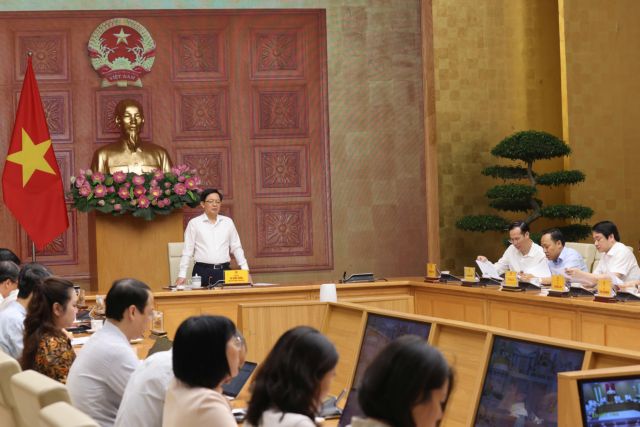
| Deputy Prime Minister Nguyễn Văn Thắng speaks at the meeting on Tuesday to discuss a KPI framework for ministries, sectors and localities in implementing public investment disbursement. VNA/VNS Photo |
HÀ NỘI — Deputy Prime Minister Nguyễn Văn Thắng has underscored the need to introduce key performance indicator (KPI)-based assessments for public investment disbursement, saying the measure would help improve the efficiency of public capital use while strengthening accountability, discipline and proactive performance among agencies and officials.
He said pilot KPI assessments would be conducted between July and August before being officially rolled out nationwide.
Speaking at a meeting on Tuesday to discuss a KPI framework for ministries, sectors and localities in implementing public investment disbursement, Thắng stressed that accelerating disbursement remained one of the Government’s most important political tasks, contributing to socio-economic development and supporting the achievement of high economic growth targets.
He said issuing a formal mechanism to evaluate public investment disbursement performance would therefore be both necessary and urgent.
The Deputy Prime Minister added that the Government was also studying the possibility of applying KPI-based evaluations to a number of other tasks undertaken by ministries, sectors and localities to enhance the effectiveness of leadership, governance and policy implementation.
Presenting the draft framework, Deputy Minister of Finance Nguyễn Đức Tâm said assessments would be conducted on both a monthly and annual basis.
Annual KPI results would serve as the primary basis for evaluating the fulfilment of public investment disbursement tasks assigned by Prime Minister Lê Minh Hưng. Monthly assessments, meanwhile, would be used to recognise ministries, agencies and localities that perform well and make rapid progress, while also identifying those lagging behind.
The proposed assessment system would cover two categories of public investment capital: annual capital plans allocated for the current year and capital carried over from previous years for continued implementation and disbursement.
For monthly evaluations, the total score would be 100 points, based on three components: the disbursement rate compared with the national average by the end of the reporting month (45 points); the proportion of monthly disbursement relative to the registered monthly disbursement plan (45 points); and compliance with reporting requirements on public investment disbursement through the national financial and budget information system (10 points).
For annual assessments, the total score would also be 100 points and would be based on indicators measuring the completion of public investment disbursement targets and compliance with implementation requirements.
At the meeting, participants agreed on the need to establish a KPI-based assessment system for public investment disbursement in line with international practices. They said the framework would help improve transparency and objectivity in evaluating performance while enabling close monitoring of disbursement progress over time.
Delegates also stressed that a KPI-based assessment mechanism should be viewed as an important management tool to enhance accountability and efficiency rather than merely serving as a basis for ranking ministries, agencies and localities.
Many participants proposed that the assessment framework be designed to encourage stronger disbursement performance while ensuring objectivity in scoring and rankings. They also suggested incorporating indicators measuring project preparation, investment management and the responsibility of agencies involved in project implementation.
Some delegates recommended further studying and refining the framework for projects involving adjustments to capital plans while also taking into account force majeure factors and project implementation conditions.
Concluding the meeting, Deputy Prime Minister Thắng praised the Ministry of Finance and relevant ministries, sectors and localities for their efforts in developing the assessment framework.
Thắng assigned the Ministry of Finance to continue reviewing and refining the draft while guiding localities on data calculation and verification to ensure the assessment process remains transparent, objective and practical.
The ministry was also instructed to study and incorporate comments from participants, complete the draft decision and ensure consistency with existing legal regulations. Based on these inputs, the Ministry of Finance will finalise the proposal and submit it to the Prime Minister for consideration and approval before June 6. — VNS
Politics & Law
 Politics & Law
 Politics & Law
 Politics & Law
 Politics & Law
 Politics & Law
 Politics & Law
 Politics & Law
 Politics & Law
 Politics & Law
 Politics & Law
 Politics & Law
 Politics & Law
 Politics & Law
 Politics & Law