 Politics & Law
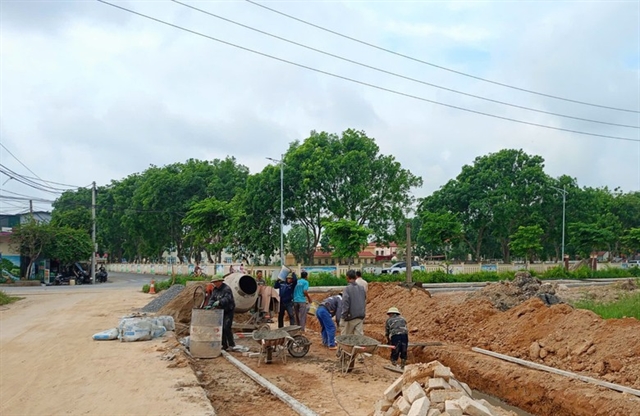
Authorities urge swift delivery of resettlement sites for North–South high-speed rail
1.
|
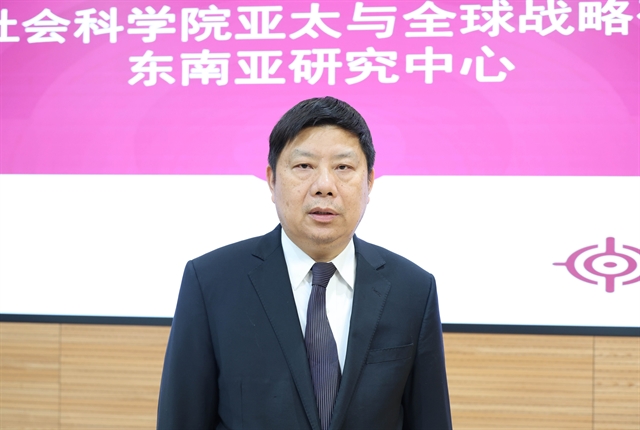
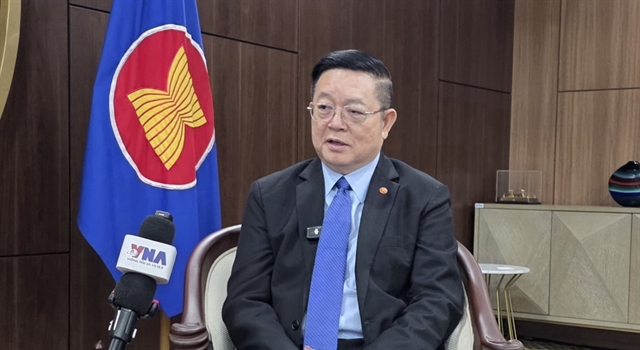
| Professor Xu Liping, Director of the Centre for Southeast Asian Studies at the National Institute of International Strategy under the Chinese Academy of Social Science. — VNA/VNS Photo |
BEIJING — The ASEAN Future Forum 2026 (AFF 2026), scheduled to take place in Hà Nội on June 9– 10 under the theme 'Shaping Our Future Together: Peace, Prosperity and People-Centred Development', reflects Việt Nam’s increasingly proactive and constructive role in ASEAN, said a Chinese scholar.
The forum was first proposed by Việt Nam at the 43rd ASEAN Summit in Indonesia in September 2023. Following its successful editions in 2024 and 2025, the initiative has gained broad support from ASEAN member states and the international community, with a large number of ideas and recommendations discussed at the forum later incorporated into ASEAN Summit documents.
Speaking to the Vietnam News Agency, Professor Xu Liping, Director of the Centre for Southeast Asian Studies at the National Institute of International Strategy under the Chinese Academy of Social Science (CASS), said this year’s gathering marked the third time Việt Nam has hosted the forum, highlighting its growing role as a proactive and constructive contributor to ASEAN’s development.
The ASEAN Future Forum addresses contemporary issues related to the bloc’s future development. By bringing together world leaders, representatives of research institutions and business executives, the forum provides fresh perspectives and practical solutions to current challenges facing ASEAN, according to Xu.
He described the initiative as a tangible contribution by Vietnam to the regional grouping, demonstrating the country’s sense of mission and responsibility as an emerging middle power.
Commenting on the key topics expected to dominate discussions, including ASEAN resilience and solidarity, conflict prevention initiatives and the application of artificial intelligence (AI), Xu said these issues closely aligned with the bloc’s most urgent development priorities.
He elaborated that strengthening ASEAN solidarity and resilience would be particularly important at a time of intensifying competition among major powers. For ASEAN members, avoiding entanglement in geopolitical rivalry while preserving regional cohesion would remain a major challenge to each country.
The scholar also highlighted the importance of advancing conflict prevention initiatives to help maintain peace and stability across the region.
Regarding AI, Xu said ASEAN faced a range of challenges in harnessing the emerging technology. Addressing these issues, particularly the broader social impacts of AI, would require collective wisdom from ASEAN member states. — VNA/VNS
Politics & Law
 Politics & Law
 Politics & Law
 Politics & Law
 Politics & Law
 Politics & Law
 Politics & Law
 Politics & Law
 Politics & Law
 Politics & Law
 Politics & Law
 Politics & Law
 Politics & Law
 Politics & Law
 Politics & Law