 Politics & Law
Việt Nam, Laos seek to expand room for trade, investment cooperation
1.
|
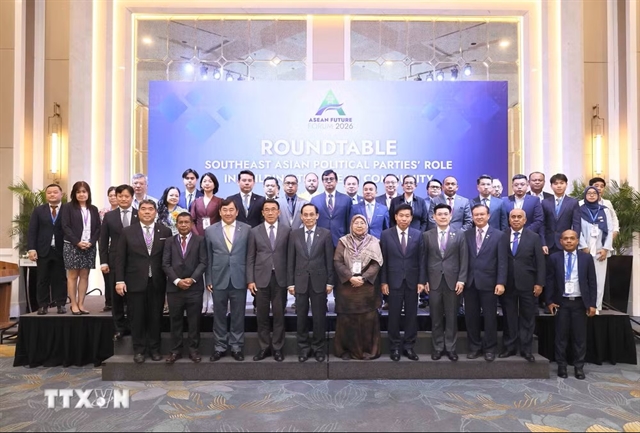
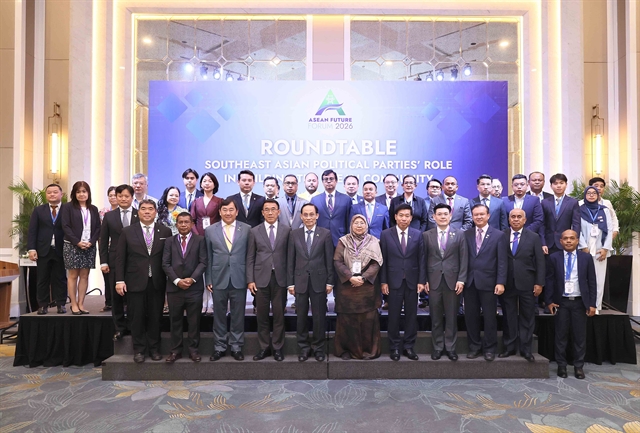
| Delegates attend a dialogue on the role of Southeast Asian political parties in building the ASEAN Community in Hà Nội on Monday. VNA/VNS Photo |
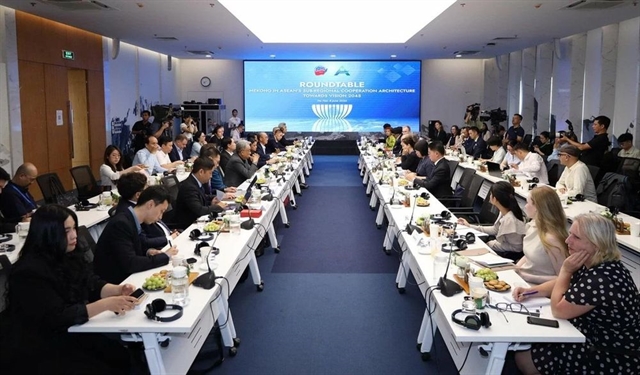
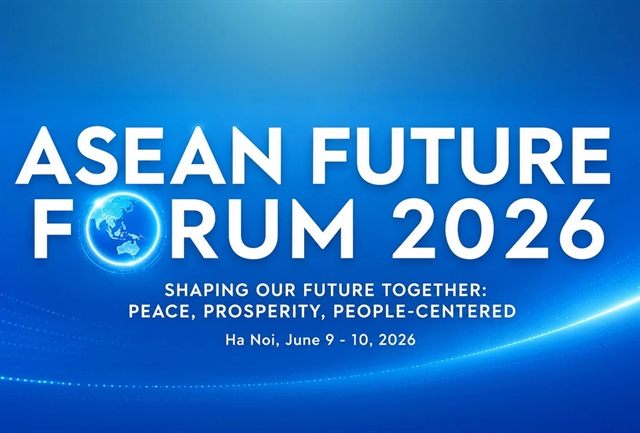
HÀ NỘI – A series of side events held in Hà Nội on June 8 within the framework of the third ASEAN Future Forum (AFF) 2026 focused on the strategic role of the Mekong subregion and the contribution of young people as the Association of Southeast Asian Nations (ASEAN) works towards realising the its Community Vision 2045.
Speaking at a seminar on the Mekong in the bloc’s subregional cooperation architecture, Nguyễn Mạnh Đông, Vice President of the Diplomatic Academy of Vietnam, stressed that Mekong cooperation should be viewed not merely as a collection of separate initiatives but as an integral component of the community-building process.
Hoàng Thị Hà, Senior Fellow at the ISEAS – Yusof Ishak Institute, described the Mekong basin as a soft pillar of regional security, providing essential food, fisheries and agricultural products for ASEAN countries.
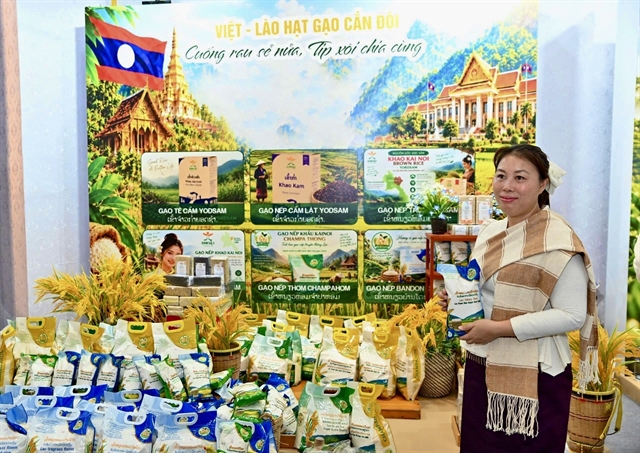
Anoulak Kittikhoun, an adviser to Laos’ Ministry of Agriculture and Environment, highlighted the region’s significance, noting that the Mekong subregion currently produces between 20 and 23 million tonnes of rice annually. Singapore alone, he said, imports between 40 and 60 per cent of its rice requirements from countries in the subregion.
Beyond food security, the Mekong also possesses considerable renewable energy potential. Kittikhoun pointed to initiatives such as the Laos–Thailand–Malaysia–Singapore power integration project and strategic transport infrastructure networks, including the Laos–China railway.
He argued that perceptions of the Mekong should evolve, suggesting that the subregion should no longer be viewed simply as an area requiring support, but rather as a centre of growth, resilience and innovation for the bloc as a whole.
However, participants at the seminar also noted that the subregion continues to face significant institutional challenges that could affect its long-term development.
Australia’s Deputy Ambassador to Việt Nam, Renee Deschamps, reaffirmed her country’s long-standing commitment to supporting the area through a package worth more than AUD450 million AUD (US$317.12 million) under the Mekong–Australia Partnership, focusing on energy transition and climate resilience.
At an intergenerational dialogue on shaping ASEAN’s future, Nguyễn Thị Thìn, Vice President of the Diplomatic Academy of Vietnam, highlighted the region’s population of more than 200 million young people aged between 15 and 34.
She said youth should not be regarded merely as beneficiaries of development, but as a driving force capable of leading the bloc through major global challenges.
Discussions centred on three key trends expected to shape the region by 2030, namely artificial intelligence (AI), climate change and strategic competition.
Helen Mary Fazey, Head of the UK Mission to ASEAN, observed that the region faces mounting pressure from technological transformation and climate change, particularly as four member states remain among the world’s least-developed countries.
She stressed that ASEAN must identify a sustainable growth pathway capable of reducing emissions while maintaining economic development opportunities.
Philippine Ambassador to Việt Nam Francisco Noel R. Fernandez III encouraged young people to use AI as a tool for shaping foreign policy and to take an active role in creating the future they wish to see.
Professor Nguyễn Vũ Tùng of the Diplomatic Academy of Vietnam noted that ASEAN was originally established, in part, to manage competition among major powers, and said this mission is increasingly being passed on to younger generations.
He emphasised that the ultimate objective of ASEAN’s three community pillars is to improve people’s lives through stronger intergenerational connectivity and cooperation.
The dialogue carried particular significance as participants worked towards finalising AFF Youth Vision 2030 Declaration, which is expected to be submitted to future ASEAN high-level meetings. VNA/VNS
Politics & Law
 Politics & Law
 Politics & Law
 Politics & Law
 Politics & Law
 Politics & Law
 Politics & Law
 Politics & Law
 Politics & Law
 Politics & Law
 Politics & Law
 Politics & Law
 Politics & Law
 Politics & Law
 Politics & Law