 Politics & Law
Authorities urge swift delivery of resettlement sites for North–South high-speed rail
1.
|
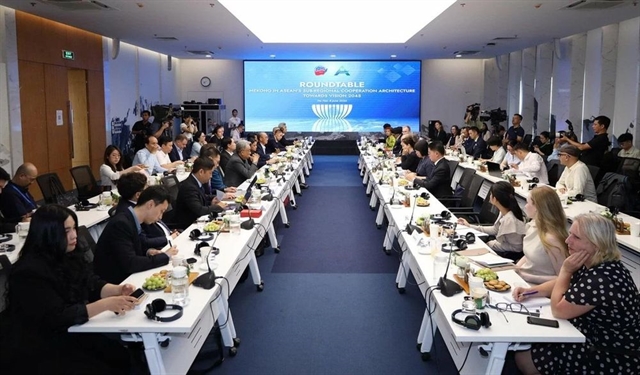
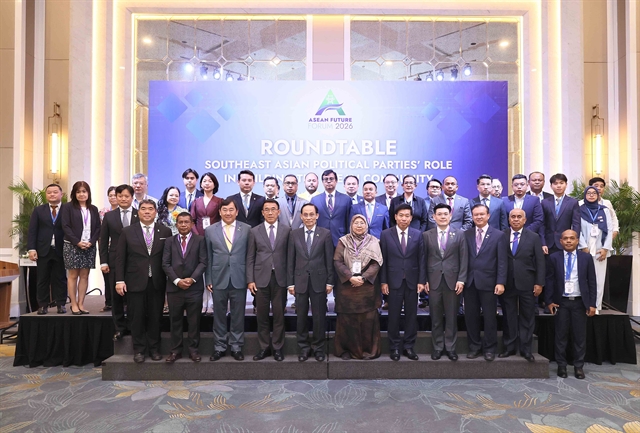
| The roundtable meeting on Mekong in ASEAN’s Sub-regional Co-operation Architecture towards Vision 2045 in Hà Nội on June 8. Photo |
HÀ NỘI — The Mekong is one of the most active co-operation spaces in ASEAN, bringing together many initiatives with the participation of countries in the region and external partners.
That was a remark by Nguyên Mạnh Đông, deputy director of the Diplomatic Academy of Việt Nam, at Monday’s roundtable meeting on Mekong in ASEAN’s sub-regional co-operation architecture towards Vision 2045, organised within the ASEAN Future Forum (AFF 2026) in Hà Nội.
However, this development is accompanied by new challenges as many mechanisms operate in parallel, leading to programme overlap, dispersion of resources and a lack of coordination between sub-regional structures, Đông told the meeting.
"Issues such as water resources, energy, food security or climate change are all interconnected, beyond national boundaries," Đông said, while emphasising the need to strengthen coordination at regional and sub-regional levels.
The Mekong Roundtable has special significance as the region prepares to realise the ASEAN Community Vision 2045.
Since its inception in 2024, the forum has gradually asserted its role as an important regional policy dialogue platform, promoting innovative ideas associated with recommendations capable of practical implementation and contributing to the process of building the ASEAN Community in the new period.
In this period, ASEAN is facing profound changes in the strategic environment, with increased great power competition, greater economic pressure and the emergence of both traditional and non-traditional security challenges, according to the deputy director.
"The question is not only how ASEAN will respond but also whether the association will continue to maintain solidarity, adaptability and effectiveness of action," Đông said, stressing that in this context the role of sub-regional cooperation becomes even more prominent.
From a strategic perspective, Đông said the ASEAN Community Vision 2045 can only realise its value when translated into specific actions at all levels, especially the sub-regional level, which directly impacts socio-economic life.
"Mekong co-operation needs to be seen not only as a collection of individual initiatives but as an important component of the process of building the ASEAN Community," he said.
He also proposed focusing the discussion on three groups of issues, including common challenges between sub-regions, lessons learned from models such as BIMP-EAGA (Brunei Darussalam, Indonesia, Malaysia, Philippines East ASEAN Growth Area) and IMT-GT (Indonesia–Malaysia–Thailand Growth Triangle) and policy recommendations to realise ASEAN Vision 2045.
Unlocking the potential in the future ASEAN architecture
Hoàng Thị Hà, senior researcher at the ISEAS–Yusof Ishak Institute, said many opportunities and challenges shaping ASEAN’s future are "most clearly shown at the sub-regional level," where regional issues are reflected most directly and specifically.
“This region is no longer limited to the geographical scope along the river but has risen to become an economic and strategic linkage space of increasingly important significance in the ASEAN cooperation structure,” Hà said.
The Mekong basin currently acts as a soft pillar of regional security by providing essential food, fisheries and agricultural products for ASEAN as a whole, while hydroelectric systems and renewable energy sources are gradually participating more deeply in the regional electricity market, contributing to strengthening common energy security, she said.
Along with the rapid development of cross-border transport networks, logistics and infrastructure systems have gradually been reshaping the link structure between the continental region and ASEAN coastal economies, creating new momentum for regional economic integration, she said.
Sumitra Jayaseelan, representative of the ASEAN Secretariat, said most of the challenges facing the Mekong are not exceptional but are highly similar to those of other sub-regions in ASEAN.
In that context, ASEAN does not need to continue increasing the number of cooperation frameworks but needs to improve the quality of connections between existing mechanisms, especially by building more substantive experience-sharing channels between sub-regions, she said.
From an institutional perspective, Suriyan Vichitlekarn, director of the Mekong Institute, said that after more than three decades of development, the Mekong is still in the process of finding a clear strategic identity in the ASEAN cooperation architecture.
He pointed out that many frameworks and a series of bilateral and multilateral cooperation initiatives currently exist simultaneously in the region, causing the cooperation landscape to become fragmented, with overlapping priorities and lacking a strong enough coordinating focal point.
According to the director of the Mekong Institute, this fragmentation means that despite its large resources and widespread attention from development partners, the Mekong still lacks a truly Mekong of the Mekong mechanism to consistently establish common priorities.
At the meeting, experts said it is necessary to strengthen coordination between sub-regional and ASEAN frameworks, build a common priority project list to focus resources and promote information-sharing mechanisms in cross-border areas such as water security, risk management and transnational crime.
The Mekong is not only an important space for cooperation in Southeast Asia but also a convergence of many regional challenges and opportunities, from water security and energy to climate change, economic connectivity and sustainable development. — VNS
Politics & Law
 Politics & Law
 Politics & Law
 Politics & Law
 Politics & Law
 Politics & Law
 Politics & Law
 Politics & Law
 Politics & Law
 Politics & Law
 Politics & Law
 Politics & Law
 Politics & Law
 Politics & Law
 Politics & Law