 Politics & Law
Central Council Theoretical Studies requested to strengthen core role in strategic advisory work
1.
|
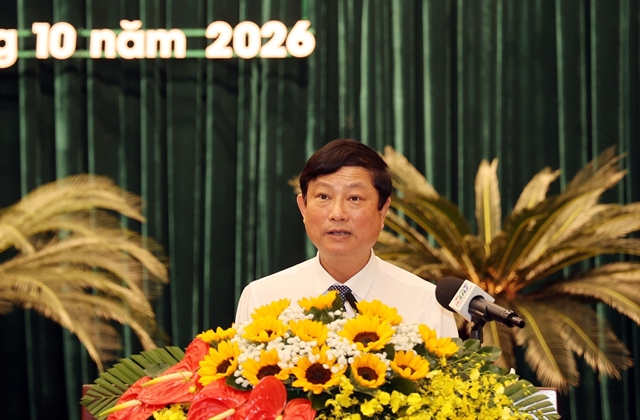
| Võ Văn Minh, chairman of the HCM City People’s Council, delivers his opening address at the session on October 29. — VNA/VNS Photos Xuân Khu |
HCM CITY — HCM City aims to become a multipolar global mega-city with a population projected to reach 18 million by 2030 and over 27 million by 2050, under an ambitious 100-year vision master plan currently under review by the municipal People’s Council.
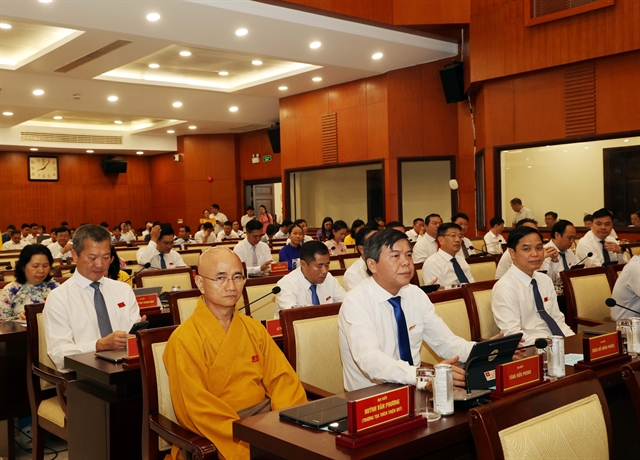
The master plan is a key item on the agenda of the 6th session of the 11th-term city People’s Council, which opened on Thursday.
During the session on October 29-30, city lawmakers are deliberating 47 proposals and draft resolutions focusing on three interconnected pillars: strategic planning and spatial vision, institutional mechanisms to unlock resources, and public investment allocation for major projects.
A 100-year vision for a global mega-city
The city’s master plan for the 2025-50 period, with a 100-year vision, covers an enlarged administrative area of approximately 6,773 square kilometres across 168 administrative units, following the city’s strategic merger with Bình Dương and Bà Rịa - Vũng Tàu provinces.
Nguyễn Mạnh Cường, vice chairman of the municipal People’s Committee, said the city’s population is projected to reach 18 million by 2030, 25 million by 2045, and more than 27 million by 2050.
The city is shifting toward a multi-polar, multi-centre urban model connected to river and maritime ecosystems to support this demographic scale.
Key growth drivers include expanding transit-oriented development (TOD) and metro networks; developing next-generation industrial parks and free trade zones; and building an international financial centre and integrated logistics hubs.
Võ Văn Minh, chairman of the municipal People’s Council, said the city must "transcend administrative and sectoral boundaries" rather than rely on traditional planning models.
"The guiding principle throughout this master plan is to transcend rigid administrative and sectoral boundaries, organising HCM City into a unified, multi-polar, and multi-centre entity," Minh said.
He called for leveraging science, technology, innovation, and digital transformation as key growth engines, while ensuring "people and their quality of life are at the centre of development."
He asked to assess spatial planning models rigorously to ensure balanced provision of land, transport infrastructure and social services while tackling pressing urban challenges like traffic congestion, severe flooding, and environmental pollution.
|
| Delegates attend the opening of the 6th session of the HCM City People’s Council on October 29. |
Key infrastructure and policy reforms
Alongside spatial planning, the People’s Council is reviewing 17 draft resolutions implementing the national Urban Development Law.
These measures aim to unlock financial resources through urban and project bonds issued via the International Financial Centre and provide incentives for high-tech zones, healthcare workers, cultural preservation, and sports institutions.
Lawmakers are adjusting the city's medium-term public investment portfolio for 2026-30 to prioritise critical transport and environmental projects.
Key transport initiatives include upgrading and expanding the Phan Anh-An Dương Vương road corridor from Hòa Bình Street to Bà Hom Street, as well as adjusting investment plans for the expansion of Tân Kỳ Tân Quý Street from Lê Trọng Tấn Street to Cộng Hòa Street.
In addition, the city will allocate resources for environmental remediation and completion oftechnical infrastructure along the Bàu Trâu, Bà Tàng, and Hy Vọng canals.
The session will also review regulations on naming public works, free trade zones, integrated logistics, rice land protection, and sustainable poverty reduction. — VNS
Politics & Law
 Politics & Law
 Politics & Law
 Politics & Law
 Politics & Law
 Politics & Law
 Politics & Law
 Politics & Law
 Politics & Law
 Politics & Law
 Politics & Law
 Politics & Law
 Politics & Law
 Politics & Law
 Politics & Law