 Politics & Law
Int’l cooperation helps address nuclear power workforce shortages
1.
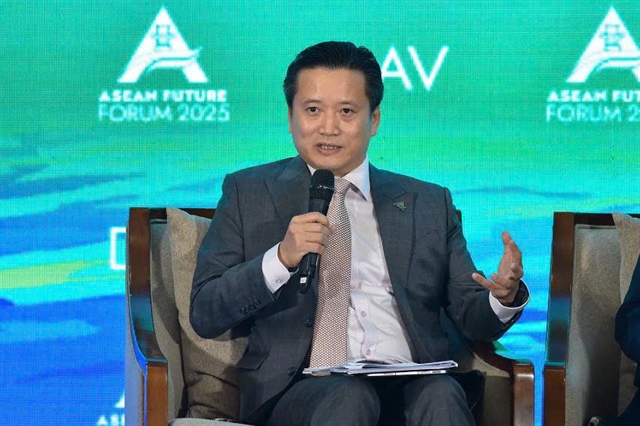 |
| Nguyễn Hùng Sơn, President of the Diplomatic Academy of Vietnam, during the ASEAN Future Forum 2025. — Photo courtesy of the academy |
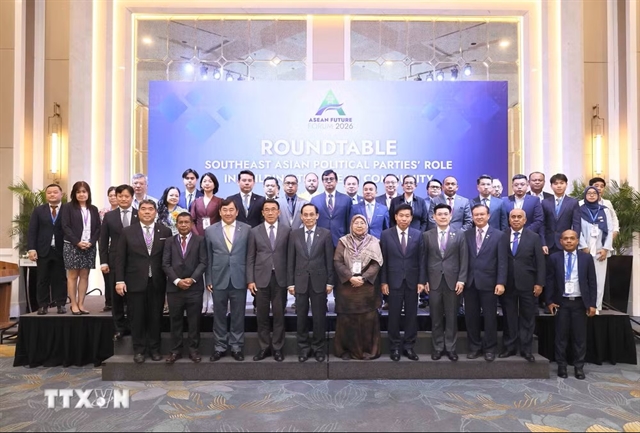
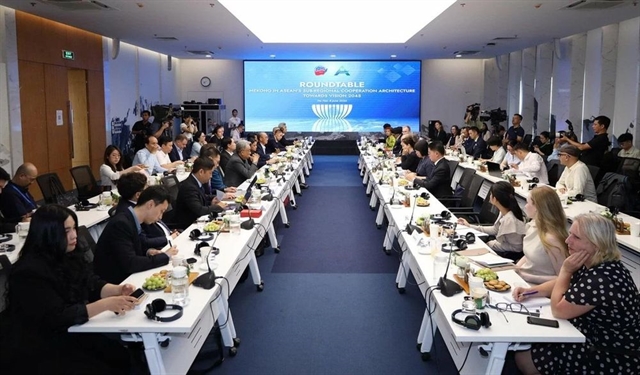
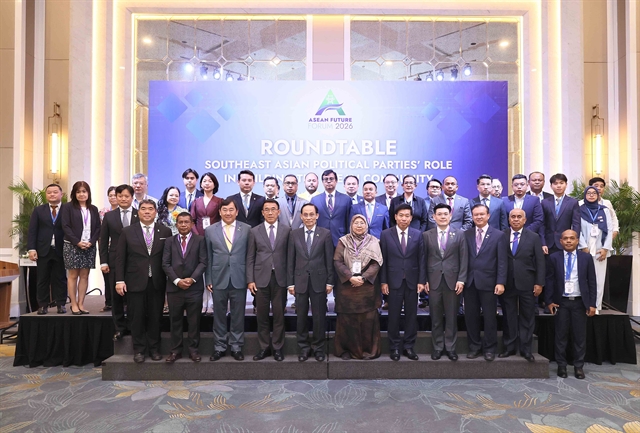
The ASEAN Future Forum 2026 (AFF 2026) opens in Hà Nội on June 9–10 under the theme 'Shaping Our Future Together: Peace, Prosperity, People-centred.' As one of the forum's co-organisers, the Diplomatic Academy of Vietnam has played a central role in crafting the event's vision and objectives.
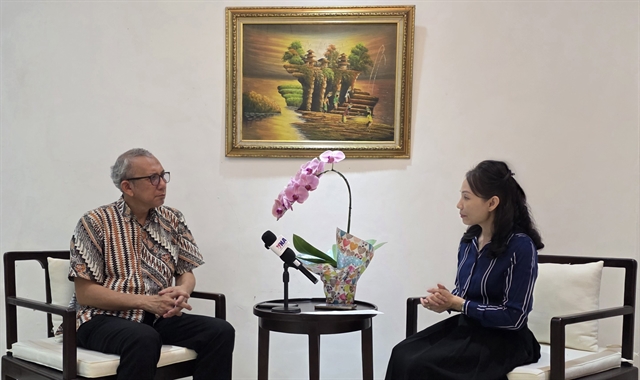
On the eve of the forum, Việt Nam News reporters Khánh Chi and Việt Dũng sat down with Nguyễn Hùng Sơn, President of the Diplomatic Academy of Vietnam, to discuss the significance of this year's theme, the multi-stakeholder spirit driving the forum and what the next decade holds for ASEAN.
First and foremost, how do you view the significance of the theme chosen by Việt Nam for the ASEAN Future Forum 2026?
I believe the theme of AFF 2026, 'Shaping Our Future Together: Peace, Prosperity, People-centred,' is both timely and forward-looking.
ASEAN is entering a new stage of development with the implementation of the ASEAN Community Vision 2045. At the same time, the region is facing a more complex strategic environment marked by geopolitical competition, economic uncertainty, technological disruption and a growing range of transnational challenges. In this context, the theme chosen by Việt Nam captures both the opportunities and responsibilities that ASEAN faces as it looks toward the future.
The three elements of the theme are closely interconnected. Peace remains the essential foundation for stability, trust and cooperation in the region. Prosperity is the shared goal that ASEAN seeks through economic integration, innovation and sustainable growth. Equally important, a people-centred approach reminds us that regional cooperation should ultimately improve the lives, well-being and opportunities of ASEAN’s citizens.
The theme also reflects Việt Nam’s belief that ASEAN’s future can only be shaped through dialogue, cooperation and the active participation of all stakeholders. It is particularly relevant as ASEAN begins implementing the Community Vision 2045 and works towards building a more resilient, innovative, inclusive and people-oriented Community.
In essence, the theme conveys a simple but important message: peace is the prerequisite for sustainable prosperity, and people must remain at the heart of everything ASEAN does. That is how we can shape our future together.
It can be seen that the forum is quite open, with the presence of businesses, scholars, youth, social organisations and representatives of the people as well as regional leaders. What role do these actors play in promoting peace, prosperity, and people-centred development in ASEAN?
The challenges facing ASEAN today are increasingly interconnected. Issues such as peace and security, economic development, technological transformation, energy transition and social inclusion can no longer be addressed by governments alone. They require the active participation of all sectors of society.
This is why the ASEAN Future Forum was designed as a multi-stakeholder platform, bringing together government leaders, businesses, scholars, youth representatives, social organisations and other stakeholders. Each of these actors contributes in different but complementary ways. Businesses help drive innovation, investment and economic growth. Scholars provide research-based insights and policy recommendations. Youth bring fresh perspectives and represent the aspirations of future generations. Social organisations help ensure that development remains inclusive and responsive to people's needs.
By bringing these voices together, AFF helps foster mutual understanding, build trust across sectors and generate more practical and forward-looking solutions to regional challenges. This approach reflects ASEAN's commitment to building a people-centred Community, where peace, prosperity and sustainable development are advanced not only through intergovernmental cooperation, but also through the meaningful participation of the people themselves.
Among the topics to be discussed at AFF 2026, how do you assess the importance of digital transformation and artificial intelligence (AI) for the present and future of ASEAN?
Digital transformation and artificial intelligence are among the most important issues for ASEAN today because they cut across almost every dimension of regional development: economic growth, public services, education, finance, connectivity and even security. For ASEAN, AI is not simply a technological issue. It is a development issue, a governance issue, and increasingly a question of regional competitiveness. If ASEAN countries can adopt AI effectively, the region can improve productivity, upgrade public services, support small and medium-sized enterprises, and create new sources of growth. But if the region moves too slowly or unevenly, existing development gaps may widen, both between ASEAN and the wider world and among ASEAN member states themselves.
This is why AFF 2026 places strong emphasis on AI adoption in ASEAN, especially the idea of 'leaving no one behind'. The central question is not only how to regulate AI, but also how to ensure that ordinary citizens, young people, workers, businesses, and public institutions can benefit from it in practical ways. I believe that digital transformation and AI will be central to whether ASEAN can remain dynamic, inclusive and resilient in the next stage of regional
Could you please share your views about the role of young people in shaping the future of ASEAN, particularly in regional policymaking? How do you envision ASEAN’s future in the next five to 10 years?
Young people have a vital role in shaping the future of ASEAN because they are not only the beneficiaries of regional cooperation, but also the generation that will live with the long-term consequences of today’s decisions. ASEAN has a large youth population and this is a major strategic asset if young people are given the skills, platforms, and confidence to contribute meaningfully. Their role should go beyond symbolic participation. Young people should be encouraged to engage in policy discussions on issues that directly affect their future, including education, employment, climate change, digital transformation, mobility, innovation and regional identity.
Looking ahead to the next five to 10 years, I believe ASEAN’s future will depend on its ability to remain united, adaptive, and people-centred in a more uncertain world. The region will likely face stronger pressure from major-power competition, technological disruption, geoeconomic fragmentation, as well as climate-related challenges. But ASEAN also has significant advantages: a young and dynamic population, growing economic weight, strong habits of dialogue and an expanding network of partners.
If ASEAN can translate its long-term vision into practical cooperation, and if it can bring young people closer to regional policymaking, ASEAN can become not only a stable community, but also a more innovative, inclusive and forward-looking one. — VNS
Politics & Law
 Politics & Law
 Politics & Law
 Politics & Law
 Politics & Law
 Politics & Law
 Politics & Law
 Politics & Law
 Politics & Law
 Politics & Law
 Politics & Law
 Politics & Law
 Politics & Law
 Politics & Law
 Politics & Law