 Society
Int’l cooperation helps address nuclear power workforce shortages
1.
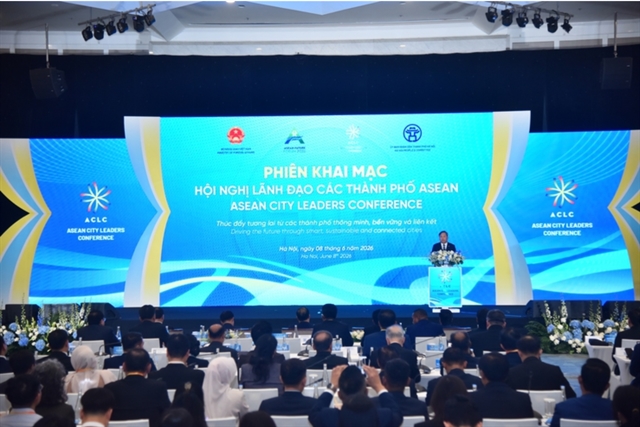 |
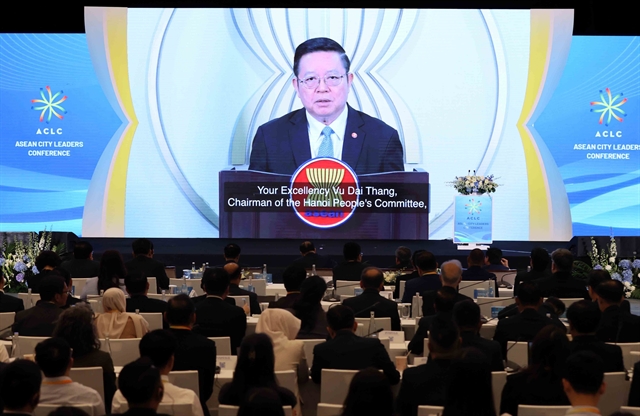
| A view of the conference. Photo hanoi.gov.vn |
HÀ NỘI — Mayors and city leaders from across ASEAN on Monday shared experience in scaling citizen-centric governance and integrating artificial intelligence (AI) in the development of smart, connected cities at the ASEAN City Leaders Conference in Hà Nội.
Trương Việt Dũng, vice chairman of the Hà Nội People’s Committee, introduced the capital’s digital ecosystem designed to better serve residents at the first thematic session on digital pulse.
In health care and education, the city is promoting the integration of electronic health records, expanding access to high-quality public services and gradually applying AI and advanced technologies to support diagnosis and service delivery.
In transport, energy and environmental management, data and AI are being deployed to optimise traffic flows, reduce waste, save travel time and improve quality of life.
In the relationship between government and citizens, the iHanoi application enables reports of flooded areas, potholes or issues within local communities to be submitted quickly, received transparently and addressed responsibly.
Hà Nội is also studying the development of a digital twin of the city, allowing major policy decisions and urban projects to be simulated and their impacts assessed more thoroughly before implementation.
Dũng proposed that ASEAN cities develop an integrated and inclusive digital infrastructure to ensure digital services reach older people, low-income groups, residents in suburban areas and those not yet familiar with technology.
“Alongside modern platforms, we must create user-friendly, simple and accessible pathways for everyone to benefit from digital transformation,” he said.
“When we talk about digital cities, we often think of data, platforms, algorithms and infrastructure. Yet, in the end, the most important measure of success remains the well-being of our people. A good city is not only one where systems operate efficiently but one where residents feel respected, protected and empowered to thrive.”
Hoàng Minh Cường, vice chairman of the Hải Phòng People’s Committee, introduced the city’s digital citizen ecosystem, which provides online platforms enabling citizens and businesses to interact directly with the city government.
Through these channels, residents and enterprises can submit feedback, recommendations, proposals and policy suggestions directly to city leaders. The processing of this feedback has been enforced as a mandatory responsibility of government agencies and public officials.
Citizen satisfaction is considered a key KPI, marking a significant shift from a government that manages to a government that serves, according to Cường.
He proposed establishing an ASEAN Urban Data Sharing Network. ASEAN cities should work together to promote the sharing of open data, enhance connectivity among smart city platforms and develop common ASEAN data standards.
Math Azimah, vice mayor of Siem Reap Municipality, said Siem Reap had made significant improvements in online administrative services.
Citizens can now access information about required documents online, submit certain requests electronically and track application status more efficiently.
It reduces travel time and waiting periods and is particularly beneficial for elderly citizens, people with disabilities, busy workers and residents living farther from administrative offices.
"Digital public services are an important component of Siem Reap’s smart city vision," she said.
She said the city was working to build a smart waste collection system, including sensor-based bins to optimise waste collection routes, develop green ring road infrastructure and promote electric vehicle transport.
“Siem Reap’s journey demonstrates that digital transformation is not only about technology, it is also about improving people’s lives," she said.
“By harnessing the digital leap, embracing citizen-centric governance and responsibly integrating artificial intelligence, cities can become more resilient, inclusive, efficient and sustainable.” — VNS
Society
 Society
 Society
 Society
 Society
 Society
 Society
 Society
 Society
 Society
 Society
 Society
 Society
 Society
 Society