 Society

Students to compete in first national dance talent contest
1.
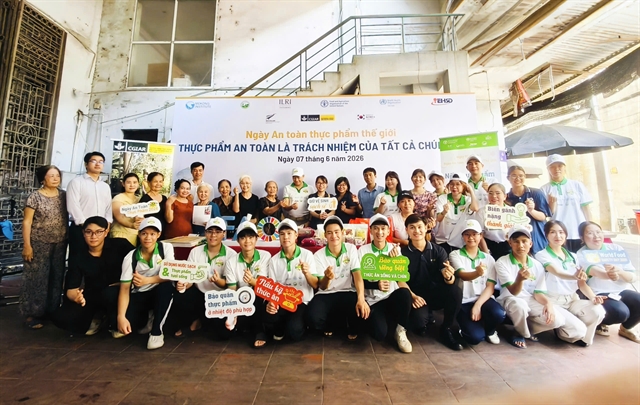 |
| World Food Safety Day communications event in Đồng Quang market, Thái Nguyên province. — VNS Photo Tố Như |
THÁI NGUYÊN — Partners marked World Food Safety Day 2026 in Thái Nguyên northern province with a push for One Health measures to curb rising foodborne illness and strengthen Việt Nam’s food system.
Under the theme “From burden to solutions – safe food everywhere,” the International Livestock Research Institute (ILRI), FAO, WHO, the Mekong Institute, the Institute of Environmental Health and Sustainable Development and Thái Nguyên University of Agriculture and Forestry convened authorities, researchers, businesses and students for a forum, market demonstrations and a nationwide digital campaign.
“Food safety is a public health priority. Preventing foodborne diseases requires coordinated action across the food system,” said Angela Pratt, WHO representative in Việt Nam.
Global illness linked to unsafe food has risen to about 866 million cases a year, up from 600 million in 2015, with annual losses estimated at US$647 billion, said Nguyễn Việt Hùng, Regional Director for Asia at ILRI.
Foodborne disease may cost Việt Nam about 1 per cent of GDP, he added.
Organisers said efforts in Việt Nam should focus on better handling and hygiene, expanding traceability technologies, building evidence through research and strengthening policies and enforcement.
“Safe food is vital for food security, nutrition and sustainable agrifood systems,” said Vinod Ahuja, FAO Representative in Việt Nam, calling for action “from farmers to consumers, from policymakers to retailers.”
Flagship activities in Thái Nguyên Province, a One Health field site under the Vietnam One Health Partnership, where ILRI co-chairs the Food Safety Technical Working Group, highlighted governance gaps, emerging risks and practical, scalable solutions.
“Progress in food safety happens when research, policy and community action come together,” Hùng said.
"Research helps us identify where food safety risks occur and which interventions are most effective, but lasting impact requires partnership and collaboration. This campaign provides a platform for bringing together diverse takeholders to share knowledge, align efforts, and translate evidence into practical solutions."
At the community level at Đồng Quang market in Thái Nguyên City, students, experts, vendors and consumers demonstrated safe selection, storage, transport and product traceability. “Shoppers now ask about origin, quarantine stamps and storage conditions, not just appearance,” said Nguyễn Thị Thanh Huyền, a fresh-food vendor.
More than 200 local students joined poster and video contests, with winners presenting at the forum. Nearly 400 RMIT Vietnam students earlier took part in a communications challenge translating technical guidance into content for wider audiences.
"Universities play an important role in developing future leaders," said Phan Thị Hồng Phúc, vice rector of the Thái Nguyên University of Agriculture and Forestry.
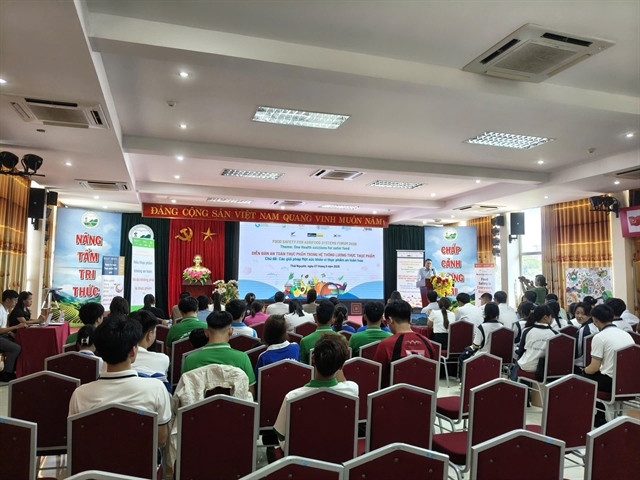 |
| Delegates at the event. |
The campaign also promotes WHO’s Five Keys to Safer Food to encourage simple, preventive practices among consumers and food handlers.
Regional cooperation is crucial because food safety challenges do not stop at national borders, said Ornuma Polpanich, Director of the Green Transitions and Nexus Solutions Department, Mekong Institute.
The initiative was supported by New Zealand’s foreign ministry, South Korea’s Ministry of Food and Drug Safety and CGIAR’s Sustainable Animal and Aquatic Foods program. Organisers said only coordinated action by regulators, businesses, scientists, vendors and consumers can deliver safer, more transparent and sustainable food systems. — VNS
Society
.jpg) Society
Society
 Society
 Society
 Society
 Society
 Society
 Society
 Society
 Society
 Society
 Society
 Society
 Society
 Society