 Society
Int’l cooperation helps address nuclear power workforce shortages
1.
|
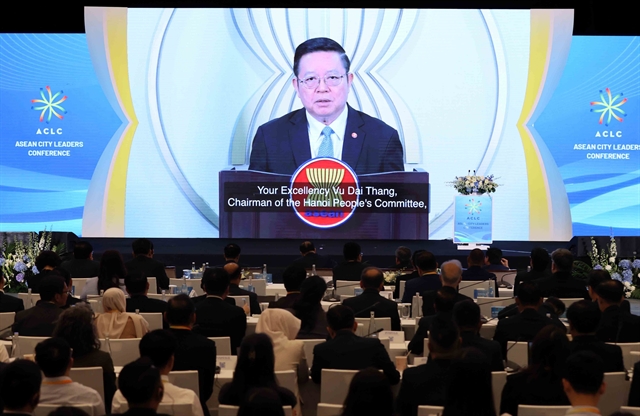
| ASEAN Secretary-General Kao Kim Hourn delivers a video message to the conference. — VNA/VNS Photo |
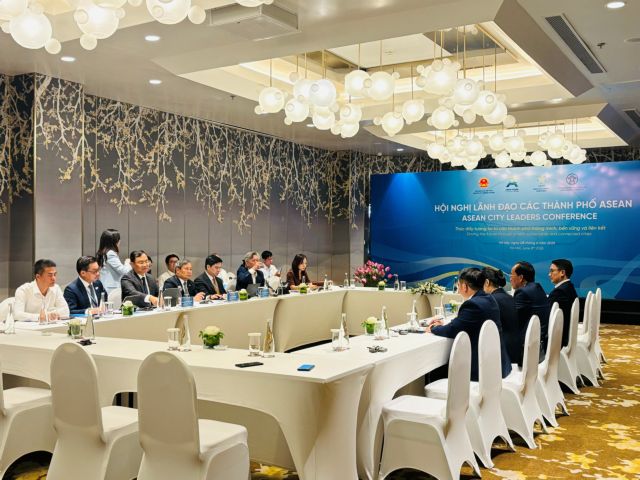
HÀ NỘI — ASEAN Secretary-General Kao Kim Hourn on Monday called on ASEAN cities to use technology wisely to reduce inequality, strengthen communities and leave no neighbourhood behind.
He was speaking while sending a video message to the ASEAN City Leaders Conference in Hà Nội.
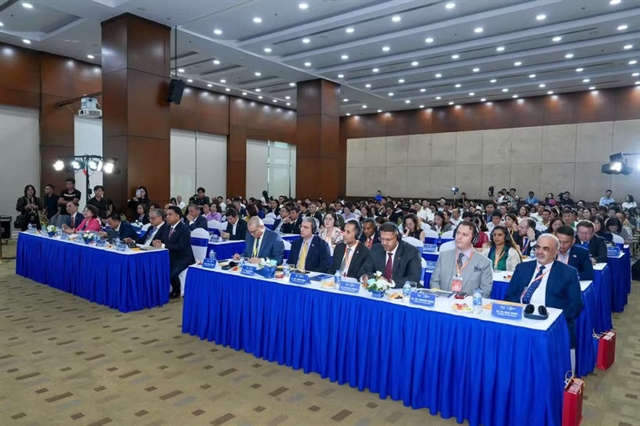
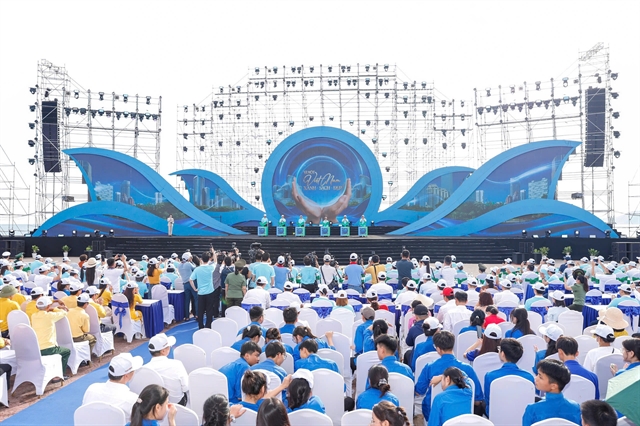
Themed “Driving the future through smart, sustainable, connected cities”, the conference drew the participation of 350 domestic and international delegates, including ASEAN governors, mayors and leaders.
Kao said smart cities, sustainable cities and connected cities would not be just aspirations. They would be at the heart of how ASEAN is building a resilient, innovative, dynamic and people-centred community.
He said a smart city “uses technologies and innovation not as ends in themselves, but as tools to tackle congestion, pollution, inequality, and climate vulnerability”.
“It drives economic and social progress while protecting the environment. It ensures that no one is left behind,” he added.
He praised ASEAN cities for integrating technology solutions into public services, tailored to local realities.
“The biggest obstacles are rarely technological. They are systemic, such as high cost, rigid architecture solutions that do not fit local contexts. We need more partnerships on smart and sustainable urban development. Partnerships that expand open road digital connectivity, undertake joint technical assistance, share knowledge on regulatory frameworks, and pool investment and financing mechanisms,” Kao said.
“The world's most livable cities of the future will not necessarily be the most technology advanced, they will be the ones using technology wisely to reduce inequality, strengthen communities, and leave no neighborhood behind,” he said.
The ASEAN Secretary-General also called on ASEAN cities to build climate resilience into every city investment.
Every new growth, every new drainage system, every new housing development must be assessed against climate risk, he said.
“We need stronger capacity building programs to strengthen climate risk assessment at the city level, better integration of green infrastructure, and greater use of nature-based solutions, such as green roofs, permeable pavements, urban mangroves,” he added.
|
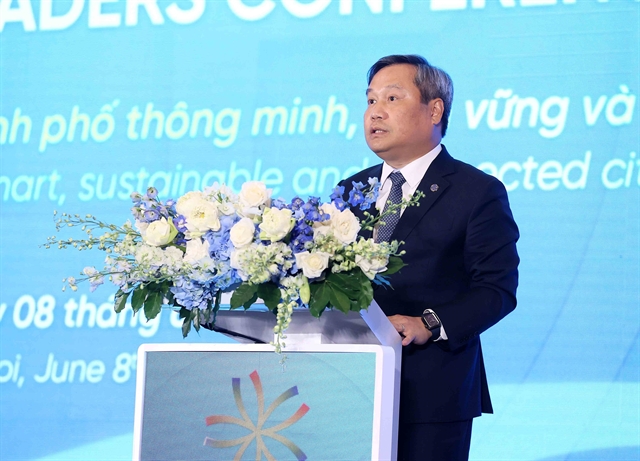
| Vũ Đại Thắng, chairman of Hà Nội People’s Committee, affirmed Hà Nội’s commitment to the principle that technology only has real value when it serves people. VNA/VNS Photo |
Echoing Kao’s message, Vũ Đại Thắng, chairman of Hà Nội People’s Committee, said the future of ASEAN would be shaped by its cities - where resources, knowledge, technology, and aspirations for innovation converge.
He said: “Hà Nội regards digital transformation as a key driver of development. We are actively promoting the development of digital government, a digital economy, and a digital society, applying artificial intelligence, big data, and advanced technologies to enhance urban governance, improve public service delivery, and create a more enabling environment for citizens and businesses.”
He affirmed Hà Nội’s commitment to the principle that technology only has real value when it serves people. Citizens must be at the centre, the driving force, and the ultimate beneficiaries of all urban development policies. This is also a shared vision and common objective among ASEAN cities.
Nguyễn Mạnh Cường, deputy minister of foreign affairs, said all Vietnamese localities represented at the conference had established at least two sister-city or cooperation partnerships with localities from other ASEAN member states.
Among them, Hà Nội stood out as a prime example. Through its extensive network of partnerships with more than one hundred cities worldwide, including numerous ASEAN capitals, Hà Nội demonstrated how local-level cooperation could lay a strong foundation for relations between nations, he said.
“ASEAN cities are not merely places where policies are implemented. They are living spaces where the trust, shared identity, and vitality of the ASEAN Community are nurtured every day.
“Connectivity among ASEAN cities should not be measured solely by hard infrastructure or digital metrics. It must be anchored in the strength of human connections - particularly among our youth, who will inherit and shape the ASEAN Community for decades to come,” he said. VNS
Society
 Society
 Society
 Society
 Society
 Society
 Society
 Society
 Society
 Society
 Society
 Society
 Society
 Society
 Society