 Environment

Learning Việt Nam through food
1.
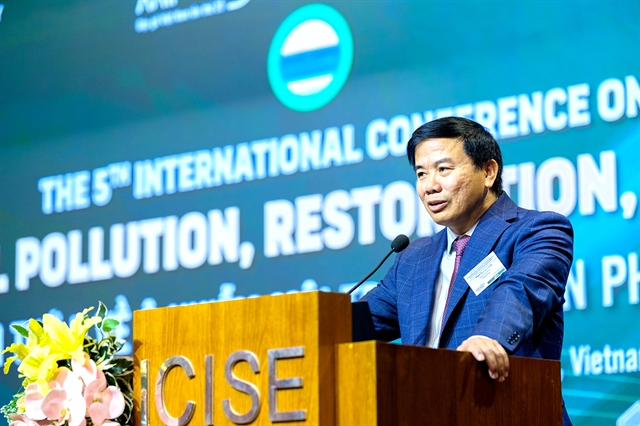 |
| Professor Hoàng Chung Thẩm speaks at the 5th ICEPORM held in Quy Nhơn, Gia Lai Province on March 9. Photos courtesy of ICISE |
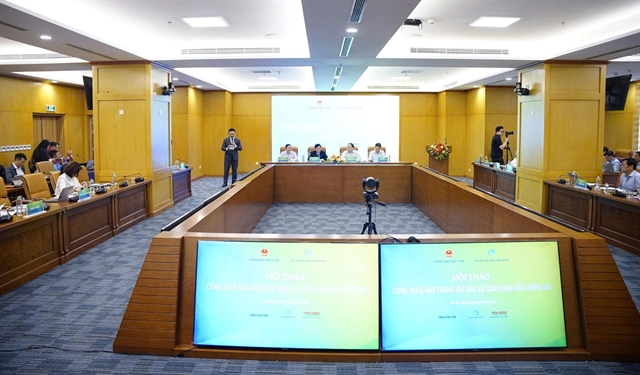
Scientists from around the world gathered at the 5th International Conference on Environmental Pollution, Restoration, and Management (5th ICEPORM) in the International Centre for Interdisciplinary Science and Education (ICISE) in Quy Nhơn last week to share research results and management experiences and discuss environmental issues.
Việt Nam News reporter Nguyễn Khánh Chi spoke to Professor Hoàng Chung Thẩm from Auburn University in the US, the founder of the ICEPORM conference series and chair of the 5th ICEPORM. With over 25 years of conducting environmental toxicology research, he has acted as a bridge connecting environmental scientists from around the world with Vietnamese environmental scientists and managers.
Could you identify the most urgent environmental issues currently facing Việt Nam in particular and Asia more broadly?
Environmental pollution usually occurs in developing countries where rapid industrial development is happening, but environmental management remains at a level that needs improvement. Việt Nam is one of those countries and I think it is facing environmental problems.
Among those, air and solid waste pollution problems are of concern. Plastic pollution is one of the solid waste problems. I have been doing research on microplastics in both laboratory and field conditions and found that microplastic pollution is a global problem, especially in Việt Nam and other Southeast Asian countries.
In addition, countries where agriculture is an important factor, like Việt Nam and other neighbouring countries, usually have pesticide and nutrient pollution problems because they are applied regularly but not properly, and the guidance is not carefully followed. As a result, nutrient and pesticide runoff that causes pollution in aquatic ecosystems is an environmental issue. Farmers are also exposed to pesticides during application and health consequences caused by pesticide exposure have been reported.
With 90 delegates, scientists and environmental managers from universities, research institutes, businesses and government agencies across 22 countries, the 5th ICEPORM has put forward several scientific recommendations and new initiatives. Which of these do you consider most noteworthy in addressing today’s environmental challenges quickly and effectively?
The conference covers various environmental pollution areas, including pesticides, metals, microplastics, and chemicals used in pharmaceutical and personal care products.
Ecological risk assessment for contaminants and pollutants to support environmental management was also presented and discussed at the conference.
In addition, a session on environmental remediation and technology was also organised to discuss strategies for mitigation, removal, and management of environmental pollution problems. Among those, microplastic pollution and its impacts were one of the main focuses because this is an emerging pollution problem not only in Việt Nam but in the world. Although, we are still having technical disadvantages in measuring microplastic concentrations and effects. This limits our capacity to evaluate the environmental risk of microplastics.
At the conference, we discussed a plan to conduct a microplastic pollution assessment project at a global scale using a harmonised method that we have developed over the past ten years. We hope to get funding support to conduct the project and help us better understand the status of microplastic pollution in Asia and the world at large.
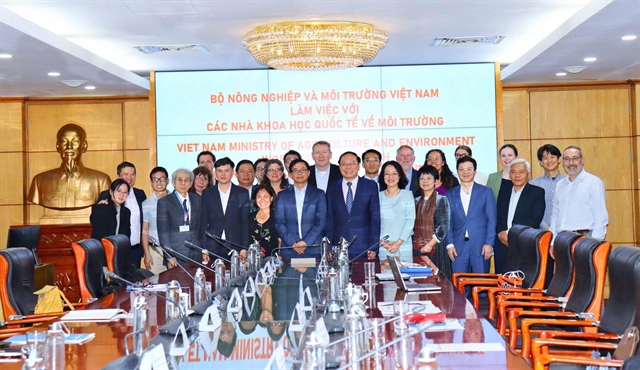 |
| Professor Hoàng Chung Thẩm leads a delegation of international experts working with the Ministry of Agriculture and Environment in March. |
You have stated that environmental pollution caused by human activities is a major concern, especially in developing countries such as those in Southeast Asia, including Việt Nam. Beyond macro-level government policies, what specific actions should communities, particularly businesses and citizens, take to help reduce environmental pollution?
This is an interesting question. Environmental pollution problems can be caused by point and nonpoint sources. Point sources are usually related to industry because they come from manufacturers and industrial plants, which can be managed by regulatory mandates of governmental agencies. With nonpoint sources, pollutants that come from daily activities of humans, such as plastic pollution or pesticides, community action plays an important role in pollution reduction and prevention. Therefore, increase knowledge and awareness on environmental pollution and its impacts on communities is vitally important. Once they understand it, they will act to reduce and prevent pollution.
A few years ago, we conducted a pilot project on plastic pollution reduction and prevention using an educational approach, called “educating the educator approach”. The project was conducted for 20 high schools along the coast of Gia Lai Province.
Through the project, we provided education on environmental pollution and impacts and the need to protect the environment to support sustainable development to about 20,000 students, teachers, and their family members and friends in their communities.
The project was able to engage students, teachers, and their family members to participate and act to reduce plastic waste. This was evidenced through a survey we conducted to evaluate plastic waste reduction after the project. The results show a significant reduction in plastic discards at the high schools.
Many schools developed projects for their students to reduce and reuse plastic products that helped minimise plastic waste, such as using fewer single use plastic items (e.g., plastic bags, bottles) and reusing plastic products for different purposes.
This pilot project should be continued and expanded to other provinces and regions in Việt Nam to help reduce plastic pollution.
Solving environmental pollution requires a long-term roadmap spanning many years. In the meantime, what immediate and simplest measures can be implemented so that all stakeholders, from policymakers to businesses and citizens, can take part?
That is correct, the pollution problems we are facing today have accumulated from our activities over time.
In Việt Nam, environmental pollution occurred when industrial development started about 20 years ago. However, the problems became more of a concern in recent years because of the rapid urbanisation that has changed land use and affected ecosystem functioning and services.
Solving pollution problems will take time and efforts. Immediate or long-term measures to solve environmental pollution problems depend on the pollution problem of concern. Overall, solving environmental problems will need regulatory mandates and citizen’s actions.
From the regulatory mandate aspect, I think a relevant and clear set of environmental criteria and guidelines are necessary. To do so, relevant scientific data are needed. However, Việt Nam is lacking such data, especially environmental toxicology data that are used for criteria development.
Regarding the citizens' action aspect, enhancing public education on environmental pollution and consequences is vitally important. Once knowledge and awareness are increased, people will act to help protect the environment and reduce pollution impacts. Our plastic pollution reduction project I mentioned above is an example.
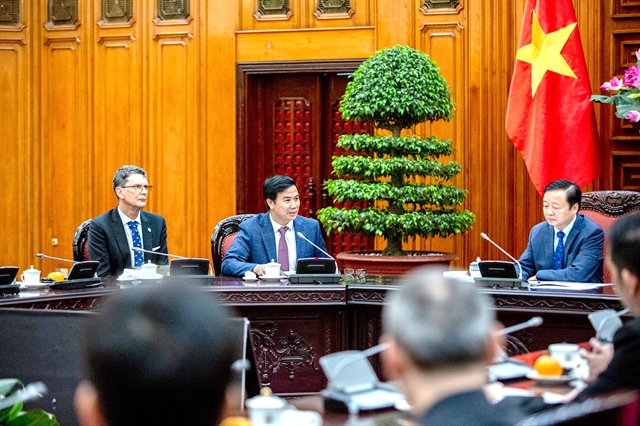 |
| Professor Hoàng Chung Thẩm (centre) during a meeting between Deputy Prime Minister Trần Hồng Hà and a delegation of international scientists and environmental managers in Hà Nội in 2024. |
Việt Nam is seeking new approaches, technologies, and technical solutions to address environmental problems. As someone who has led international expert delegations working with Deputy Prime Minister Trần Hồng Hà and the Ministry of Agriculture and Environment to provide scientific recommendations for environmental protection and management, what specific recommendations would you make in this regard? What new approaches, technologies, or technical solutions should Việt Nam pursue?
These are important questions but there might not be a simple and straight answer to the questions. In general, to solve an environmental pollution problem, we need to know what causes the pollution, how it affects the natural ecosystem and public health, and where we stand regarding science, technology, and resources including human factor that can allow us to manage the problem.
Environmental pollution problems are usually complicated because it is related to the ecosystem costs and benefits of human society. We are facing environmental challenges; however, opportunities are also available.
I am happy to say that we had the opportunities to discuss environmental challenges Việt Nam is facing with Deputy Prime Minister Trần Hồng Hà and the Ministry of Natural Resources and Environment (now Agriculture and Environment, MAE) a few years ago.
My friends and colleagues in Việt Nam and around the world and I are glad to know that Việt Nam is concerned about environmental pollution and has taken actions towards managing this issue.
However, more efforts and investment are needed. As I mentioned above, having a relevant set of environmental criteria and clear guidelines to guide businesses and private sectors in following the requirement of environmental rules and policies are very important. Good criteria and guidelines can only be developed based on relevant scientific data.
At the meeting with MAE on March 14, we discussed problems and suggested several applied research projects to be conducted to support environmental management of pollution problems, such as microplastics, pesticides and heavy metals.
From the human resources aspect, more technical training to regulatory agencies to increase knowledge and understanding of management strategies is also important. In the past few years, my colleagues and I were able to conduct a few training workshops on ecological risk assessment for contaminants, environmental resilience and disaster risk reduction for scientists and managers of MAE.
Regarding public education, enhancing environmental education to the public, especially to younger generations is vitally important. The pilot project on plastic pollution reduction we conducted, and I mentioned above, is an example. Through the project, we developed an educational framework for students, and it can be easily implemented and expanded to other schools and regions of Việt Nam.
I am happy to hear that Việt Nam will increase investment in environmental protection in the coming years. My colleagues and I will continue collaborating with scientists and managers of Việt Nam on environmental protection to maintain ecosystem functioning and services to support human wellbeing and sustainable development of Việt Nam. VNS
Environment
 Environment
 Environment
 Environment
 Environment
 Environment
 Environment
 Environment
 Environment
 Environment
 Environment
 Environment
 Environment
 Environment
 Environment