 Environment

Digital transformation opens new prospects for sports medicine in HCM City
1.
 |
| Forests in Đăk Glei District, Kon Tum Province, are being actively preserved and protected by local individuals and communities. VNA/VNS Photos Khoa Chương |
HÀ NỘI — Experts have called for forests to be placed at the heart of Việt Nam’s socio-economic development strategies, planning and policymaking, stressing that forest protection and the strengthening of forest-based economies must go hand in hand to ensure a prosperous and sustainable future.
Nationwide, around 25 million people directly and indirectly benefit from forests through livelihoods, water resources, health and overall well-being.
Việt Nam is among Asia’s leading countries in forest restoration and sustainable forest management efforts. Forests are not only ecosystems but also economic drivers, cultural foundations, climate shields and sources of livelihoods, health and happiness.
 |
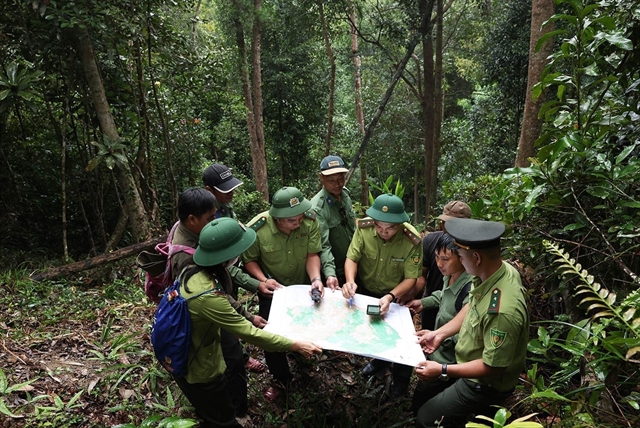
| Forest rangers patrol and protect forests to minimise forestry violations in Đăk Glei District, Kon Tum Province. VNA/VNS Photo |
According to Trần Quang Bảo, Director of the Forestry and Forest Protection Department, with a total forest area of 14.87 million hectares, forests play a vital role not only in environmental protection, community well-being and climate change response, but also in social welfare and economic development.
Between 2021 and 2025, the forestry sector recorded an average annual growth rate of around 5 per cent while maintaining forest coverage at 42.03 per cent, according to the Ministry of Agriculture and Environment.
Beyond environmental benefits, forestry has helped reshape economic structures in mountainous regions through programmes and projects that have established raw material zones for the wood processing industry.
Notably, the wood and forest product processing industry has become one of the country’s key export sectors. In 2025 alone, export turnover exceeded US$18.3 billion, generating a trade surplus of over $15 billion, accounting for more than 75 per cent of the country’s total trade surplus.
These figures reinforce Việt Nam’s position as one of the world’s leading exporters of wood and wood products.
The expansion of the forestry sector has also driven growth in related industries such as hydropower, eco-tourism, aquaculture, medicinal plants and carbon sequestration services.
It has created jobs, improved livelihoods and contributed to poverty reduction, particularly among ethnic communities in remote and disadvantaged areas.
Bảo noted that forests’ contributions go far beyond measurable economic indicators.
“Their value is not only reflected in timber output or export figures, but also in protected water sources, climate regulation, biodiversity conservation and sustainable livelihoods for millions of people,” he said.
Investing in forests is investing in the future
From a global perspective, the Food and Agriculture Organization of the United Nations (FAO) emphasises that forests contribute trillions of dollars to the global economy through ecosystem services and renewable resources. More than half of the world’s GDP depends directly on nature, including forests.
However, forests remain undervalued in global economic decision-making, and investment in forest protection and restoration remains insufficient compared to their true potential.
Vinod Ahuja, FAO Representative in Việt Nam, said the country’s forests are not only a natural treasure but also a powerful driver of economic opportunities and rural livelihoods.
“Investing in forests means investing in water security, climate resilience and sustainable growth for millions of people,” he said.
To achieve global climate and biodiversity goals, FAO stresses that forests must be placed at the centre of socio-economic development strategies.
Protecting forests and strengthening forest-based economies must go hand in hand if we are to build a prosperous and sustainable future, Ahuja added.
Bảo also underlined that amid mounting global environmental and economic challenges, the role of forests is becoming more critical than ever.
Developing a sustainable forestry economy is not only an urgent requirement for Việt Nam but also reflects the country’s commitment to contributing to global sustainable development goals.
In the future, the forestry sector will focus on several key priorities: sustainable forest management, protection and development; strengthening forest product value chains; expanding forest ecosystem services; promoting the forest carbon market; advancing science, technology, innovation and digital transformation; and placing local communities at the centre of forest governance and development. — VNS
Environment
 Environment
 Environment
 Environment
 Environment
 Environment
 Environment
 Environment
 Environment
 Environment
 Environment
 Environment
 Environment
 Environment
 Environment