 Environment

LANDMARK Launches ‘Destination CENTRAL’: A District-Wide Invitation to Explore the Dynamism, Luxury, and Soul of Central
1.
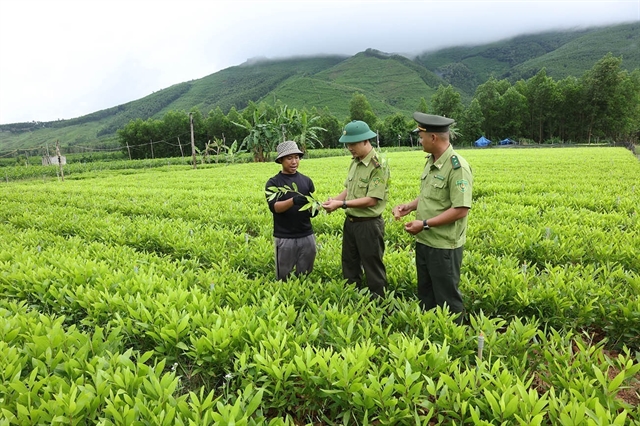 |
| Two forest rangers inspect seedlings at a forestry nursery in the southern province of Gia Lai, which has produced more than one million saplings for reforestation. — VNA/VNS Photo |
HÀ NỘI — Forests can only fulfil their full economic, social and environmental potential if countries develop solutions that are not just technically sound but also economically viable and scalable, Switzerland’s ambassador to Việt Nam said on Tuesday, as officials, investors and development partners gathered in Hà Nội to tackle a persistent shortfall in forest finance.
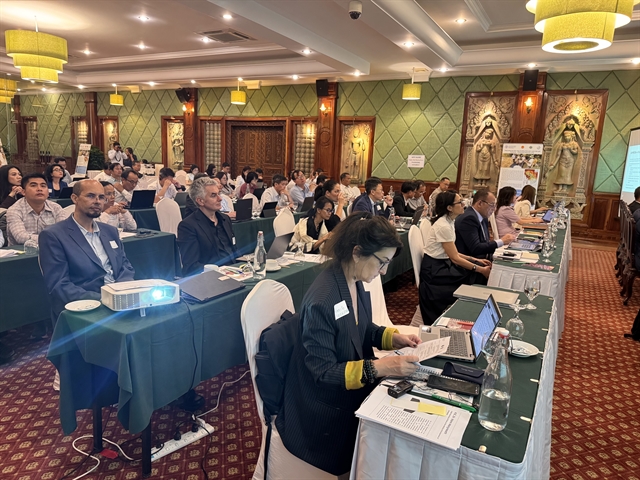
The two-day Forest Investments Marketplace, which opened on March 31 under the UN-REDD Programme in collaboration with the Vietnamese Government, brings together policymakers, financiers and forest enterprises to explore how investment in forests can be scaled up without compromising environmental integrity.
Forests support more than 1.6 billion people and contribute an estimated US$1.3 trillion a year to the global economy. At the same time, deforestation and land-use change account for about 12 per cent of global greenhouse gas emissions, a reminder that forests sit at the heart of both the problem and the solution.
Even as demand grows for deforestation-free supply chains, high-integrity carbon credits and nature-positive investments, global funding for forests is estimated at just $15–20 billion annually, a fraction of the $150–200 billion needed each year by 2030, according to organisers.
The challenge, they said, is not simply a lack of capital, but a disconnect between forest actors, policymakers and investors.
Trần Quang Bảo, director of the Vietnam Administration of Forestry, said the event reflected a broader shift in thinking, away from treating forests purely as areas to be protected and towards seeing them as productive assets that can generate value for climate, biodiversity and local communities.
Việt Nam has maintained forest cover at more than 42 per cent and built up several financing mechanisms over the years, including its long-running Payment for Forest Environmental Services policy, which generates about $150 million annually. The country has also begun to tap more actively into carbon markets. A World Bank-backed emissions reduction programme launched in 2023 has already generated $56.5 million from the transfer of 11.3 million tonnes of carbon credits, he said.
Further deals are in the pipeline. Việt Nam is negotiating another emissions reduction programme in the Central Highlands and south-central regions, expected to cover 5.15 million tonnes of carbon, equivalent to $51.5 million.
Most recently, the Green Climate Fund approved a nearly $72 million REDD+ results-based payment project for Việt Nam at its 44th board meeting in South Korea on March 26. The project will be implemented in the northwest and northeast, with a focus on sustainable forest management and improving local livelihoods.
Even so, Bảo said the sector still faces structural challenges, from a persistent financing gap to weak links between forestry enterprises and investors, as well as a shortage of risk-sharing tools and innovative financial mechanisms, particularly for smaller firms and community-based initiatives.
Thomas Gass, Switzerland’s ambassador, said meeting global climate and biodiversity goals would require far more than incremental progress.
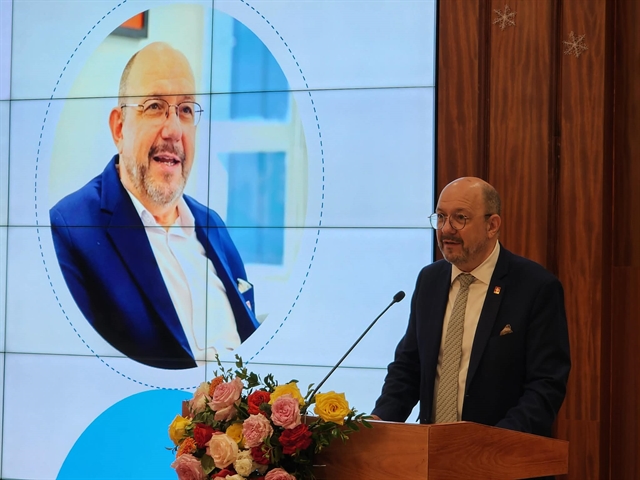 |
| Thomas Gass, Switzerland’s ambassador, speaks at the workshop on Tuesday. — VNS Photo Lê Việt Dũng |
He said forests would only be able to fulfil their functions if countries could build models that were economically workable and capable of scaling. Just as importantly, he added, the conversation needs to shift from focusing narrowly on funding mechanisms to making a broader case for why forests matter in long-term development.
Gass pointed to Việt Nam’s reforestation gains since the 1960s and noted that both Switzerland and Việt Nam have signed the Glasgow Leaders’ Declaration on Forests and Land Use, committing to halt and reverse forest loss by 2030.
He also highlighted Switzerland’s long-standing support for social forestry in Southeast Asia, including programmes aimed at helping communities manage forests sustainably while building viable businesses.
Annette Wallgren, regional coordinator for UN-REDD at the United Nations Environment Programme, said the challenge was not only to mobilise more capital but to ensure it is structured in a way that is predictable and that it actually reaches the people managing forests on the ground.
Forests, she said, will only be conserved in the long term if they are embedded in viable economic systems. That means ensuring finance flows beyond national-level programmes to local communities, smallholders and forest-based enterprises that act as the primary stewards of these landscapes.
Over the two days, participants are discussing sustainable supply chains, carbon finance, risk-sharing instruments and forest enterprise development, alongside technical exchanges and investor–enterprise matchmaking sessions.
A recurring theme is credibility, how to distinguish between forest enterprises that genuinely deliver environmental and social impact and those that simply adopt the language of sustainability.
Alexis Corblin, a senior technical adviser at UNEP, said the key question is not who claims to be 'forest-positive' but how those claims can be assessed transparently and consistently.
He pointed to two recurring gaps. Many social forestry enterprises show strong environmental and social impact but are often slow to develop and not yet ready to attract investment. By contrast, small and medium-sized companies (SMEs) may already be operating commercially with customers and revenue streams, but their environmental impact is often less clear or harder to verify.
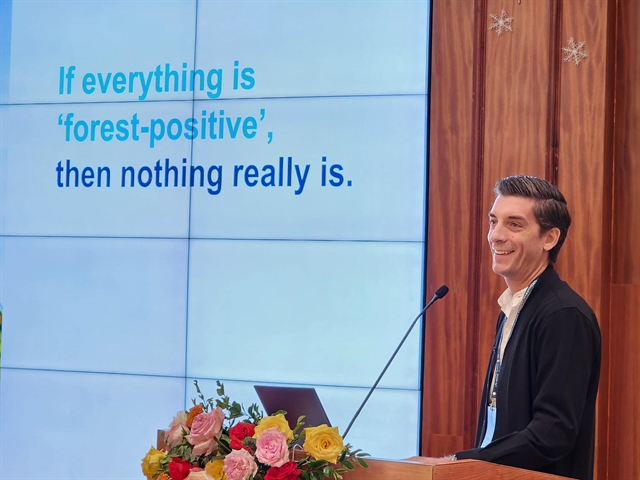 |
| Alexis Corblin, a senior technical adviser at UNEP, speaks at the workshop. — VNS Photo Lê Việt Dũng |
That divergence, he said, makes a one-size-fits-all approach ineffective.
“Impact without viability will never scale, and viability without impact doesn’t really matter,” he said.
Corblin argued that selecting which enterprises to support is as important as designing financing or incubation programmes. Rather than building large pipelines, he said, investors and policymakers should focus on a narrower pool of businesses that can demonstrate both credibility, including environmental integrity and social legitimacy, and the potential to grow. — VNS
Environment
 Environment
 Environment
 Environment
 Environment
 Environment
 Environment
 Environment
 Environment
 Environment
.jpg) Environment
Environment
 Environment
 Environment
 Environment
 Environment