 Environment
PM Hưng meets with Cambodian People's Party, Senate leader Hun Sen
1.
.jpg) |
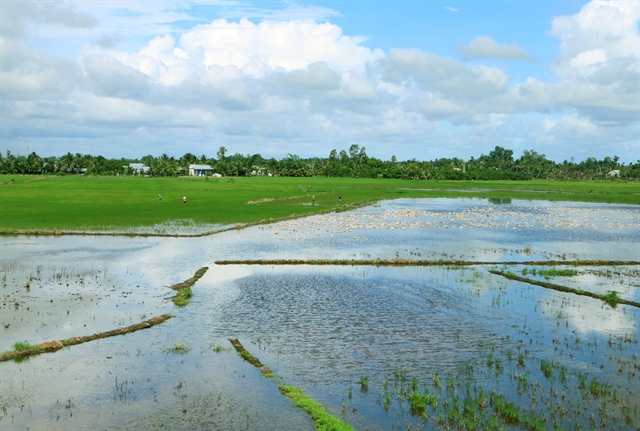
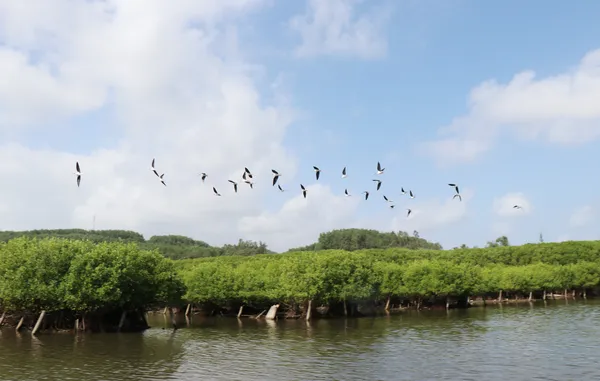
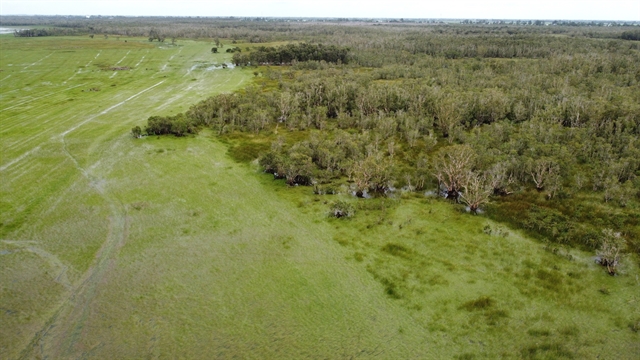
| A natural landscape of the Tràm Chim National Park in Đồng Tháp Province. The provincial Department of Agriculture and Environment, in co-operation with WWF-Việt Nam, launched Phase Two of the Climate Resilient by Nature (CRxN) project in Tràm Chim National Park. Photo courtesy of Nguyễn Văn Hùng/WWF |
ĐỒNG THÁP — WWF-Việt Nam, in collaboration with Department of Agriculture and Environment of the southern province Đồng Tháp, has officially launched Phase II of the Climate Resilient by Nature (CRxN) project in Tràm Chim National Park.
WWF-Viet Nam said the launching of phase two of the project was promoted as climate change and ecological shifts increasingly threaten the Mekong Delta.
The ambitious next phase – funded by the Australian Government through the Mekong Climate Resilience Partnership – will restore 1,750ha of the region’s most critical freshwater ecosystems while securing sustainable, climate-resilient livelihoods for nearly 2,000 vulnerable residents in Đồng Tháp and Tây Ninh.
Director of Đồng Tháp’s Department of Agriculture and Environment Lê Hà Luân said: “Đồng Tháp Province is now shifting from conventional agriculture to climate-smart agriculture to address climate challenges as well as sustain community livelihoods. Nature-based solutions (NbS) are the key to restoring the natural flood dynamics of the Mekong Delta, which is essential for long-term sustainability of the environment and humans. Through our partnership with WWF-Việt Nam, Đồng Tháp is committed to promoting NbS and scaling up successful practices and securing financial support to make them permanent.”
According to a 2023 forecast by the Intergovernmental Panel on Climate Change (IPCC), approximately 40 per cent of the Mekong Delta could be inundated by a one-metre sea-level rise, threatening the livelihoods of more than 17 million people. In response, the initial phase of the CRxN saw WWF-Việt Nam successfully pilot nature-based solutions (NbS), that supported communities to adapt to changing flood dynamics.
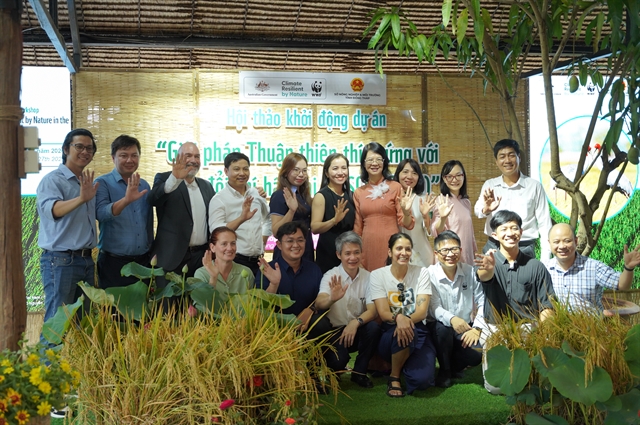 |
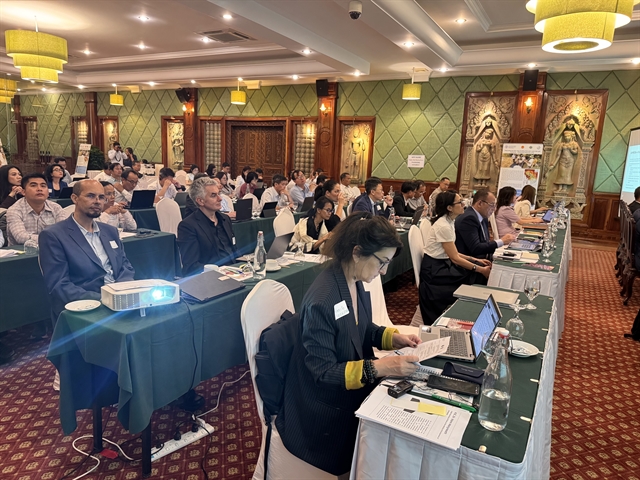
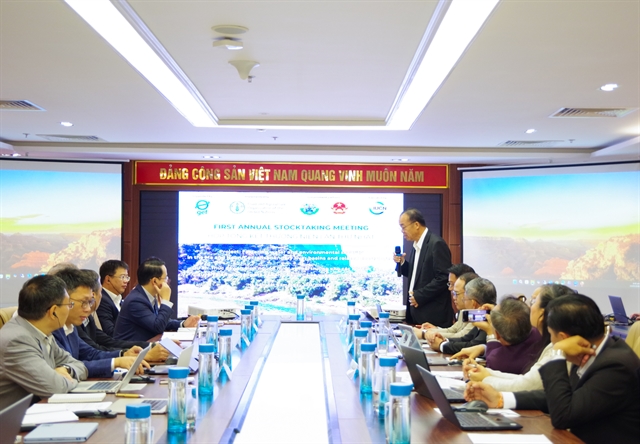
| Participants share a photo session at the launching ceremony of Phase II of the Climate Resilient by Nature (CRxN) project in Tràm Chim National Park in the southern Đồng Tháp Province. — Photo courtesy of WWF-Việt Nam |
By introducing innovative flood-based livelihood models such as floating rice cultivation and integrated lotus-fish farming, the project proved that ecological restoration and economic growth can go hand-in-hand.
These scientifically backed models restored the natural floodplains, boosted local incomes, and contributed to a 25 per cent reduction greenhouse gas emissions.
Gillian Bird, Australia’s Ambassador to Việt Nam stated: “We’re excited to partner with Việt Nam to support a more inclusive and resilient Mekong subregion. By building on the strong foundation of our earlier work, we will have a positive impact on local people’s lives and the planet, by restoring ecosystems, supporting sustainable livelihoods and building resilience to climate shocks.”
Running through 2029 across Đồng Tháp and Tây Ninh, Phase II marks a transformative shift from piloting climate-resilient farming models to scaling proven solutions that restore ecosystems and strengthen community resilience, enabling people and nature to thrive together. This phase will primarily target marginalised communities in the buffer zones of the Láng Sen Wetland Reserves and Tràm Chim National Park.
Vương Quốc Chiến, Regional Programme Manager, WWF-Greater Mekong, shared: “The success of Phase One was made possible by the commitment and expertise of all our partners and communities. As we enter Phase II, our focus is on strengthening collaboration to drive landscape-level restoration, where healthier wetlands, resilient livelihoods, and long-term climate security reinforce one another. This shared vision is what will enable the Mekong’s people and ecosystems to thrive well into the future.”
Charlotte Sterrett, Senior Manager-Community Resilient and Adaptation, WWF-Australia stated that: “Phase II of Climate Resilient by Nature programme marks progression from piloting solutions to building pathways for scale. By making value of high-integrity locally-led nature‑based solutions visible, we can unlock investment that sustains community-led approaches long after project cycles end.”
Delegates discussed the opportunities in Phase II and finalised strategic co-operation mechanisms to support effective implementation, ensuring a unified approach across the project to protect the Mekong Delta’s biodiversity and people who call it home. The event brought together 80 delegates, including representatives from the Department of Foreign Affairs and Trade of Australia (DFAT), central and local governments, leading research institutes and development partners. — VNS
Environment
 Environment
 Environment
 Environment
 Environment
 Environment
 Environment
 Environment
 Environment
 Environment
 Environment
 Environment
 Environment
 Environment
 Environment