 Environment

Cambodian PM Hun Manet chairs welcome ceremony for Vietnamese counterpart Lê Minh Hưng in Phnom Penh
1.

|
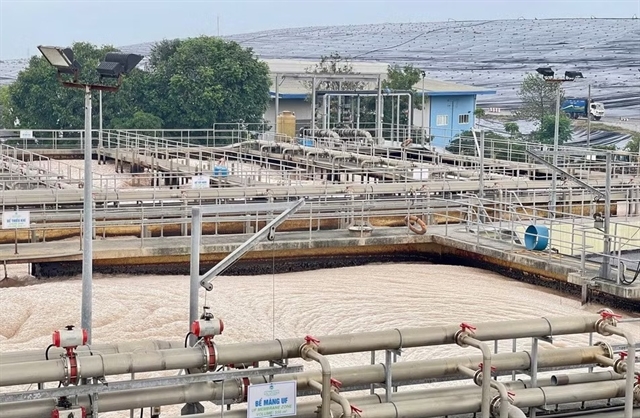
| Inspecting the wastewater discharge index at the automatic environmental monitoring station in the centralised treatment area at Thành Thành Công Industrial Park JSC. VNA/VNS Photo |
HÀ NỘI — The Ministry of Agriculture and Environment has ordered all provinces and centrally run cities to urgently review automated wastewater and emissions monitoring systems following reports that enterprises have been tampering with data.
In its dispatch, the ministry required local Departments of Agriculture and Environment to verify the accuracy of monitoring equipment using certified reference materials, and to select high-risk facilities for independent comparative assessments in accordance with Circular No. 10/2021/TT-BTNMT.
Where deviations exceed prescribed thresholds, data recognition must be suspended and full system calibration carried out.
Any changes to conversion coefficients installed on equipment must be reported to local authorities.
Departments were also told to inspect operation logs to distinguish between legitimate technical calibration, such as compensating for zero/span drift, and the deliberate manipulation of coefficients to falsify readings.
The ministry set out further requirements including tighter control over administrative access to data logger systems, enhanced security and surveillance at monitoring stations, and on-site inspections of discharge pipes and sample conduits to detect acts such as sample dilution, bypass systems or illegal underground piping.
In-depth equipment inspections may also be ordered at certain facilities to make sure that sensor probes and analytical instruments have not been interfered with, including the pumping of inert gases into analysis chambers.
Where deliberate fraud is detected, case files must be referred to police if there are signs of criminal conduct.
The dispatch follows the recent indictment of 74 suspects on 10 charges related to environmental monitoring irregularities across multiple localities.
Nguyễn Xuân Hải, Deputy Director of the Department of Environment, said the case had exposed shortcomings in oversight and post-inspection checks that had not kept pace with the rapid expansion of automated monitoring systems.
He stressed, however, that the issue was one of implementation rather than a gap in the law. Under the 2020 Law on Environmental Protection, enterprises bear direct responsibility for the accuracy and integrity of monitoring data, while state agencies are responsible for supervision and inspection.
"The tampering with and falsification of monitoring data is a violation of the law and is first and foremost the responsibility of the organisation operating the system," Hải said. — VNS
Environment
 Environment
 Environment
 Environment
 Environment
 Environment
 Environment
 Environment
 Environment
 Environment
 Environment
 Environment
 Environment
.jpg) Environment
Environment
 Environment