 Environment

Việt Nam, Russia step up cooperation in criminal sentence enforcement
1.
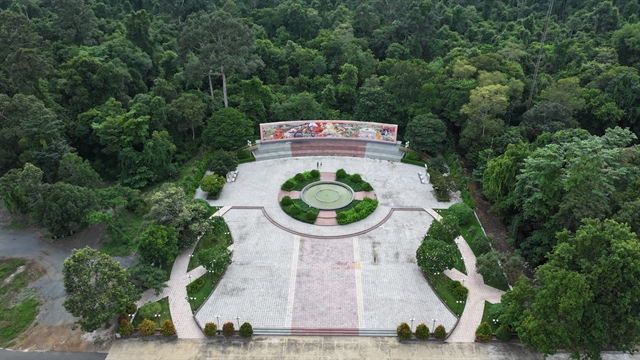 |
| Central Office for South Việt Nam, a special national historical site, is located within the Lò Gò-Xa Mát National Park. — VNA/VNS Photos Minh Phú |
TÂY NINH — On Việt Nam’s southwestern frontier, the forests of Lò Gò-Xa Mát National Park have borne witness to both conflict and recovery, evolving from a wartime stronghold into one of the country’s key conservation landscapes.
Once a revolutionary base and strategic corridor during the struggle for national independence, the area was heavily damaged by bombing and chemical defoliants. By 1985, forest cover had fallen to just 24.3 per cent, leaving vast tracts of degraded land and disrupted ecosystems.
That legacy is now steadily being reversed.
Spanning nearly 30,000 hectares along the Việt Nam-Cambodia border, Lò Gò-Xa Mát National Park is today recognised as one of southern Việt Nam’s most significant biodiversity hotspots. Its gradual restoration has been driven by conservation programmes, State investment and the long-term commitment of soldiers, forest rangers and local communities who have lived and worked along this frontier for generations.
Central to that effort is the Xa Mát border outpost, which has maintained its presence in the area for more than half a century.
Established in January 1973, Xa Mát Border Guard Station was among the first two border guard posts set up by revolutionary forces in southern Việt Nam.
In its early years, officers and soldiers operated deep within the forest, securing the outer defensive ring of the Central Office for South Việt Nam while also supporting local communities as they rebuilt amid the hardships of war.
"What began as a mission to defend a revolutionary base has evolved into a broader responsibility of protecting the border, supporting local communities and preserving the environment," said Senior Colonel Dương Văn Dược, Political Commissar of the Tây Ninh Border Guard Command.
While the nature of the mission has changed over time, the sense of duty and continuity on the frontier remains firmly intact.
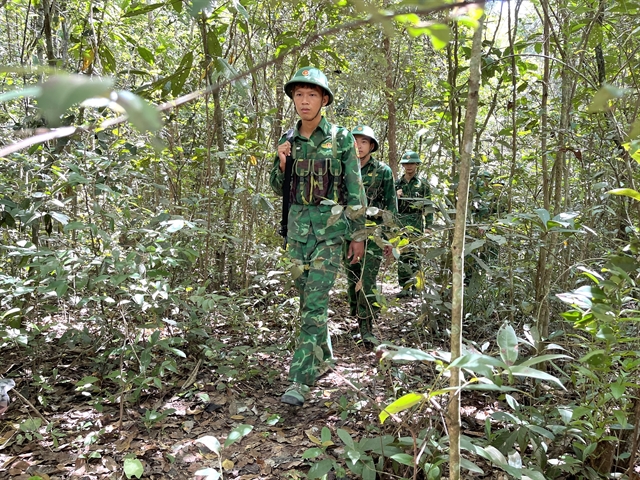 |
| Border guards patrol a forest. |
Deep within Lò Gò-Xa Mát National Park, soldiers stationed at Tân Nam International Border Gate patrol more than 25 kilometres of the Việt Nam-Cambodia frontier. During the rainy season, flooded tracks and dense vegetation often make access to border markers difficult, yet patrols continue daily without interruption.
Lieutenant Dương Minh Trí, head of the station’s administrative and planning team, has spent more than two years serving in the area.
"My colleagues and I regularly patrol the border and inspect the marker system," he said. "Some locations become flooded during the rainy season and can only be reached by wading or swimming through the water. The conditions are challenging, but we always try to complete our assigned tasks."
As well as maintaining territorial security and preventing illegal crossings, border guards are also tasked with protecting the surrounding forest. Working in coordination with forest protection forces, they monitor remote trails, deter illegal logging and help safeguard wildlife habitats.
Further north, at Lò Gò Border Guard Station, soldiers patrol another section of the frontier running along the Vàm Cỏ Đông River. A mix of forest paths, farmland and informal crossing points creates a complex operational environment.
"There are days when we spend hours walking through the forest looking for unusual signs," said soldier Lê Hoàng Giang. "At night, we continue patrols in key locations to detect illegal border crossings or the transport of prohibited goods."
For personnel stationed along this frontier, border security and community support have long been closely connected.
Over the years, border guard units have provided scholarships, bicycles and health insurance cards to disadvantaged children while assisting local authorities in repairing roads and building homes for vulnerable families.
Lieutenant Colonel Nguyễn Văn Vương, political commissar of Lò Gò Border Guard Station, said community development is an essential pillar of border security.
"When people's living standards improve and their understanding of the law increases, the all-people border defence system becomes stronger as well," he said.
The same sense of duty extends to those working to restore and protect the forest itself.
Trần Anh Tuấn, a resident of Tân Biên Commune, has spent more than three decades involved in reforestation efforts on land once damaged by war. He first joined national tree-planting programmes in the early 1990s and has remained closely tied to the forest ever since.
What began as a source of supplementary income gradually evolved into a long-term commitment.
"This work helps create more green space, protects wildlife and the environment, and also provides income for my family," Tuấn said. "The longer I stay with the forest, the more I want to protect it."
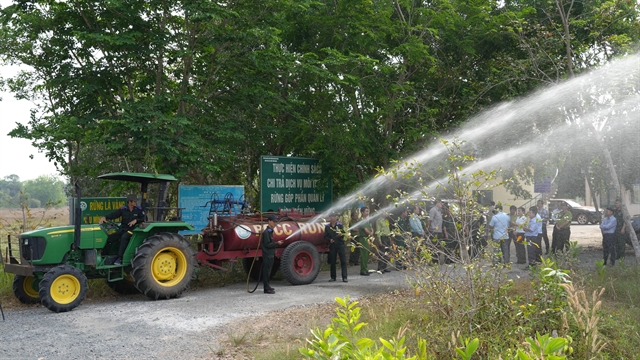 |
| Forest fire prevention and control drill for the forest protection forces. |
Like many households involved in reforestation programmes, Tuấn not only plants trees but also takes part in preventing forest fires and supporting conservation activities.
According to Nguyễn Thanh Xuân, an officer with the park’s Department of Conservation Science and International Cooperation, local communities remain the most important partners in protecting the forest.
"People living near the forest are the most important force in conservation," he said. "If they understand the value of the forest, protection efforts become much more effective."
These combined efforts have contributed to a notable ecological recovery.
According to Nguyễn Minh Cường, deputy director of Lò Gò-Xa Mát National Park, large-scale deforestation has largely been brought under control and ecosystems have gradually recovered, with an increasing number of rare and endangered species returning to the park.
However, safeguarding the forest has become increasingly complex.
Climate change has heightened the risk of wildfires, while pressure on natural resources continues to intensify. In response, the park has begun integrating technology into its conservation work.
This year, an AI-powered camera system capable of detecting smoke and fire was brought into operation. Drones and forest-monitoring software are also being deployed to identify potential threats more quickly.
"If additional equipment and technology can be invested, patrols and the detection of violations will become much faster and more effective," Cường said.
Trần Thị Ngân Hà, director of Tây Ninh Province’s Forest Protection Sub-Department, said the adoption of new technologies alongside stronger inter-agency cooperation has helped significantly reduce forestry violations over the past decade.
But technology alone is not enough.
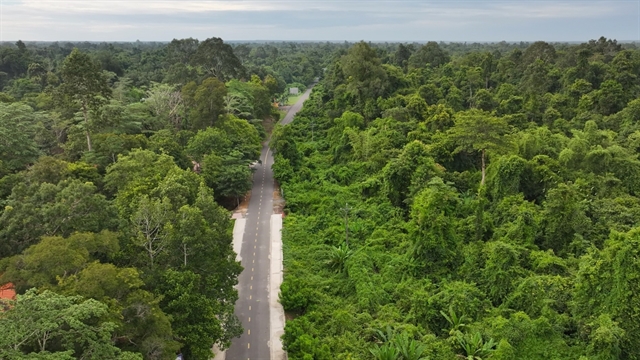 |
| The road through the Lò Gò-Xa Mát forest. |
Across the frontier, much of the work still relies on people willing to spend long days patrolling forest trails, monitoring border markers and responding to emergencies far from towns and villages.
Many work in remote conditions for modest salaries, yet few speak of leaving.
For them, protecting the forest is about more than conservation. It is about preserving a landscape shaped by history and ensuring that future generations inherit what earlier generations fought to defend.
Designated an ASEAN Heritage Park in 2019, Lò Gò-Xa Mát National Park has become a symbol of recovery on Việt Nam’s southwestern frontier.
Its forests have regenerated, wildlife has returned and communities have taken root where war once brought devastation. Behind that transformation stand generations of border guards, forest rangers and local residents whose quiet dedication continues to shape the future of this borderland. — VNS
Environment
 Environment
 Environment
 Environment
 Environment
 Environment
 Environment
 Environment
 Environment
 Environment
 Environment
 Environment
 Environment
.jfif) Environment
Environment
 Environment