 Environment

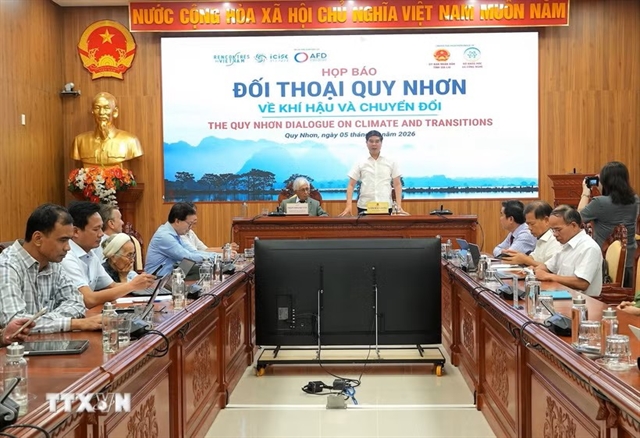
Quy Nhơn Dialogue on Climate and Transition to provide platform for open discussion
1.
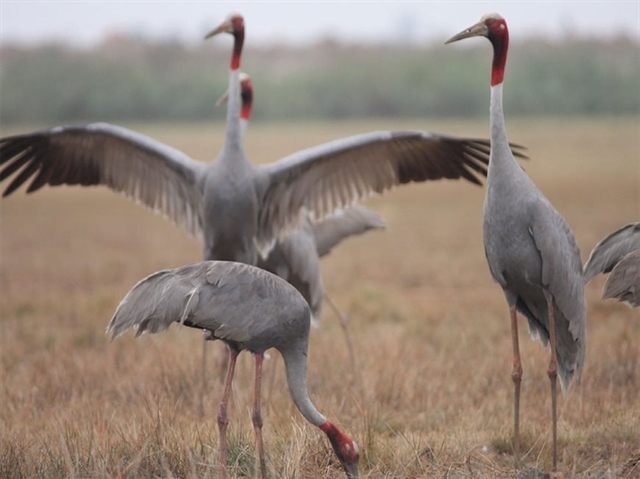 |
| Red-crowned cranes in Tràm Chim National Park. — Photo moitruong.net |
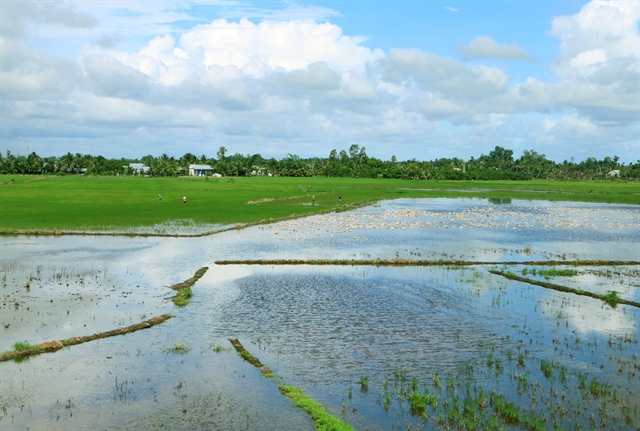
ĐỒNG THÁP — Tràm Chim National Park, a quintessential wetland in Đồng Tháp Province, is witnessing a spectacular return of nature.
A place that once puzzled many with the question 'Where have the birds gone?' has now seen the return of flocks of thousands of birds, covering the flooded fields. Many characteristic plant species have also reappeared after years of absence.
Pelicans and cranes
Tràm Chim was once home to over 230 species of water birds, including the red-crowned crane – a rare species named on the World Red List.
In 2012, the park was recognised as Việt Nam's fourth and the world's 2,000th Ramsar site, or a wetland area designated to be of international importance under the Ramsar Convention environmental treaty.
However, the park has undergone a period of severe degradation. Hydrological fluctuations, along with forest fires and human impacts, have severely damaged the ecosystem.
Many areas experienced prolonged droughts. The grasslands – an important food source for the red-crowned crane – shrank. As a result, bird species, especially the red-crowned crane, gradually disappeared. At one point, Tràm Chim almost lost its characteristic image as a kingdom of water birds.
To save the park and the species that call it home, in 2022 the World Wildlife Fund (WWF) carried out a project to restore the seasonal wetland ecosystems, improving livelihoods for local residents and raising community awareness of nature conservation.
From the beginning, experts defined the key issue as water level regulation. So, the WWF coordinated with Cần Thơ University to develop a water management strategy, adapting to new conditions.
The initial pilot project was implemented on an area of approximately 40ha in the park's zone A4. After only one year, 12ha of the Năng Kim grassland and characteristic plant species, such as Hoàng Đầu Ấn, a type of wild herb, were successfully restored. This initial result provided the impetus to expand the model.
By this March, the restored area had reached over 1,000ha in zones A4, A1 and A5. The seasonal wetland ecosystem was gradually reconstructed through various technical means, with focus remaining on regulating water in a way that is in harmony with nature.
After four years, flocks of thousands of birds have flown back, covering the wetland fields.
Flocks of red-crowned cranes were first seen returning in 2024, after two years of absence. And in March this year, a flock of six grey-footed pelicans – known among biologists as a rare and very 'picky' bird species, only choosing spots with sufficient forest, grasslands, fields, ponds and food sources – came back after six years.
According to WWF experts, this return is not only a positive sign for biodiversity, but also proof of the effectiveness of habitat restoration solutions.
Plant species characteristic of the wetland ecosystem are also gradually reappearing.
After a seven-year absence, at the end of 2025, the purple-stemmed trumpet vine – a native species of Tràm Chim – reappeared and bloomed brilliantly. This unique pinkish-purple flower used to be abundant in the park's wetlands brings a vibrant beauty to the area.
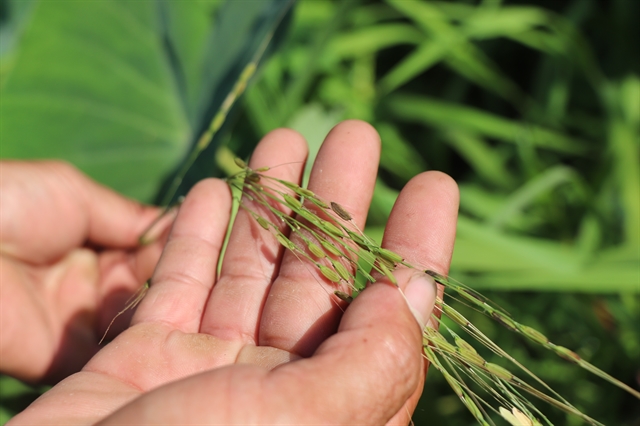
The reappearance of other species, such as Năng kim (spike rush), Lúa ma (a type of wild rice) and Nhĩ cán vàng (golden bladderwort), has gradually confirmed that conservation efforts to restore the habitat are taking the right approach.
These are silent changes, but their significance is unparalleled, because they create a sustainable living environment for the park's many animal species.
Restoration and natural harmony
One of the most important facets of reviving Tràm Chim is the restoration of locals' livelihoods alongside the natural habitat.
In the buffer zone around the park, nature-friendly farming models that restore and maintain floodplains to replace the resource-intensive three-crop rice cultivation have been put into use.
Local residents have taken a variety of approaches.
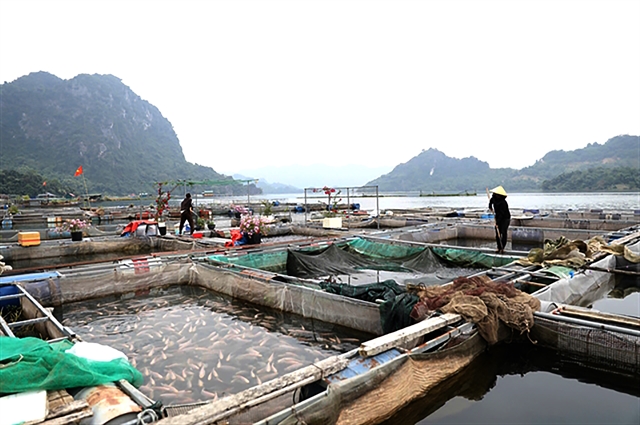
Small-scale farmers release additional snakehead and tilapia fish, supplementing their feed for two months before introducing them into the flooded fields.
The Quyết Tiến Cooperative in Phú Thọ Commune releases carp, supplementing feed in the initial stage, combined with natural fish storage and community-based ecotourism.
Through training and communication, hundreds of farmers have learned about the benefits of these nature-friendly models, enhancing their awareness of environmental protection and wildlife conservation, especially of bird species.
New fish storage models not only help increase water circulation and retain silt, but they also bring sustainable profits to local residents.
Thousands of students have also visited Tràm Chim and taken part in education programmes on nature conservation.
From a once-forgotten land, Tràm Chim has today returned to its rightful value – a kingdom of water birds in the heart of the province's Plain of Reeds region. — VNS
Environment
 Environment
 Environment
 Environment
 Environment
 Environment
 Environment
 Environment
 Environment
 Environment
 Environment
 Environment
 Environment
 Environment
 Environment