 Environment

Việt Nam, Russia step up cooperation in criminal sentence enforcement
1.
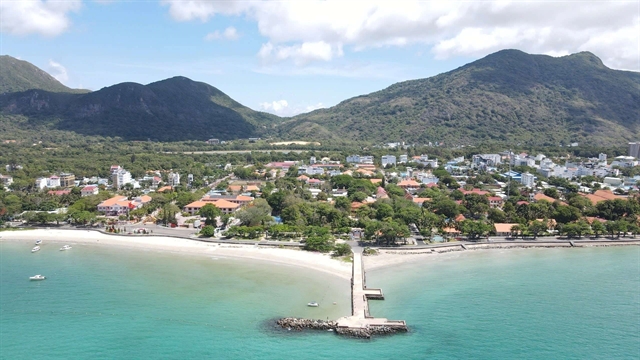 |
| Côn Đảo Island boasts a rich forest and marine ecosystem. Developing a carbon credit sales model based on forest and marine resources in Côn Đảo contributes to fulfilling the national commitment to reducing greenhouse gas emissions. — VNA/VNS Photo |
HÀ NỘI — The global carbon market is undergoing a significant shift from prioritising volume to emphasising the quality of carbon credits, which is widely expected to create new opportunities for Việt Nam in developing forest carbon credits.
Dr Nguyễn Sỹ Linh, head of the Climate Change Division at the Institute of Strategy and Policy on Agriculture and Environment under the Ministry of Agriculture and Environment, made the statement at a webinar on carbon pricing trends and their implications for Việt Nam’s forest carbon credits.
The online event was organised by the Forestry and Agriculture Policy Research Network and was held on June 2.
According to Linh, the World Bank’s State and Trends of Carbon Pricing 2026 report shows that the global carbon market has expanded significantly over the past decade.
In 2015, only 58 countries and territories had made use of compliance carbon pricing instruments. That number has now increased to 87. The number of emissions trading systems (ETS) worldwide has risen from 19 to 40, while carbon crediting mechanisms have increased from 21 to 47.
Carbon pricing instruments now cover 29 per cent of global greenhouse gas emissions. Total revenue generated from these instruments reached an estimated US$107 billion in 2025, up 2 per cent from the previous year, underscoring the growing role of carbon markets in supporting the transition to a low-carbon economy.
Việt Nam’s ETS was recognised by the World Bank for the first time in its 2026 report. Under the current roadmap, the country plans to pilot its ETS starting with around 110 major firms in the thermal power, steel and cement industries.
Linh said this recognition marks Việt Nam’s formal entry into the global carbon market and the increasing number of carbon pricing mechanisms worldwide.
Also in the report, the World Bank noted that the global carbon market is entering a new stage of development, with focus shifting away from increasing the volume of credits issued and toward enhancing credit quality and environmental integrity.
A clear example of this shift is the growing share of credits generated from forestry and land-use activities, which now account for about 36 per cent of the market. Meanwhile, credits from renewable energy projects have declined by around 38 per cent from previous periods.
This trend reflects increasing demand for high-quality carbon credits, particularly those generated through nature-based solutions.
Current carbon credit rating systems also reveal substantial differences in value among credit categories. Credits rated BBB or higher can command prices of around $30 per credit. By contrast, lower-quality credits average about $8.70 each, while unrated credits typically trade at approximately $6.30 apiece.
Research by BeZero Carbon indicates that high-quality afforestation and reforestation credits can be traded at prices up to 87 per cent higher than similar projects with lower quality ratings. This demonstrates that quality is becoming the key determinant of carbon credit value in the global marketplace.
Three major trends are identified in the World Bank report and are expected to shape the carbon market in the next few years.
The first trend is a shift from trading already-issued credits toward investing in future carbon credit generation. Offtake agreements have expanded significantly, with the volume of pre-purchased credits reaching three times the level recorded in previous reports.
Nature-based projects account for about 19 per cent of the total volume traded under such arrangements. This trend enables carbon projects to secure financing at an earlier stage, while allowing buyers to lock in future supplies of high-quality credits.
Another trend is narrowing the gap between compliance and voluntary carbon markets. Both markets are increasingly competing for high-quality credits, making eligible credits scarcer and more valuable.
Finally, the third trend is growing investor interest in the co-benefits delivered by carbon projects. Beyond emissions reductions or carbon removals, projects are increasingly assessed based on their contributions to biodiversity conservation, community livelihoods and sustainable development.
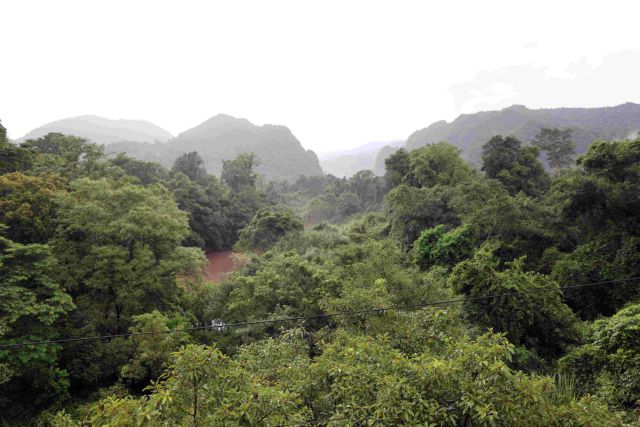 |
| Primeval forests along the Trường Sơn ecological corridor from Phong Nha-Kẻ Bàng National Park to Bạch Mã National Park. Việt Nam’s emissions trading system was recognised by the World Bank for the first time in its 2026 report. — VNA/VNS Photo |
According to Linh, these trends offer important directions for Việt Nam.
Although the carbon market is taking shape, demand will not emerge automatically, requiring project developers to proactively prepare. Quality will also be the primary factor determining the future value of carbon credits.
Meanwhile, the market is shifting from credit trading to investment in credit-generating projects, with greater attention to carbon rights, land-use rights, benefit-sharing mechanisms and project governance transparency.
As Việt Nam continues to finalise its regulatory framework and plans to fully operationalise its carbon market by 2029, these trends are expected to serve as important references for policymakers, businesses and project developers in formulating market participation strategies, particularly in the forest carbon credit sector.
The Ministry of Agriculture and Environment expects to submit applications for the issuance of forest carbon credits covering the 2023–25 period in the third quarter of 2026. — VNS
Environment
 Environment
 Environment
 Environment
 Environment
 Environment
 Environment
 Environment
 Environment
 Environment
 Environment
 Environment
 Environment
 Environment
.jfif) Environment
Environment