 Economy



Việt Nam News reporters win global journalism prize about child drowning
1.
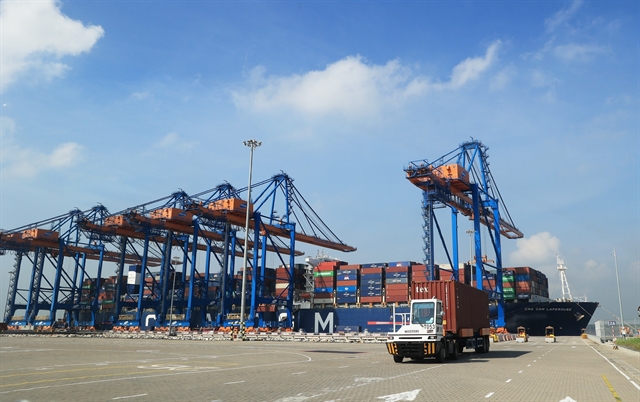 |
| Cái Mép Terminal in HCM City. Việt Nam’s logistics sector is undergoing a major transformation as companies respond to growing international demands for greener and more sustainable supply chains. — VNA/VNS Photo Hồng Đạt |
HÀ NỘI —As global supply chains race towards greener and smarter operations, Việt Nam’s logistics sector is being pushed into one of the most significant transformations in its history, driven by mounting pressure for lower emissions, carbon transparency and sustainable trade.
From replacing diesel fleets with LNG and electric vehicles to investing in energy-efficient warehouses and artificial intelligence (AI)-powered supply chain systems, companies are finding that green logistics is no longer a corporate slogan but a requirement for staying competitive in global trade networks.
Industry experts said that the shift was increasingly tied to survival.
“Green transition is now a mandatory requirement rather than a recommendation,” said Trần Ngọc Khánh, general director of OPL Logistics.
However, progress remains constrained by infrastructure gaps and unclear planning, according to Khánh.
Although Việt Nam has announced plans for logistics centres linked to seaports, inland container depots and international rail corridors, businesses still lack detailed frameworks identifying how companies can qualify to participate as pioneer investors.
It is necessary to develop a complete planning mechanism with transparent information and clear priority criteria for Vietnamese firms.
“That is an important factor that enables domestic enterprises to compete with foreign companies that are investing aggressively in logistics infrastructure in Việt Nam," Khánh said.
"Financing is another major obstacle as companies still face difficulties in accessing green finance. A clearer set of standards and eligibility criteria is needed to accelerate lending and investment."
Meanwhile, digitalisation demands are escalating rapidly.
Logistics management is evolving beyond basic information exchange toward AI-enabled real-time supply chain coordination, which will require shared data platforms and standardised digital systems capable of linking businesses, ports and customs authorities more efficiently.
According to Nguyễn Lê Hằng, external affairs director at SLP Vietnam, modern green logistics can strengthen competitiveness through cost savings, speed and adaptability.
The Government has identified reducing logistics costs as a pressing issue to enhance national competitiveness. Logistics costs in Việt Nam remained relatively high, estimated at roughly 13-15 per cent of GDP, significantly above those of developed economies.
Investment in green logistics infrastructure combined with technology can optimise transportation, improve data use and streamline labour management to help businesses cut operational expenses while boosting productivity.
Speed has also become equally critical.
Global disruptions, from energy crises to shifting trade barriers, are rewarding companies capable of responding rapidly to changing conditions. Businesses adopting advanced logistics technologies are better positioned to forecast market volatility and maintain supply chain continuity.
Adaptability, meanwhile, has become essential as multinational investors increasingly scrutinise environmental compliance across their supplier ecosystems.
Hằng pointed out that international partners were now asking detailed questions about green certifications, renewable energy use, rooftop solar systems, waste management transparency and emissions reporting.
"Companies capable of meeting those standards are likely to gain easier access to major customers and attract investment," she said.
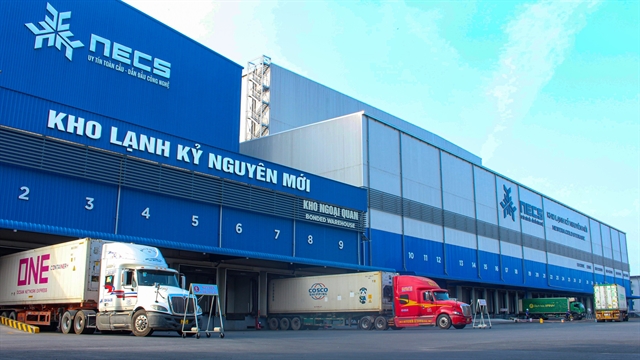 |
| A cold-storage warehouse in Tây Ninh Province. Logistics is increasingly being viewed as a strategic pillar of economic competitiveness rather than merely a support service. — VNA/VNS Photo Minh Phú |
Strategic shift
Shifts in global trade and supply chains are also forcing Việt Nam to rethink its logistics development policies.
Logistics is being reframed as a strategic pillar of economic competitiveness rather than merely a support service, according to Bùi Bá Nghiêm from the Ministry of Industry and Trade’s Agency of Foreign Trade.
The logistics development strategy for 2025-35 envisions annual sector growth of 12-15 per cent while reducing logistics costs to around 12-15 per cent of GDP.
The strategy also targets outsourcing rates of 70-80 per cent for logistics services, digital adoption among at least 80 per cent of logistics firms and the development of five internationally competitive logistics centres.
With its geographic position along major maritime and aviation routes, combined with one of the world’s broadest networks of free trade agreements, Việt Nam has significant opportunities to evolve from a transit point into a regional supply chain coordination hub.
But achieving that ambition will require simultaneous reforms in infrastructure, regulation and administrative procedures.
Nghiêm said that policy support should focus on three priorities, including meaningful digital transformation, green transition and stronger international integration.
That includes encouraging the adoption of AI, IoT, cloud computing, blockchain and digital transport management systems while also promoting low-emissions transport, multimodal logistics and emissions tracking systems aligned with global ESG and carbon border adjustment standards.
“The message to businesses is clear,” Nghiêm said. “Digital and green transformation are not merely compliance costs. They are passports to participate in higher-value global supply chains.”
Việt Nam also needs to strengthen the international connectivity of its logistics companies, including through service standardisation, workforce development and closer links with shipping lines, seaports, foreign-invested manufacturers, exporters, e-commerce platforms and regional logistics networks.
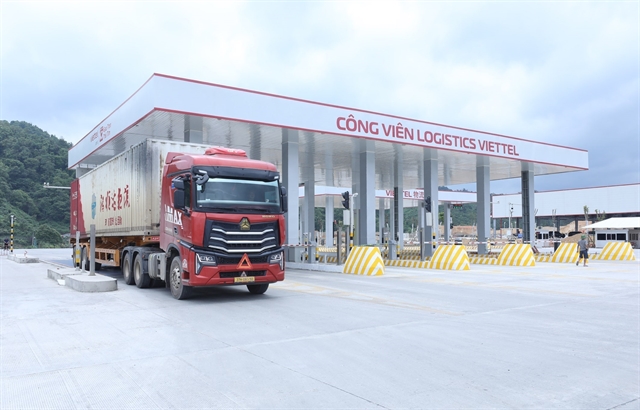 |
| Viettel Logistics Park in Lạng Sơn Province. Việt Nam must address bottlenecks in infrastructure, regulation and supply-chain connectivity to accelerate the development of green and smart logistics while strengthening regional integration. — VNA/VNS Photo Anh Tuấn |
Integrated network
According to Bùi Nguyễn Anh Tuấn, deputy director of the Domestic Markets Department under the Ministry of Industry and Trade, Việt Nam must remove bottlenecks in infrastructure, regulation and supply chain connectivity to accelerate the development of green and smart logistics while strengthening regional integration.
It is necessary to move beyond isolated logistics projects towards an integrated national logistics ecosystem in which logistics centres are planned alongside industrial zones, seaports, railways, expressways and urban development corridors.
Equally important is the development of soft infrastructure, which includes digital standards, data-sharing systems, warehouse management platforms, electronic payments and customs connectivity.
The ministry is currently reviewing the logistics regulatory framework, including possible amendments to Decree 163 issued by the Government in 2017 governing logistics services.
A draft circular on criteria for classifying logistics centres is also being developed to provide businesses with clearer standards for investment decisions and to facilitate regional coordination.
Tuấn added that stronger regional coordination would also be necessary to avoid wasteful duplication of large-scale logistics projects across provinces.
“Not every province needs a large logistics centre,” he said. “What matters is that each region develops an efficient logistics network in which every locality plays a role suited to its strengths.”
As global supply chains continue shifting towards greener, smarter and more resilient models, Việt Nam’s ability to modernise its logistics ecosystem may increasingly determine not only its trade competitiveness, but also its position within the next generation of regional and global supply chains.— VNS
Economy
 Economy
 Economy
 Economy
 Economy
 Economy
 Economy
 Economy
 Economy
 Economy
 Economy
 Economy
 Economy
 Economy
 Economy