 Life & Style
SBV to curb property price inflation, enforce lending rate rules
1.
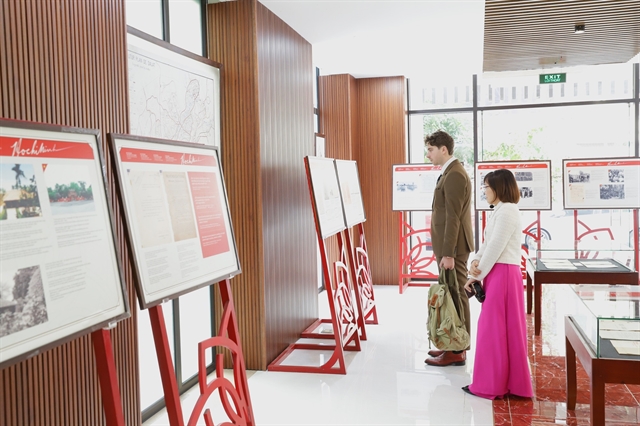 |
| Visitors get a preview of 'The Introduction Space of Việt Nam World Documentary Heritages and Outstanding Archives' which will open for public in March. — Photos moha.gov.vn |
HÀ NỘI — Việt Nam’s rare and valuable documents and archives are stepping into the public eye in a new exhibition in Hà Nội, bringing treasured materials closer to visitors and shedding light on the nation’s documentary heritage.
The event, titled The Introduction Space of Việt Nam World Documentary Heritages and Outstanding Archives, is organised by the State Records and Archives Administration of Việt Nam. It aims to serve public needs and spread historical and cultural values from original archival documents.
The administration currently manages two of Việt Nam’s UNESCO World Documentary Heritage sites, the Nguyễn Dynasty Woodblocks and the Nguyễn Dynasty Imperial Archives.
According to the organisers, the exhibition was launched after thorough preparation in line with the Communist Party and State’s policies and guidelines on safeguarding and promoting the value of national archival documents.
At the same time, it aligns with international practice, under which national archives serve as authoritative sources for showcasing the most valuable and representative documents of each country.
“In line with the spirit of Resolution 57 adopted by the party on the development of science, technology, innovation and national digital transformation, we have determined that digital transformation in archives is a change in how information is provided and how the public accesses and uses archival documents,” said Đặng Thanh Tùng, director of the State Records and Archives Administration of Việt Nam.
“This space is a hub of our strategy for digital transformation and social service in the new era.”
The exhibition is designed in a modern and scientific manner, with three main content areas.
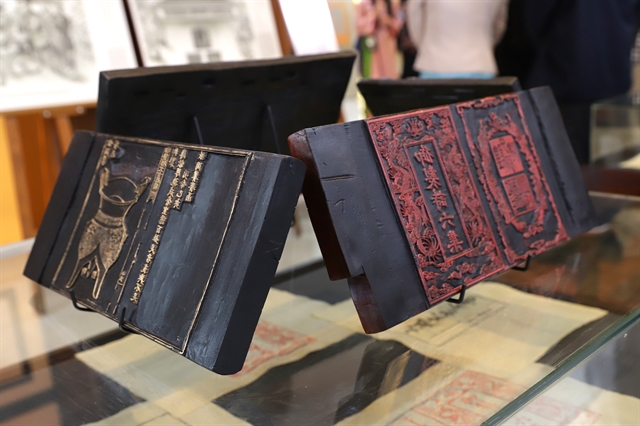 |
| Some valuable woodblocks which belonged to the Việt Nam's World Documentary Heritages displayed at the exhibition. |
At the centre is the media space, where archived documents are transformed into digital data, media products and a range of multimedia experiences.
The area dedicated to Việt Nam’s World Documentary Heritages and Outstanding Archives allows the public to access, search and interact directly with original documents.
The final section, focusing on the history of Việt Nam’s archives, is designed to honour the journey of the archival profession’s formation and development and the generations of staff who have quietly preserved the nation’s records.
The exhibition is also described as a "visual history classroom" and thematic activity space, supporting extracurricular activities and experiential education for students. It will also serve as a research destination for scientists and international visitors.
On this occasion, a number of typical original archival documents relating to the national flag, national anthem, national emblem and constitution have been selected for display, helping to vividly portray the nation’s sacred symbols and embodying the Vietnamese people’s will for independence and freedom.
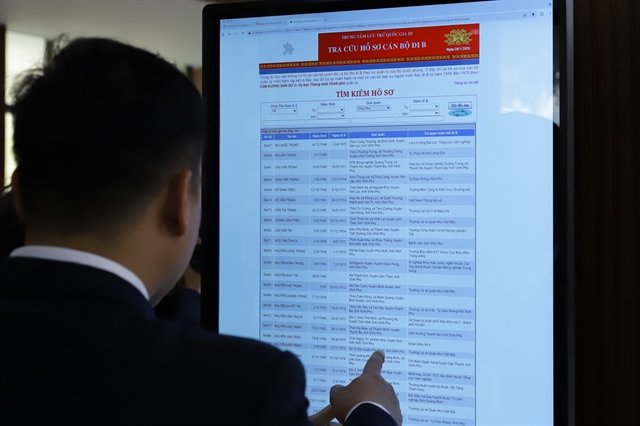 |
| Visitors can search information about documents and objects at the space. |
Many other exhibitions and workshops introducing historical documents related to major political and historical events and the general education curriculum will be organised in the coming months.
Among them is an exhibition on the Lunar New Year in the Imperial Palace through Nguyễn dynasty documents and woodblock prints, combined with experiential activities such as woodblock printing on poonah paper and calligraphy as New Year gifts.
These activities will feature original archival sources, especially woodblock prints, the Nguyễn dynasty’s imperial archives and other representative document collections, helping the public, particularly the younger generation, not only to learn history but also to understand it through original evidence.
The exhibition is open free to visitors from 9 am to 4 pm daily from March 3 at 12 Đào Tấn Street, Giảng Võ Ward. — VNS
Life & Style
 Life & Style
 Life & Style
 Life & Style
 Life & Style
 Life & Style
 Life & Style
 Life & Style
 Life & Style
 Life & Style
 Life & Style
 Life & Style
 Life & Style
 Life & Style
 Life & Style