 Travel

Sovico and Hamburg Forge Partnership to Expand Vietnam-Germany Economic Ties
1.
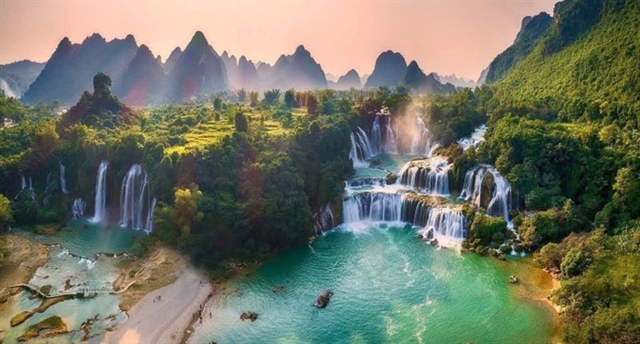 |
| Bản Giốc Waterfall is a world-famous landscape, the most important destination of the Non nước Cao Bằng UNESCO Global Geopark tourist route. — VNA/VNS Photo |
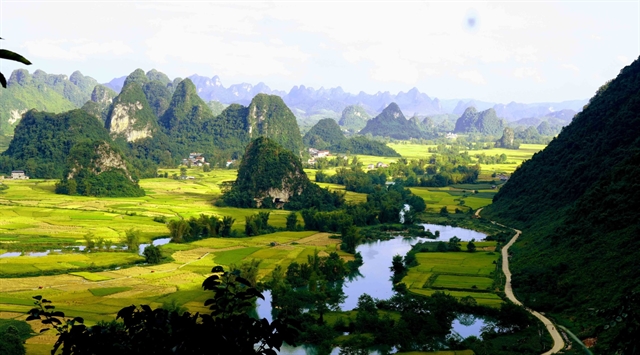
CAO BẰNG — Cao Bằng has seen a rapid increase in tourism in recent years, largely attributed to its inclusion in the UNESCO Global Geopark Network in 2018.
This membership has opened new avenues for heritage exploration, emphasising community involvement and the integration of cultural values, and has helped promote Cao Bằng’s image on both domestic and international tourism maps.
In 2016, Cao Bằng received approximately 650,000 visitors. By 2025, this number is expected to exceed 2.45 million – a quadruple increase. During the period from 2021 to 2025, the province anticipates welcoming around 7.8 million visitors, reflecting a year-on-year growth of over 53 per cent. Total tourism revenue is projected to reach about VNĐ5.5 trillion (US$214.8 million), more than tripling the previous figures.
Visitors choose Cao Bằng for its natural beauty and indigenous culture, leaving with lasting impressions. Astrid Empacher, a tourist from Denmark, shared her thoughts after visiting Bản Giốc waterfall and Ngườm Ngao cave, saying that Cao Bằng gave her a very special feeling – pristine nature, friendly people, and a vibrant culture.
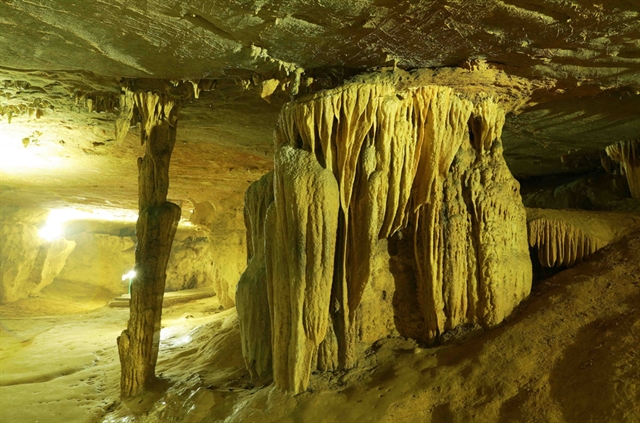 |
| Ngườm Ngao Cave in Cao Bằng boasts numerous stalactites and stalagmites in a wide variety of shapes, making it one of the most famous and beautiful caves in Việt Nam. — VNA/VNS Photo |
Đinh Tuấn Gia, a visitor from HCM City, expressed his feelings after exploring the Pác Bó Special National Relic Area in Trường Hà Commune.
"In HCM City, I've heard a lot about Pác Bó, where late President Hồ Chí Minh returned after thirty years in exile," Gia said.
"The majestic scenery, the mountains, and forests, along with stories about Uncle Hồ, made me realise how beautiful my country is."
Quảng Uyên Commune serves as the experiential hub of Non nước Cao Bằng UNESCO Global Geopark, offering numerous opportunities for tourists to explore culture and engage with local craft villages.
Mạc Thị Khon, who operates a homestay in Khuổi Ky stone village, said: "Previously, stone houses were only for living; no one thought to welcome guests.
"Since joining the geopark, we've received training in community tourism. My family renovated our house to cater to tourists, which has attracted thousands of visitors each year. While our income has improved, we still retain our unique cultural identity."
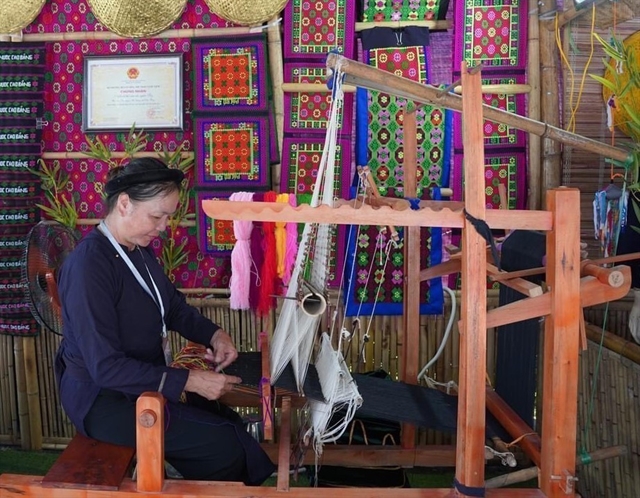 |
| Many households in Cao Bằng have restored brocade weaving to serve tourists visiting the Non nước Cao Bằng UNESCO Global Geopark. — VNA/VNS Photo |
New livelihoods from heritage
The Non nước Cao Bằng UNESCO Global Geopark has enabled highland villagers, such as those in Phia Thắp, Hoài Khao, and Luống Nọi, to find new livelihoods rooted in their heritage.
Supported by a network of 58 partners, the geopark plays a crucial role in preserving craft traditions, improving livelihoods and fostering sustainable tourism. This development has benefited thousands of local workers, particularly among ethnic minority groups, providing them with stable jobs and income.
Hoàng Thị Huệ, deputy director of the Management Board of Non nước Cao Bằng UNESCO Global Geopark, emphasised that the journey to establish the geopark is a testament to the respect for heritage and focus on community well-being.
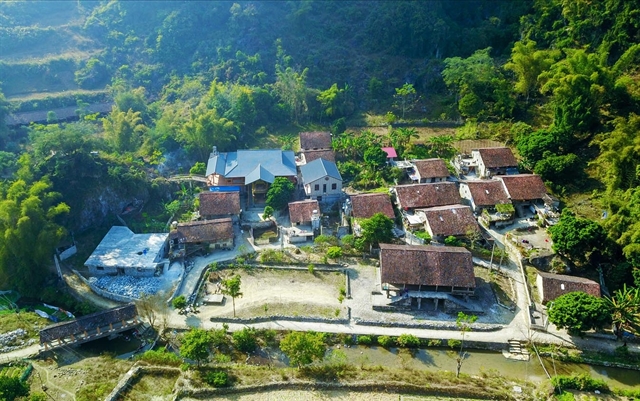 |
| A panoramic view of Khuổi Ky stone village from above. — Photo dantocphattrien.vietnamnet.vn |
Currently, 36 out of 56 communes and wards are part of the Non nước Cao Bằng UNESCO Global Geopark. By 2026, the province aims to retain its global geopark status while ensuring that the geopark genuinely benefits the people and future generations.
The province will continue to enhance and promote its value based on UNESCO criteria, preparing for re-evaluation periods, and expanding international co-operation with geoparks worldwide. This commitment aims to embed sustainable development into everyday life, ensuring that cultural preservation and the protection of the region’s natural beauty remain integral to local life.
Spanning over 3,683sq.km, Non nước Cao Bằng UNESCO Global Geopark showcases the breathtaking beauty of the mountainous region. It features four experience routes, including the Northern route, 'Journey to the Roots', and the Western route, 'Exploring Phja Oắc – The Mountain of Changes'.
The province is also developing a fifth tourist route that will connect the Non nước Cao Bằng UNESCO Global Geopark with the Đồng Văn Karst Plateau Geopark in Tuyên Quang Province, creating a unique experience that links two of the world's first global geoparks. — VNS
Travel
 Travel
 Travel
 Travel
 Travel
 Travel
 Travel
 Travel
 Travel
 Travel
 Travel
 Travel
 Travel
 Travel
 Travel




