 Travel

Sun PhuQuoc Airways expands Russian partner network ahead of Moscow route launch
1.
|
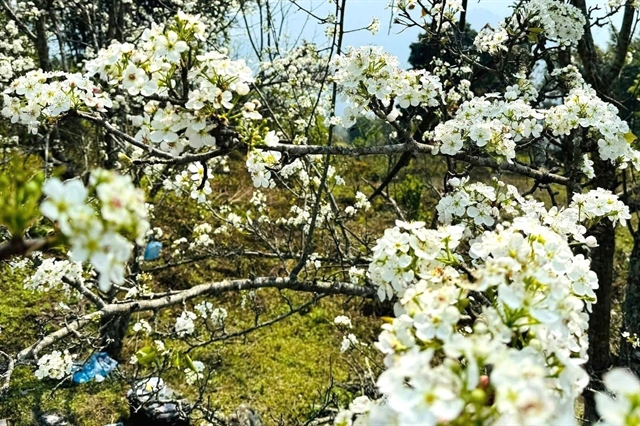
| The pristine pear blossoms, glistening in the spring sunshine, are a unique highlight that makes the Hồng Thái Pear Blossom Festival so captivating. — VNA/VNS Photo |
By Thanh Nga
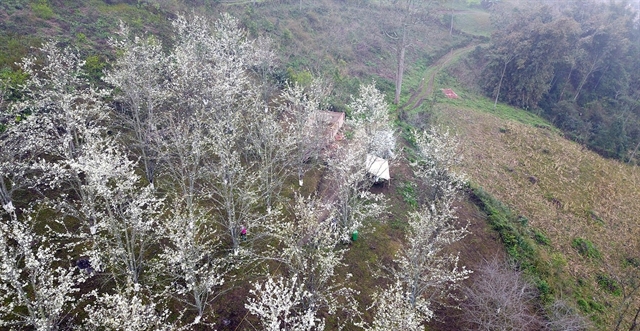
Every spring, Hồng Thái Commune in Tuyên Quang Province enters its most beautiful season. Pear blossoms cover the mountains and forests in pristine white, transforming this highland into a fairy tale landscape amid the vast wilderness.
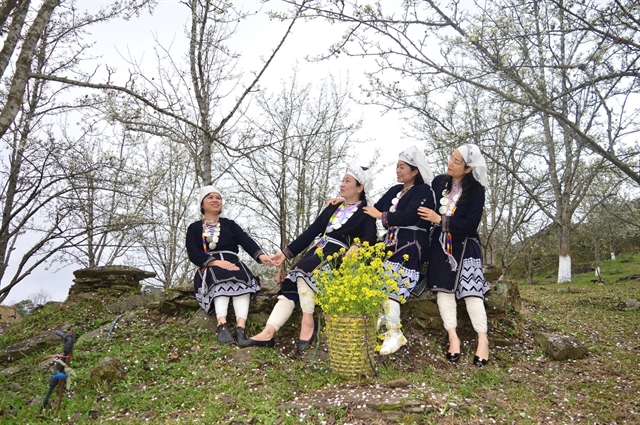
Around February and March, hillsides and village lanes are lined with pear trees in full bloom. This is the ideal time for visitors to admire the poetic scenery and experience the peaceful rhythms of Dao, Mông and Tày life.
Perched at nearly 1,000m above sea level, Hồng Thái is often called the 'Sa Pa of Tuyên Quang' for its cool climate and untouched natural beauty.
This year the Hồng Thái Pear Blossom Festival, held from February 28 to March 10, has drawn crowds eager to see the blooms and join in cultural activities.
|
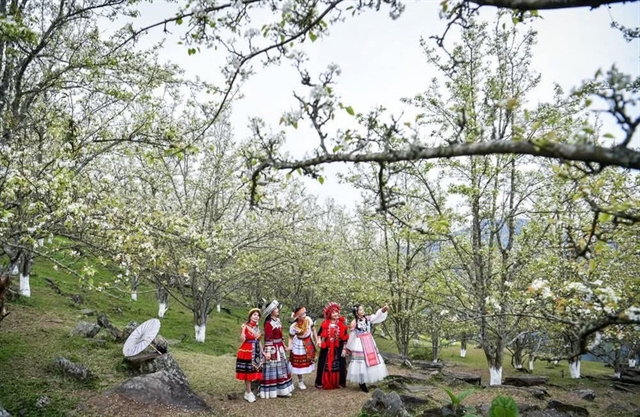
| The Hồng Thái Pear Blossom Festival attracts many tourists from all over the country. — Photo giaoducthoidai.vn |
“The festival is not only an opportunity to honour pear blossoms and the beauty of the mountains and forests, but also opens up a unique cultural and tourism experience,” Trần Thị Hải of the Tuyên Quang Provincial Tourism Promotion Centre told Việt Nam News.
From Hà Nội it takes about six hours by car to reach Hồng Thái. The journey is rewarded by standing amid vast pear orchards that look as if a light snow has settled on every branch.
Unlike the bold hues of peach blossoms or the strong perfume of plum flowers, Hồng Thái’s pear blossoms are more quietly profound. Five-petalled white flowers with delicate pink stamens bloom from gnarled trunks, a contrast that feels both fragile and enduring.
|
| This is the ideal time for visitors to admire the poetic scenery and experience the peaceful rhythms of Dao, Mông and Tày life. — Photo vanhoavaphattrien.vn |
Seen from a distance, the pear orchards resemble clouds drifting down over the stilt houses and narrow lanes. The sight makes visitors slow their pace and breathe more deeply in the crisp mountain air.
Many orchards belong to families who planted trees decades ago. Hồng Thái resident Đặng Đức Lương opened his nearly 100-tree orchard to tourists in 2019; planted in 2004, those trees now spread wide canopies that create a spectacular spring display.
The entrance fee for photography and a visit to the pear orchard is VNĐ30,000 per person. Branches offered for photos are generally kept intact, rather than cut for sale.
“The first time I came to Hồng Thái I felt as if I had stepped into a dreamy white painting,” visitor Nguyễn Yến Nhi from Hà Nội told Việt Nam News. “The winding road is flanked by pear orchards sparkling in the morning sun. Their sweet, pure scent soothes the soul and makes one forget the city.”
Climbing the slopes, visitors often pause just to stand and take in the scene: blossoms like a thin veil over stilt houses, with children playing in small courtyards half-hidden by white flowers.
|
| Pear blossoms cover the mountains and forests in pristine white. — Photo tienphong.vn |
Hồng Thái now has 164 households growing pears across more than 90ha in seven villages, with Khâu Tràng holding the largest concentration of orchards. After the merger of Hồng Thái, Đà Vị and Sơn Phú communes, this year’s festival is organised on a larger scale, aiming to promote ecotourism and contribute to local socio-economic development.
The 2026 festival programme is rich and varied. It includes a highland culinary culture festival, an OCOP product exhibition, Shan Tuyết tea tastings, visits to the Khâu Tràng community tourism village and ancient pear orchards, sports competitions, ethnic costume shows and demonstrations of embroidery and beeswax batik on traditional garments.
The festival atmosphere blends vibrancy with cultural depth. Each event leads visitors from admiring nature to participating in local life, creating layered and memorable experiences.
Many families rent ethnic costumes and guide guests through the orchards for photos.
“Checking in at ancient pear orchards and along Việt Nam’s longest pear blossom road is a must for photography lovers,” Nhi said. “Every corner adorned with flowers makes a poetic, picture-perfect scene.”
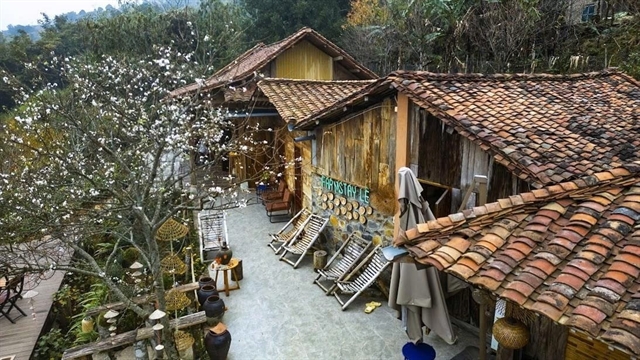
Around 16 accommodations and homestays serve tourists; ahead of peak season they have renovated facilities, improved hygiene, secured clean food sources and upgraded services to welcome visitors safely and comfortably.
At Mác Cọp Homestay, host Bàn Thị Thương said she hopes guests will not only rest, but also immerse themselves in daily village life.
|
| Farmstay Lê, a large accommodation that can welcome approximately 150 guests per day. — Photo vanhoavaphattrien.vn |
Local artisans are also prepared to share their crafts. Triệu Thúy Hằng, a beeswax painter in Khâu Tràng, said families are ready with ethnic costumes for rent. They invite visitors to learn traditional techniques, helping travellers take home true cultural memories as well as photos.
Visiting Hồng Thái at this time opens a world of authentic highland experiences. The culinary festival highlights traditional feasts, including five-coloured sticky rice, smoked meat and assorted cakes, while OCOP stalls, Shan Tuyết tea and local produce tell the story of livelihoods shaped by forest stewardship and eco-friendly culture.
A recreated Dao fire-jumping ceremony offers a powerful, sensory glimpse into local belief: amid drums and barefoot leaps over embers, the ritual expresses courage, spiritual protection and villagers’ hopes for a peaceful, prosperous year.
Hồng Thái’s pear blossom season is more than a visual spectacle – it is an invitation to slow down, breathe and join a living culture. Between snowlike flowers, homestay hospitality, folk rituals and local flavours, visitors leave with lasting memories of a place where nature and tradition bloom together. — VNS
Some notes for tourists:
• Best time to visit: Mid-February to the end of March, when pear blossoms are at their peak.
• Typical location: Khâu Phà and Muông villages.
• Entrance fee for pear orchards: around VNĐ30,000 per person.
• Homestay prices: VNĐ300,000 - VNĐ1,000,000 for private rooms; shared rooms about VNĐ100,000.
• Climate: cooler than the lowlands - bring warm layers, especially for mornings and evenings.
Travel
 Travel
 Travel
 Travel
 Travel
 Travel
 Travel
 Travel
 Travel
 Travel
 Travel
 Travel
 Travel
 Travel
 Travel