 Travel
Top Vietnamese leader meets with Belgian Senate Speaker, House President
1.
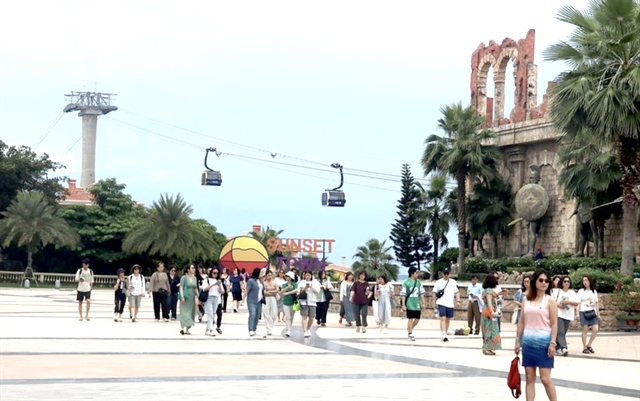 |
| Tourists visit and experience the Hòn Thơm cable car in Phú Quốc. VNA/VNS Photo |
AN GIANG — Following administrative consolidation, An Giang has emerged with a renewed development space and a distinctive tourism landscape stretching from the legendary Seven Mountains to offshore islands, positioning itself as a rising highlight on Việt Nam’s tourism map.
Over the past four decades of national renewal, tourism in An Giang has undergone a strong transformation, gradually asserting itself as a spearhead economic sector. The industry has contributed to economic restructuring, job creation and improved living standards, while serving as an effective channel for promoting the province’s cultural identity to the world.
With a natural area of nearly 10,000 square kilometres, An Giang possesses a rare combination of plains, mountains, borderlands, rivers and sea. This diversity enables the province to develop a wide range of tourism products, from spiritual and cultural tourism to eco-tourism, agricultural tourism and island-based resort tourism, making An Giang a distinctive destination in the Mekong Delta.
The province is home to a series of well-known destinations such as Phú Quốc, a centre for high-quality eco-tourism and international-standard island tourism; Hà Tiên-Kiên Lương-Kiên Hải, known for cultural heritage, historical relics and marine ecology; the Vĩnh Tế-Mount Cấm area, regarded as a stronghold of spiritual tourism in the Seven Mountains region; as well as rich forest ecosystems including U Minh Thượng National Park, Phú Quốc National Park and Trà Sư cajuput forest.
In addition to natural assets, An Giang’s cultural richness, shaped by the long-standing coexistence of Kinh, Hoa, Khmer and Chăm communities, is a key competitive advantage. This cultural convergence is reflected in festivals, architecture, beliefs, cuisine and daily life, forming a distinctive identity that underpins the sustainable development of the local tourism industry.
According to the An Giang Department of Tourism, the province welcomed more than 80.8 million visitors between 2021 and 2025, including nearly 3.5 million international arrivals, generating total tourism revenue of over VNĐ142.8 trillion.
In 2025 alone, tourism revenue reached nearly VNĐ68 trillion, up 92 per cent year on year, while total visitor numbers exceeded 24.1 million, an increase of 27.3 per cent. International arrivals rose sharply to more than 1.9 million, up over 90 per cent compared to 2024, highlighting a strong recovery and strong growth momentum.
These figures highlight tourism’s role as a key growth driver, contributing to economic restructuring, job creation and improved living standards, while serving as an effective channel for promoting An Giang’s image and cultural identity to the world.
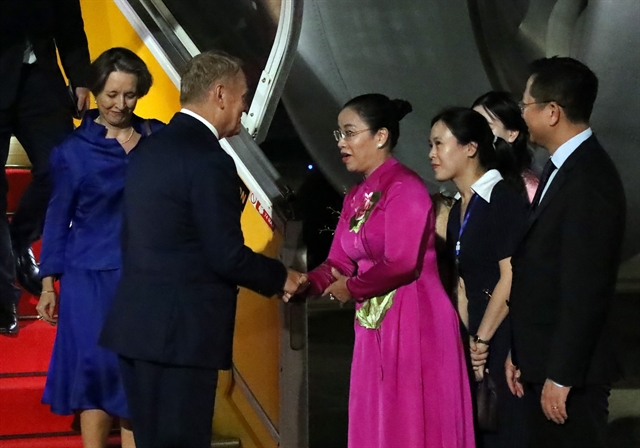
Karolina Agnieszka, a Polish national and the 20 millionth international visitor to Việt Nam in 2025, was given a ceremonial welcome at Phú Quốc International Airport. She said she felt fortunate to be in Việt Nam, praising the country’s beauty and the friendliness of its people, and added that she would recommend the destination, especially Phú Quốc, to her friends and family in Poland.
An Giang is also among the country’s leading localities in attracting tourism investment, with 317 projects and total registered capital of more than VNĐ402 trillion. Major developments in Châu Đốc, Tri Tôn, Tịnh Biên, Phú Quốc, Hà Tiên, Rạch Giá, U Minh Thượng, Hòn Tre and Hòn Sơn have helped shape a diversified, interconnected tourism ecosystem, combining spiritual and cultural tourism, eco- and agri-tourism, island resorts and urban services, thereby enhancing regional competitiveness.
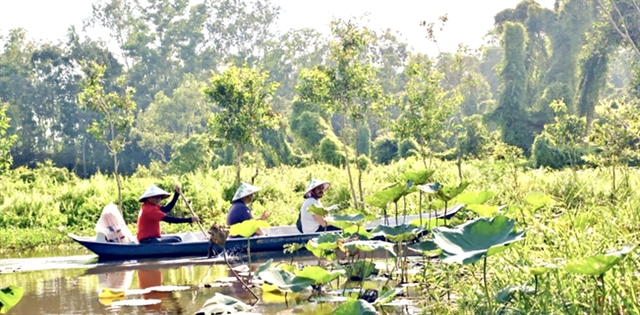 |
| International tourists visit the Trà Sư cajuput forest. VNA/VNS Photo |
Within this broader landscape, Phú Quốc stands out as a defining symbol of transformation. From a little-known island district, Phú Quốc has risen to become Việt Nam’s “tourism capital”.
Its official recognition as a Grade-I city in March 2025 marked a historic milestone, reflecting its growing national and international stature. The expansion of international air connections, seaports, road networks and power infrastructure has laid a solid foundation for rapid tourism growth.
Large-scale investments by major corporations have reshaped the island into a modern tourism hub with integrated resort, entertainment and urban complexes. Phú Quốc has repeatedly appeared in international rankings of Asia’s most attractive destinations and has been selected to host the 2027 APEC Economic Leaders’ Meeting, further affirming its global appeal.
Beyond infrastructure and branding, tourism development has also transformed local livelihoods. Many fishing communities have diversified into tourism-related services such as homestays, dining and experiential tours, combining traditional occupations with new economic opportunities.
Building on these achievements, An Giang has set ambitious targets for the coming years. By 2030, the province aims to welcome 39.5 million visitors, including more than three million international arrivals, and generate tourism revenue of VNĐ108.45 trillion. The goal is to establish An Giang as a strong tourism brand at both national and international levels, and as a key gateway in the regional “visitor economy”.
To achieve this vision, the province has identified priorities including improving transport connectivity, diversifying high-end tourism products, accelerating digital transformation, enhancing human resource quality and strengthening regional and international linkages. Policy proposals also include extending visa exemptions for key international markets and lengthening visa-free stays for foreign visitors to Phú Quốc.
With its newly integrated geography, rich natural and cultural resources and a clear development roadmap, An Giang is positioning itself as a green, sustainable and internationally competitive tourism destination. The province’s journey reflects not only economic ambition but also a commitment to sharing local values and identity with the global community. VNS
Travel
 Travel
 Travel
 Travel
 Travel
 Travel
 Travel
 Travel
 Travel
 Travel
 Travel
 Travel
 Travel
 Travel
 Travel