 Travel
Hoàn Kiếm Lake abuzz as capital marks 72nd Liberation Day anniversary
1.
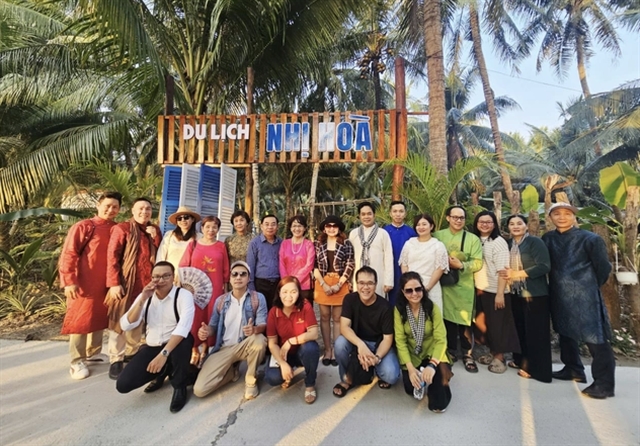 |
| Nhị Hòa Community-based Tourism Village has welcomed more than 2,100 visitors, a record figure that newly launched community-based tourism villages normally take five to six years to reach. — Photo nld.com.vn |
VĨNH LONG — Just one month after officially opening to visitors, Nhị Hòa Community-based Tourism Village in Nhị Long Commune has quickly emerged as a popular destination, attracting large numbers of tourists eager to experience tranquil rural life along the Cổ Chiên River.
According to Dương Hoàng Sum, Director of the Vĩnh Long Department of Culture, Sports and Tourism, Nhị Hòa is one of four community-based tourism villages in the new Vĩnh Long Province following the merger of Trà Vinh and Bến Tre. The model is being developed with the expectation of creating new, attractive destinations for both domestic and international visitors.
Nhị Long Commune is the first locality in the province to put a community-based tourism village into operation after the administrative restructuring, Sum said, noting that community-based tourism is challenging to develop and even harder to sustain. He expressed hope that local residents would work together to introduce distinctive products and experiences to visitors.
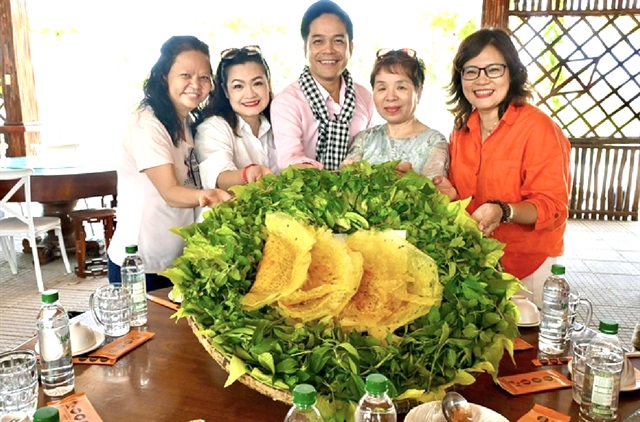 |
| Visitors enjoy a “giant” bánh xèo at Farm Ông Trầm, one of the new tourism sites in Nhị Long Commune, located about 10km from Nhị Hòa Community-based Tourism Village. — Photo nld.com.vn |
The community-based tourism model in Nhị Hòa Hamlet has been built around a closed service supply chain linked to individual rural households. Each participating household offers a distinct experience that does not overlap with others, providing an authentic reflection of daily livelihoods and local ways of life.
Visitors to Nhị Hòa can directly take part in gardening activities, farm-based daily routines and traditional folk games, while enjoying the peaceful riverine landscape shaped by a characteristic ecosystem of areca palms, coconut trees and pomelo orchards.
A particular highlight is the opportunity for visitors to sample and make traditional local dishes prepared by households using clean, home-grown ingredients. These include kumquat preserves, sweet soups, bánh lá mơ, bánh ít trần and fermented shrimp, all typical of the orchard-based countryside.
Dr Dương Đức Minh, Deputy Director of the HCM City Institute for Economic and Tourism Development Research, said the community-based tourism model has been positioned with a vision of green growth and sustainable development, built on three core values: symbolism, perception and value creation.
Nhị Hòa, he said, is not a detached ecological space but an integrated system located along a transport corridor with convenient access, enabling it to attract tourist flows more effectively. This, in turn, helps unlock the potential of agricultural tourism and create sustainable livelihoods for local residents.
In Nhị Hòa, local people are not merely storytellers but living bearers of cultural heritage in a village with nearly 200 years of history, adding depth to the visitor experience and defining the uniqueness of the community-based tourism model.
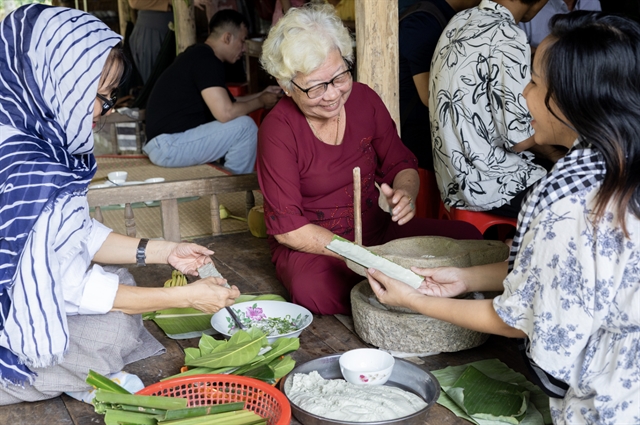 |
| Rustic yet appealing local cuisine prepared by residents is a highlight of the community-based tourism experience in Nhị Hòa Hamlet. — Photo vietnamnet.vn |
Rather than simply observing, visitors are encouraged to participate directly in activities, from crafting leaves into shapes and joining blindfolded duck-catching games filled with laughter, to collecting eggs and engaging with the rhythms of farm life. Quiet moments drifting on boats along the calm river, where the scenery is gentle and time seems to slow, further complete the experience. — VNS
Travel
 Travel
 Travel
 Travel
 Travel
 Travel
 Travel
 Travel
 Travel
 Travel
 Travel
 Travel
 Travel
 Travel
 Travel