 Features

LANDMARK Launches ‘Destination CENTRAL’: A District-Wide Invitation to Explore the Dynamism, Luxury, and Soul of Central
1.
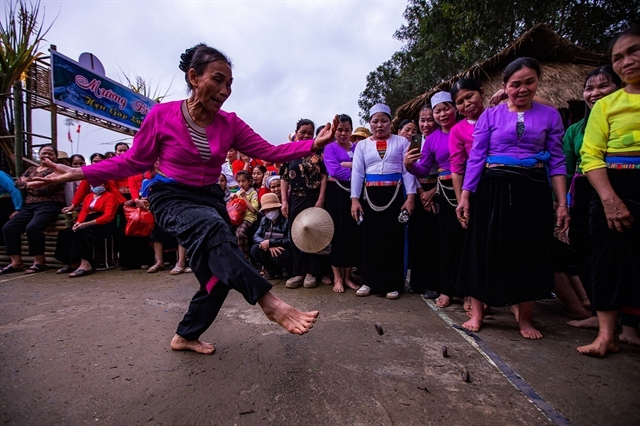 |
| Mường women play a traditional game during Lunar New Year celebrations. — VNA/VNS Photo |
In the northern province of Phú Thọ, rapid development is exposing a core dilemma of modernisation: how to sustain economic progress without eroding the foundations of Mường cultural heritage.
Urbanisation and changing lifestyles are replacing stilt houses, weakening the use of the Mường ethnic minority language and limiting the transmission of ritual arts, leaving the community’s unique identity at risk even as new opportunities emerge.
Yet Mường heritage, if systematically preserved and integrated into tourism, education and local enterprise, could become a practical, homegrown resource for sustainable development across the province.
Across many villages, the traditional stilt house that once anchored communal life is giving way to modern concrete homes. The Mường language, once the daily medium of communication and the vehicle of shamanic ritual language, gongs and sacred songs, is used less frequently, especially among young people educated in Vietnamese national language.
These shifts reflect natural responses to improved living standards and broader integration, but they also create urgent risks: without targeted, flexible solutions, essential elements of Mường culture may be lost.
Local testimony brings the change into focus. Bùi Xuân Những of Lội Mương Hamlet, Thượng Cốc Commune, in the ancient land of Mường Vang, recalls: “Previously, everyone in the village spoke the Mường language. Now, children go to school more often, and they speak more Vietnamese. Mường traditional clothing only appears at village festivals and celebrations. Traditional stilt houses are gradually being replaced by modern, sturdy concrete houses.”
Language and ritual are especially vulnerable. Researcher Bùi Huy Vọng warns: “Only when the Mường language is widely taught in the community can Mo Mường (a ritual practice performed at funerals, religious festivals and life-cycle ceremonies by the Mường people) be fully preserved. Losing the language means losing the memory.”
His point underlines that safeguarding rituals and oral traditions depends first on keeping the linguistic framework alive.
Phú Thọ’s Department of Culture, Sports and Tourism reports that 39 of the province’s intangible cultural heritage items have been recognised nationally. Many of these items are linked to Mường life, performing arts, festivals, customs and shamanic rituals, which together testify to the culture’s depth and longevity.
Notably, the nomination of Mo Mường and other Mường cultural expressions to UNESCO’s list of Intangible Cultural Heritage in Need of Urgent Safeguarding marks progress in formal protection and international recognition.
At the community level, cultural clubs in schools and neighbourhoods are emerging as vital transmission points. These clubs teach gongs, folk songs, traditional costume and the Mường script, creating everyday spaces for learning and practice.
“We must ensure that the children can sing and speak the songs so that Mường culture and language can be preserved and developed,” says Đinh Thị Kiều Dung in Kim Bôi Commune, who has taught Mường folk songs for more than 20 years.
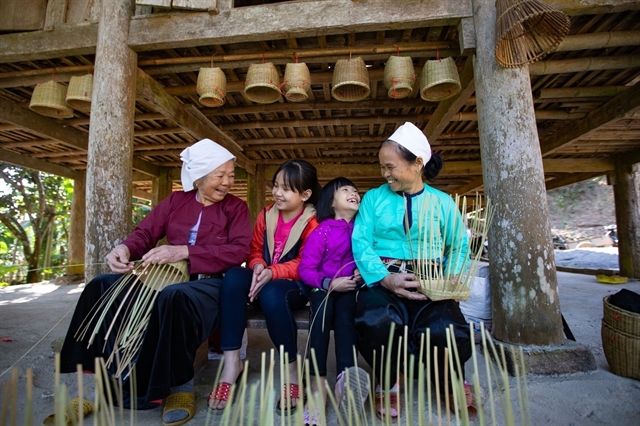 |
| The traditional weaving craft of the Mường people uses bamboo and rattan to create a range of items. — VNA/VNS Photo |
Crafts and livelihoods
Beyond performance and ritual, traditional crafts are being revived and linked to new livelihood models. The Mường handloom weaving craft, long threatened with decline, has seen a strong comeback, engaging women and young people and creating opportunities through cooperatives and craft villages.
Notable examples include the Lục Nghiệp Thành Agricultural and Handloom Fabric Weaving Cooperative in Mường Vang and the Đông Lai Handloom Fabric Weaving Co-operative in Mường Bi.
“Handloom fabric weaving is a traditional craft of the Mường people. We created many diverse designs and models, welcomed many tourist groups to visit, and they really appreciated the cooperative’s hand-embroidered products,” Bùi Thị Lan of the Lục Nghiệp Thành Cooperative says.
These initiatives demonstrate how cultural preservation can align with income generation, market access and community resilience.
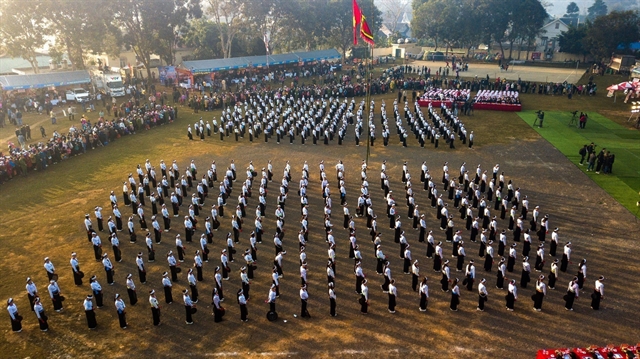 |
| The Khai Hạ (going to the fields) festival is the largest traditional festival of the Mường people. — VNA/VNS Photo |
Tourism and policy
Local authorities have restored and organised traditional festivals linked to agricultural life and belief systems, such as the Khênh Temple Festival and the Cội Temple Festival.
These events are increasingly included in experiential tourism packages, serving both to revitalise rituals and to expose visitors to living traditions.
The province has also integrated folk games, music and crafts into tourism services aimed at mountainous communes.
The Mường Culture Festival at the Việt Nam National Village for Ethnic Culture and Tourism provided a national platform to showcase gongs, shamanic practices, folk dances and costume artistry. Such events strengthen ethnic identity and attract both domestic and international visitors.
Tourism initiatives such as Mừng Retreat, Sánh Thuần Homestay and Đá Bia Tourist Village convert intangible culture into sustainable income through homestays, guided cultural performances and the sale of traditional handicrafts, while offering visitors immersive cultural and ecological experiences.
To support the Mường community amid integration, Phú Thọ Province launched a project to preserve and promote Mường culture for 2023–2030.
The initiative sets concrete targets: digitising records of shamanic rituals, gongs and ceremonies to build an accessible cultural database; supporting artisans and facilitating intergenerational skills transfer; establishing Mường cultural spaces within ecological and community-based tourism sites; and linking cultural values to tourism products, local speciality products, homestay experiences and craft workshops.
These strategies reflect the guiding principle that culture is both a spiritual heritage and a developmental resource. When preservation is aligned with sustainable use, culture can generate economic value while maintaining authenticity.
Phùng Thị Kim Nga, vice chairwoman of the provincial People’s Committee, emphasises that culture is not merely memory but an asset: properly preserved and responsibly utilised, Mường culture will help define Phú Thọ’s distinctive identity in the region’s evolving development landscape. This view frames cultural preservation as integral to broader socio-economic goals rather than a marginal or purely symbolic task.
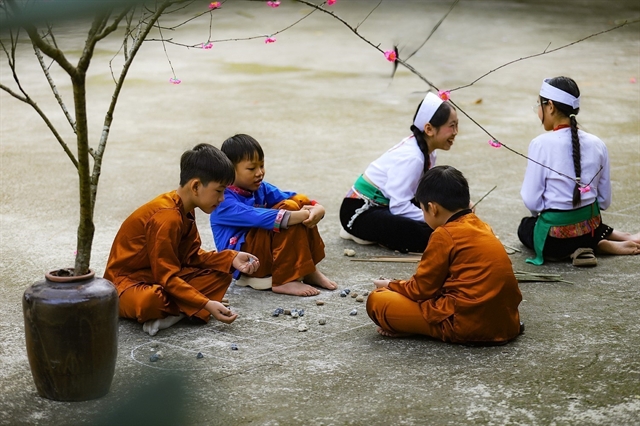 |
| Mường children play traditional games. — VNA/VNS Photo |
In Thanh Sơn Commune, Mường cultural clubs have attracted more than 200 active members who both preserve cultural identity and serve as hubs for disseminating values within their communities. Traditional crafts, festivals and performances now support cooperative enterprises, homestays and community tourism, diversifying incomes while reinforcing cultural pride.
The path ahead for Phú Thọ is not to freeze tradition in amber but to enable adaptive continuity. Digitisation, education and market linkage, combined with respectful tourism and community-driven cultural programming, offer practical ways to sustain the Mường language, rituals and craftsmanship.
Recognition through national listings and UNESCO nominations provides an important foundation, but long-term sustainability will depend on integrating preservation into everyday life — from education and community practice to tourism and local enterprise — ensuring that Mường culture remains a living, evolving asset rather than a fading legacy. - VNS
Features
 Features
 Features
 Features
 Features
 Features
 Features
 Features
 Features
 Features
 Features
 Features
 Features
 Features
 Features