 Features

Ping An Digital Bank Completes HKMA’s Second GenA.I. Sandbox Cohort
1.
by Hồng Linh
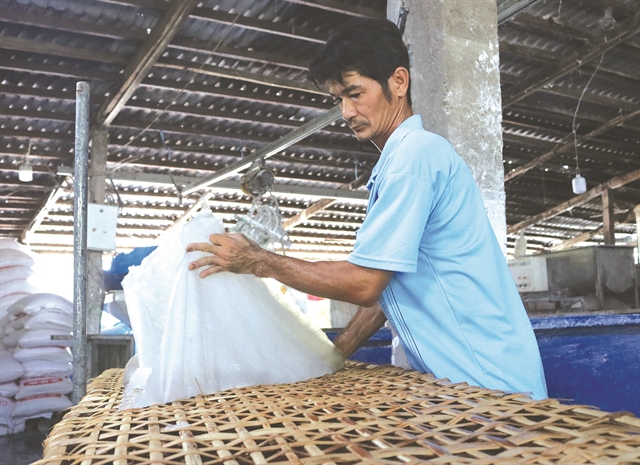 |
| A worker at one of the hủ tiếu Mỹ Tho production facilities in Đồng Tháp Province separates dried rice sheets from a bamboo board. — VNS Photo Hồng Linh |
ĐỒNG THÁP — The craft behind the signature chewy rice noodles of hủ tiếu Mỹ Tho is quietly enduring in Mỹ Phong Ward in Đồng Tháp Province, where small household producers continue to preserve a tradition at the heart of one of the Mekong Delta’s most iconic dishes.
The dish originated in the former city of Mỹ Tho, once one of the largest trading and export hubs in the southern region thanks to thriving wet-rice agriculture, a network of connecting rivers and Việt Nam's first railway line.
Over time, hủ tiếu Mỹ Tho became an iconic dish of the region and in 2013 was recognised as one of the top 100 dishes of Asia by the Asia Book of Records.
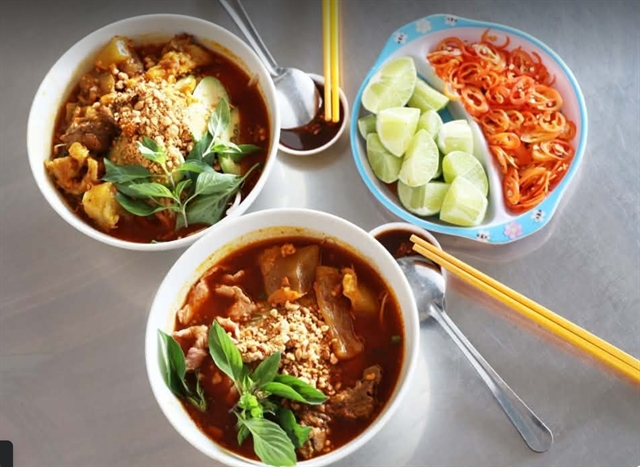 |
| cTrưng Trắc-style sa tế hủ tíu is a dish that leaves diners craving more once they have tasted it. VNA/VNS Photo Hồng Đạt |
Its popularity helped sustain the craft of making Mỹ Tho rice noodles, which has since become a proud traditional trade of the region.
According to Hà Thanh Tú, owner of Mỹ Tho Quán restaurant and rest stop in Đồng Tháp Province, hủ tiếu Mỹ Tho is a traditional Vietnamese rice noodle soup that evolved from kueh teow, brought to the region by Chinese immigrants and influenced by Khmer cuisine.
The original dish consists of the signature Mỹ Tho rice noodles served in clear broth simmered with pork bones, dried shrimp and dried squid, and topped with sliced pork or pork ribs.
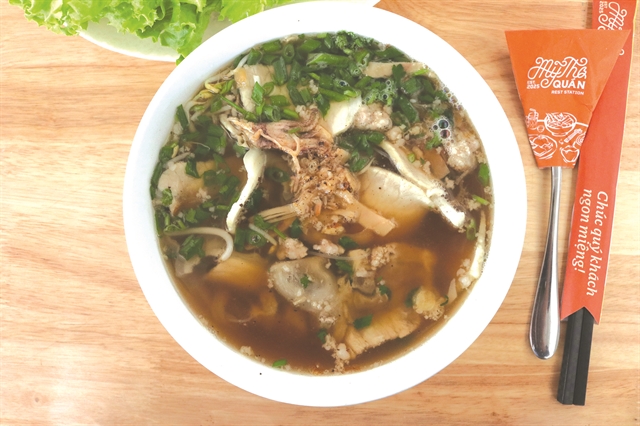 |
| A typical bowl of hủ tiếu Mỹ Tho features a clear, aromatic broth with sliced pork, distinctive thin, chewy noodles, and pork ribs. — VNS Photo Hồng Linh |
Chewy signature
Today the toppings have become more diverse and cooking methods vary to suit diners’ tastes.
However, the defining feature of the dish remains the unique chewy texture of the noodles, which sets it apart from other hủ tiếu dishes in the region.
Traditionally, this texture comes from Gò Cát rice, a well-known variety in the province used to make the noodles.
“When blanching the noodles in boiling water, they soften while still retaining a chewy bite without becoming mushy,” Tú explains.
Some people initially think the noodles are undercooked because of the chewiness, but soon come to appreciate the texture, he adds.
Vương Bảo Linh, a visitor to Mỹ Tho City, says she particularly enjoys the chewy texture.
For her, the combination of fragrant rice noodles, clear broth and the dish’s aroma creates a distinctive and memorable culinary experience.
Craft village
The famous Mỹ Tho rice noodles are produced in the traditional Bánh – bún – hủ tiếu (rice paper – rice noodles) craft village in Mỹ Phong Ward in Đồng Tháp Province, formerly part of Tiền Giang Province.
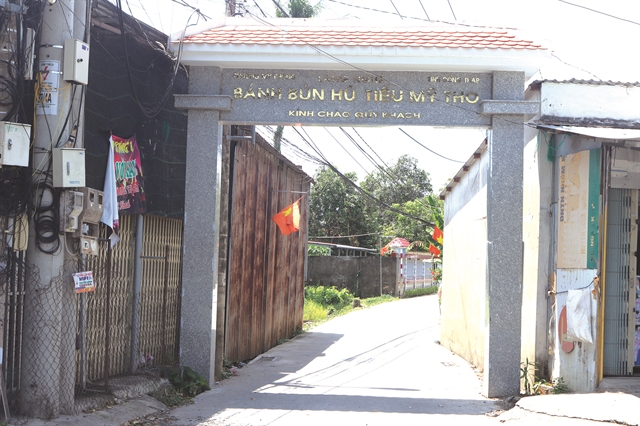 |
| The traditional rice noodle craft village in Mỹ Phong Ward, Đồng Tháp Province, recognised in 2007, preserves the production of the iconic thin, chewy Mỹ Thonoodles. — VNS Photo Hồng Linh |
While it is unclear when the craft village was formed, the province officially recognised it in 2007. At the same time, a production cooperative was established, led by Trương Văn Thuận, who has been making the noodles since 1983.
The group now has six household workshops employing around 30 workers.
Its noodles carry the trademark “Hủ Tiếu Mỹ Tho Đặc Sản Truyền Thống” (Mỹ Tho Noodles, a Traditional Speciality) issued by the Intellectual Property Office of Việt Nam in 2008.
Most households still produce the noodles partly by hand. Machines are used in certain processing stages such as cooking the rice batter or cutting the noodles, helping save time and labour but not affecting the quality of the final product.
However, two households have mechanised the entire production process, together producing three to four tonnes of noodles a day.
During holidays the volume can double, and the noodles fetch around VNĐ25,000 (US$1) per kilogram.
Currently, the noodles are sold at local traditional markets and in neighbouring provinces, but are not yet exported.
The rice used to make the noodles has changed because the famous Gò Cát variety is now in short supply due to modern farming practices and shrinking cultivation areas. As a result, producers have switched to other rice varieties from elsewhere that expand well and remain dry and separate in texture when cooked.
Local producers also pay attention to food safety and environmental protection during production.
They receive support from local authorities in the form of soft loans and assistance in promoting their products at festivals and trade fairs.
These efforts help sustain noodle production and preserve one of Mỹ Tho’s most famous culinary traditions.
The craft village also provides a livelihood for local residents who have spent decades preserving the traditional production processes.
Dương Văn Tèo, a 39-year-old worker at one of the hủ tiếu workshops, says he has worked there since he was young and the job has helped him support his family.
He has mastered every step of the process and enjoys doing the work each day, he says.
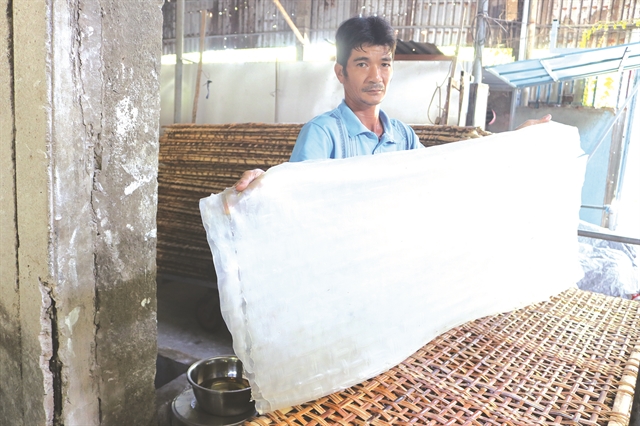 |
| A soft rice sheet is removed from a bamboo board, ready for cutting into thin strands. — VNS Photo Hồng Linh |
Future plans
Starting his day at 4am, he works for about six hours, handling every step of the production process along with other workers.
Every day he rhythmically soaks and grinds the rice down into batter, uses a machine to cook and spread it onto bamboo boards, then, after sun-drying, feeds the soft dried rice sheets into a cutting machine to make thin strands.
The resulting noodles have a translucent appearance and a chewy texture, with the fragrant aroma of rice. To complete his shift, he packs the noodles into rolls before placing them into 10-kilogram bags ready for delivery, with each wholesale bag priced at VNĐ210,000 (US$8).
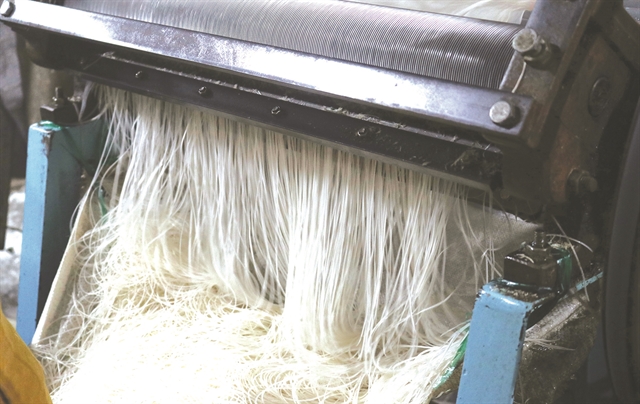 |
| The chewy Mỹ Tho noodles are created by feeding soft rice sheets through a cutting machine. — VNS Photo Hồng Linh |
According to the People’s Committee of Mỹ Phong Ward, a plan launched in 2026 aims to preserve the traditional rice-noodle craft village, increase workers’ incomes and link the village’s development with digital transformation and the “One Commune, One Product” (OCOP) programme.
The goals for the year include maintaining the current number of production facilities, supporting at least one facility in registering for an OCOP product and organising training in e-commerce.
Authorities will also provide loans on easy terms to help households invest in modern production equipment.
They plan to offer guidance for selling products through e-commerce platforms and promote the village’s products through trade promotion activities.
These include showcasing OCOP specialities and local products at festivals and trade fairs both within and outside the province.
Under the plan, by 2030 the craft village is expected to modernise its production lines, build a sustainable brand and integrate its activities with tourism and trade.
It may not be an easy task, but the ward authorities and local households will do everything they can to ensure that this traditional craft, along with the unique hủ tiếu Mỹ Tho dish, will not be lost to history. — VNS
Features
 Features
 Features
 Features
 Features
 Features
 Features
 Features
 Features
 Features
 Features
 Features
 Features
 Features
 Features
.jpeg)