 Features
VN-Index ends lower despite liquidity hit over $1 billion
1.
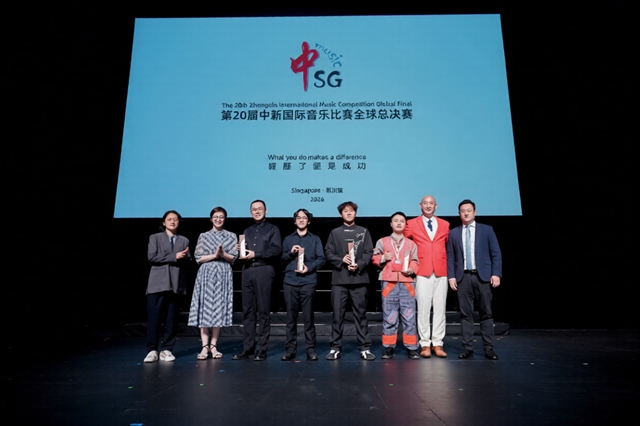 |
| Giàng A Hảng (3rd right) wins the grand prize at the ZhongSin International Music Competition 2026. — Photo courtesy of the orginsers |
by Lương Thu Hương
When the lights dimmed and the hall fell silent, Giàng A Hảng lifted his bamboo flute to his lips, striking a high note that carried more than melody. More than sound, the note carried the winds of the mountains, the murmur of streams and the cherished memories of his upland homeland.
At the Star Performing Arts Centre in Singapore, the young musician’s performance earned him the grand prize at the ZhongSin International Music Competition 2026.
The event drew more than 1,000 contestants from 25 countries. When the results were announced, the 24-year-old flautist from Việt Nam’s Mông ethnic community was named the overall winner.
“I feel both happy and proud — proud to be Vietnamese and proud to be Mông — to have won such a prestigious international competition,” he tells Việt Nam News.
“As a Mông person, I feel that representing my culture on an international stage is a great honour. I carry not only my personal dreams but also the images, sounds and spirit of my homeland.
Mông culture, he says, is deep and distinctive, from its music and colourful dress to the strong sense of community among its people.
"When I stand on an international stage, I am always aware that each performance is a way for the world to discover and appreciate those traditional values," he says.
“That awareness is both my motivation and my responsibility. I want to show that young people from ethnic minority communities can reach the world and still preserve their identity.”
A flute carries the mountains
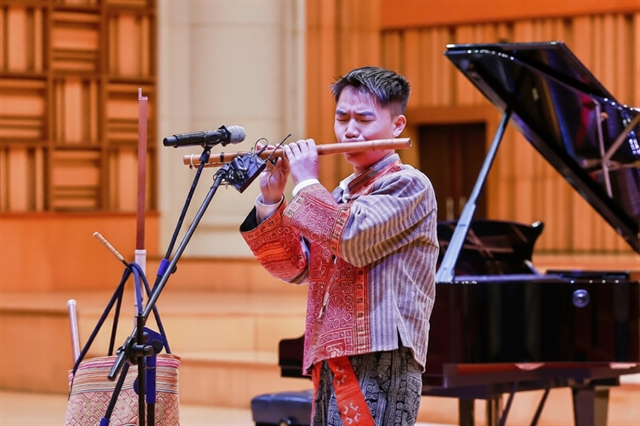 |
| Hảng in traditional Mông costume performs during the ZhongSin International Music Competition 2026. — Photo courtesy of the organisers |
Hảng was born and raised in a Mông village in the northern province of Lào Cai, where music and oral tradition are woven into daily life.
His first teachers were family members. His brother and uncle introduced him to the flute, passing down melodies heard at village gatherings and mountain festivals.
There were no textbooks in those early lessons. He learned by ear, repeating melodies until the sound felt right.
He soon realised the flute meant more than music.
“To me, the flute is the voice of the soul,” he says. “It is how Mông people express joy, sorrow and longing.”
“Since childhood, each time the flute sounded in the quiet air, I felt an invisible thread connecting me to my roots. That feeling urged me to learn, to understand more deeply, and to master this instrument,” he says.
“At first it was an innocent love, but gradually I realised that pursuing the flute was not merely a career choice; it was a journey of safeguarding identity and telling my people's story through music."
After finishing ninth grade in his hometown, Hảng reached a turning point. A recruitment team from the Lào Cai College of Culture, Arts and Tourism visited the area.
He joined an audition by chance — and was selected for formal arts training.
Leaving home for the city, Hảng carried little more than an old backpack and his flute, the sole companion that eased his loneliness.
His early artistic journey, however, was far from smooth. He admits he was once the weakest student in his class and at times considered quitting. A remark from a beloved teacher — “I don't need the best student; I just need the most hardworking” — gave him the resolve to continue.
A difficult road to mastery
Throughout his training, Hảng has received steady support from his family and teachers, from whom he learned discipline, humility and a commitment to constant self-improvement.
“For me, today's success is not the result of my efforts alone but the outcome of guidance, sacrifice, and trust from those who have always accompanied me behind the scenes,” he says.
In his second year, to help his parents pay tuition, he began earning money by playing the flute. The instrument that had once sheltered his private emotions became a source of financial support. During those itinerant days, he says, he came to understand music more deeply.
“To play the flute well, I believe a solid technical foundation comes first: breath control, embouchure, finger technique and the ability to manage dynamics and tone colour. The flute is a very sensitive instrument: if your breath is unstable, the emotion is affected immediately. That’s why I spend so much time training my breathing and maintaining steadiness in every note,” Hảng says.
But technique alone, he adds, is not enough. To shape genuinely expressive melodies, the flautist must fully understand the work and inhabit it.
“I usually study the context, the story, and the spirit of a composition, then put my own feelings into it. When you are genuinely moved, the audience can be moved too,” he says.
The artist says he favours works that match his tonal colour and artistic temperament, preferring pieces with depth that allow space for storytelling and subtle interpretation. At the same time, he seeks to blend traditional and modern elements, preserving his identity while offering something new on larger stages.
“For me, every performance is not merely a technical display but a way of sharing a story through sound,” he says.
The flute crosses borders
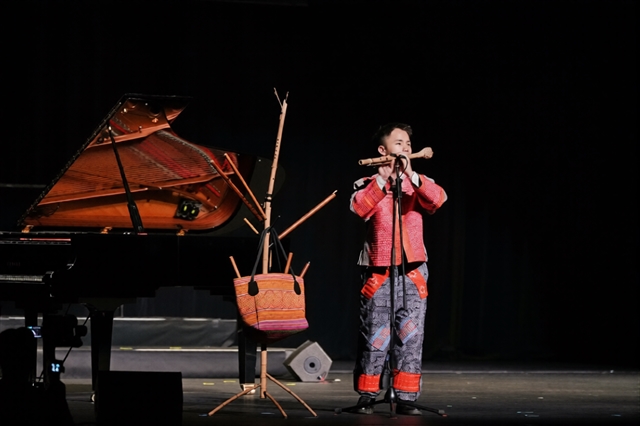 |
| Hảng's melodious flute performances are imbued with Mông cultural identity. — Photo courtesy of the organisers |
Hảng’s flute first carried beyond Việt Nam’s borders in 2021, when he entered an Australian music competition and won a scholarship to study overseas. He was unable to take up the offer because of the pandemic, yet the achievement marked an early milestone, affirming that his dedication was beginning to bear fruit.
He went on to compete in further contests, collecting a string of domestic and international accolades, including first prize at the Vietnam HKIMF 2024 Grand Final, a top-three finish at the 11th Hong Kong International Music Festival 2024 and an Outstanding Gold Award at the 12th Hong Kong International Music Festival 2025. His most recent triumph, the grand prize at the 2026 ZhongSin International Competition, has added to that growing list of honours.
The ZhongSin event is a large-scale international competition that brings together leading young talents from around the world, placing considerable pressure on its finalists. Each contestant demonstrated a strong artistic identity and high technical skill, and Hảng understood that he was competing not only on ability but on distinctiveness.
He therefore concentrated on refining his personal tone, devoting long hours to studying each piece, polishing the smallest details and strengthening his stage presence.
“The greatest difficulty was probably staying calm in a highly competitive international environment. But I overcame it through thorough preparation, disciplined practice, and faith in my journey. I believe that confidence in my art is what helped me stand firm among many strong talents,” Hảng says.
Dreams without borders
He views the victory not as a final destination but as another step in his artistic journey. Looking ahead, the flautist hopes to pursue projects that blend traditional music with a contemporary spirit, so that the sound of the flute not only preserves its national identity but also resonates more closely with young audiences and international listeners.
“Dreams have no borders. Circumstances may limit our conditions, but they cannot limit our aspirations if we are determined enough,” Hảng says.
“There may be times when you feel small in a vast world, when the artistic path seems too far away. But those who dare to believe in themselves during the hardest days are the ones who will go the farthest.
"Do not be ashamed of your starting point," he adds.
"Be proud that you carry a unique identity in your heart, a story no one can replace.
"Dream big. Work hard. And never lose your sincere heart in art.” — VNS
Features
 Features
 Features
 Features
 Features
 Features
 Features
 Features
 Features
 Features
 Features
 Features
 Features
 Features
 Features