 Features
Look who’s at the top
1.
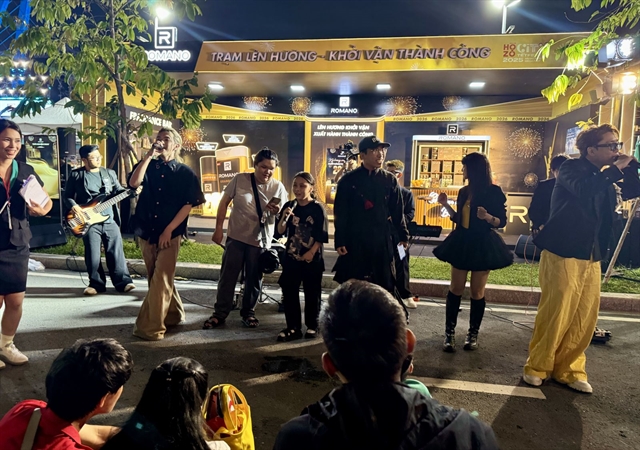 |
| Community street music and cultural exchanges at HOZO City Tết Fest 2026.— VNA/VNS Photo |
HCM CITY — Live music in Việt Nam is entering a new phase. Beyond the concert hall, multi-experience festivals are turning performances into shared urban experiences that fuse culture, commerce and collective emotion.
In recent years, urban musical life has become more vibrant than ever. Alongside the return of international tours, the domestic performance market has seen a surge in locally produced concerts on an increasingly large scale.
From iconic stars Mỹ Tâm, Hà Anh Tuấn, Sơn Tùng M-TP and Đen Vâu to community-oriented projects, many programmes have drawn tens of thousands of spectators each night, demonstrating that demand for live music remains strong even as audiences have grown accustomed to digital platforms.
Notably, concert-going habits have changed markedly.
For many spectators, especially young people, attending a concert is no longer just about listening to music, but also about meeting friends, immersing themselves in the crowd, capturing moments and sharing experiences on social media.
Concerts have thus become social events, where personal emotions resonate within a collective space.
Music does not end when the night is over, but continues to spread through stories, images and memories tied to the city.
According to Booking.com’s 2025 Travel Trends Report, 68 per cent of Vietnamese travellers said they were inspired to travel by social media, while 33 per cent were influenced by films or television programmes.
This indicates that cultural content, including music, is having a direct impact on travel intentions. Popular culture, once regarded as mere entertainment, has become a powerful catalyst, sparking the desire for real-life experiences.
Alongside shifts in audience behaviour, performance formats have also become more diverse.
In addition to individual live shows, music festivals, outdoor programmes and events combining multiple art forms have emerged.
Most large-scale events are still concentrated in HCM City and Hà Nội, underscoring the leading role of major urban centres in setting trends and experimenting with new organisational models.
In HCM City, music is increasingly visible in public spaces, from pedestrian streets and parks to outdoor cultural events.
The city is not only a venue for performances, but also a “laboratory” for connecting music with tourism, cuisine, shopping and creativity.
Music-goers do not just buy tickets; they also spend on ancillary services, creating value chains that extend beyond the performance itself.
According to People’s Artist Nguyễn Thị Thanh Thúy, deputy director of the HCM City Department of Culture and Sports, music’s gradual move into public space reflects an inevitable demand in urban life.
When art is no longer confined to auditoriums but becomes intertwined with community activities, cultural experiences become more accessible and capable of spreading more sustainably.
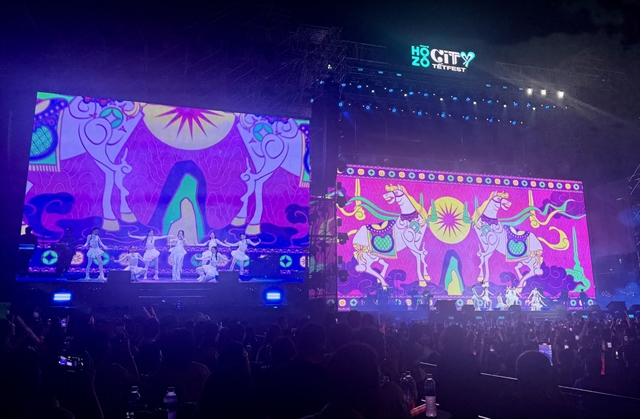 |
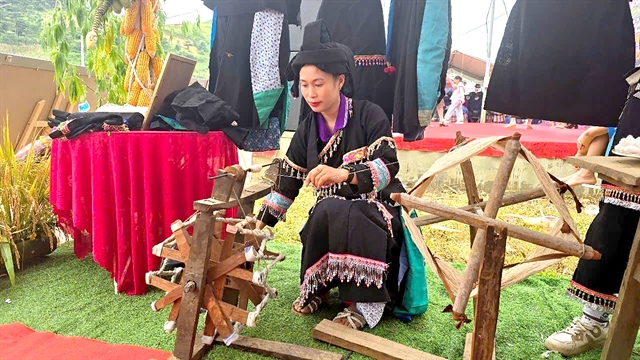
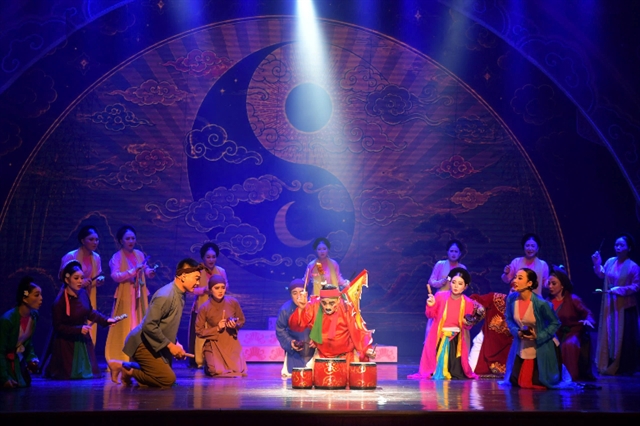
| Traditional folk culture showcased through live performances at HOZO City Tết Fest 2026. — VNA/VNS Photo |
Challenges beneath the vibrancy
Running in parallel is the trend of tourism combined with music experiences, as many spectators are willing to travel for a concert and then extend the trip into a short holiday.
However, behind the vibrancy lie certain limitations.
The performance market still relies heavily on “blockbuster” events, while buying tickets for live music has yet to become an everyday habit.
Between peak periods, urban musical life can easily fall into lulls, disrupting the flow of experiences.
It is precisely this reality that requires music to move beyond the mindset of isolated stages towards a broader structure, where experiences are extended before and after events and linked with urban space, services and communities.
The shift from “stage” to “ecosystem” is therefore no longer merely a creative choice, but increasingly an inevitable requirement.
As music enters urban space, multi-experience festivals have emerged as a new organisational approach to prolonging and enriching public engagement.
Instead of focusing solely on the stage, this model expands the experience to include cuisine, visual arts, creative shopping and community activities. Music remains central, but value is generated through connections across multiple fields.
In HCM City, HOZO City Tết Fest 2026 was an example of this approach.
The festival was organised as an open space where the public did not simply come to “watch music”, but also spent time exploring a wide range of parallel activities.
According to deputy director Thúy, such models showed how art is moving out of concert halls to merge with urban life, contributing to the development of the cultural industries ecosystem and helping position the city as a creative hub.
From an organisational perspective, Trần Đỗ Quỳnh Lê, executive director of HOZO City Tết Fest, said the festival was oriented as a long-term creative practice platform, where sub-communities were connected and all experiences were people-centred.
This approach reflects efforts to shift from short-term event organisation towards building cultural spaces that can be repeated and accumulate value over time.
However, multi-experience festivals should not be seen as a complete solution to the development of urban music.
Without standardisation, festivals risk becoming fragmented, with music diluted amid excessive commercial elements.
The core challenge of the cultural industries lies in standardisation, from performance quality and event management to human resource training and the cultivation of audience participation habits.
As HCM City is a member of UNESCO’s Creative Cities Network, models such as HOZO City Tết Fest can be viewed as necessary experiments. Festivals may serve as starting points where ideas are tested and refined.
But for music to truly become the city’s “soft axis” of creativity, it is more important to build a standardised cultural ecosystem that operates steadily and remains closely connected to community life.
With a population of 100 million, a high proportion of young people and one of the world’s leading levels of internet access, Việt Nam stands before a “golden opportunity” to break through in its domestic music market.
If HCM City continues to act as a laboratory for multi-experience festival models, music can indeed become a language that awakens the city, where culture, economy and collective emotion resonate together, creating new vitality for the city in the era of cultural industries. — VNS
Features
 Features
 Features
 Features
 Features
 Features
 Features
 Features
 Features
 Features
 Features
 Features
 Features
 Features
 Features