 Features
Việt Nam fosters comprehensive cooperation with Uruguay
1.
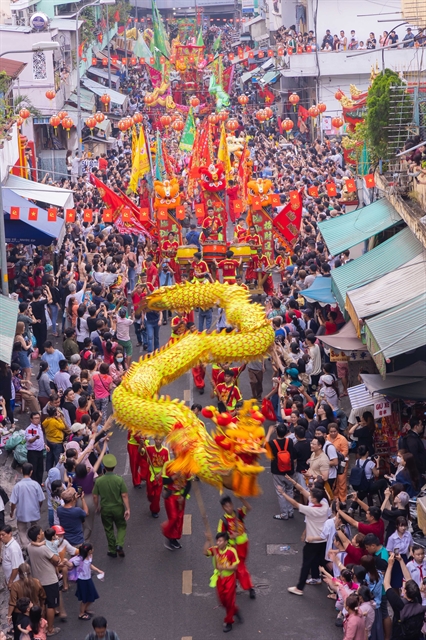 |
| Lion and dragon dance performances in the Chợ Lớn area in HCM City to celebrate Tết Nguyên Tiêu (Lantern Festival) last year. — Photo An Hiếu |
Thu Hằng
As Tết draws near, the thunder of drums and the swirl of lion and dragon dance once again animate Hồ Chí Minh City’s streets, signalling not just the arrival of the Lunar New Year, but the enduring pulse of a living heritage.
For Hồ Chí Minh City residents, “Seeing the lion dance means seeing Tết” has long been a familiar saying. The resounding beats of the drums and the graceful movements of the dancers are a sign that Tết has arrived, carrying wishes of good luck, prosperity and happiness for all.
The art of Lân Sư Rồng (Kylin, Lion and Dragon) Dance, practised by the ethnic Hoa (Chinese-Vietnamese) community in the city, achieved a historic milestone one year ago when it was recognised as a national intangible cultural heritage.
Roots of rhythm
The Chợ Lớn (Big Market) area, comprising former districts 5, 11 and 6, is widely regarded as the cradle of this tradition in Việt Nam, with many troupes carrying lineages that span nearly a century.
Among them is the Nhơn Nghĩa Đường troupe, one of the oldest in the country, founded 90 years ago. Its artistic standard is widely regarded as superior.
The troupe has not only won numerous awards in national competitions but also boasts many accomplishments on the international stage. It was also one of the first kylin, lion and dragon dance troupes to expand its reach globally, and has since become well-known among overseas Vietnamese and international audiences alike.
Recently, HCM City’s kylin, lion and dragon dance community has grown even stronger following the city's merger with Bình Dương and Bà Rịa-Vũng Tàu provinces, with the number of troupes rising to around 120.
No longer limited to Lunar New Year and Mid-Autumn Festival celebrations, kylin, lion and dragon dance has become increasingly professional, with many troupes now operating year-round, performing at grand openings and tourism events in the city.
Huỳnh Gia Bửu, head of the Thắng Nghĩa Đường troupe, which has a history of 47 years, says the kylin, lion and dragon dance is a distinctive performing art of the ethnic Hoa community in Chợ Lớn, reflecting the realities of their lives and spiritual beliefs.
The three mythical creatures symbolise the warding off of bad luck and wishes for prosperity and good fortune.
The troupe is currently practising new performances to serve the community during the Tết holidays, Bửu says.
Trần Văn Thảo, 28, a resident of Chợ Lớn Ward, has spent 13 years mastering the dance at the Thắng Nghĩa Đường troupe.
Training the tradition
In the weeks ahead of Tết, Thảo and his colleagues are deeply immersed in rehearsals, refining elite techniques and storytelling elements that make the troupe a local favourite year after year.
“All members of the troupe train hard to deliver the best performances for the public,” he says.
For locals, the thunderous beat of lion dance drums echoing through the streets is the first sign that Tết has arrived, often before calendars or decorations say so.
Hứa Nguyễn Vĩnh Huỳnh and his wife recently took their son and daughter to watch the International Lion and Dragon Dance Competition for the 2026 Chợ Lớn Cup held at the An Đông Ward Cultural and Sports Centre on January 3.
“My children love watching these performances,” Huỳnh said.
“Lion dance performances in the first days of the new year are cherished. They are an integral part of Vietnamese traditional culture.”
For him, the holiday is defined by moments like these – watching his children witness a vibrant tradition come to life.
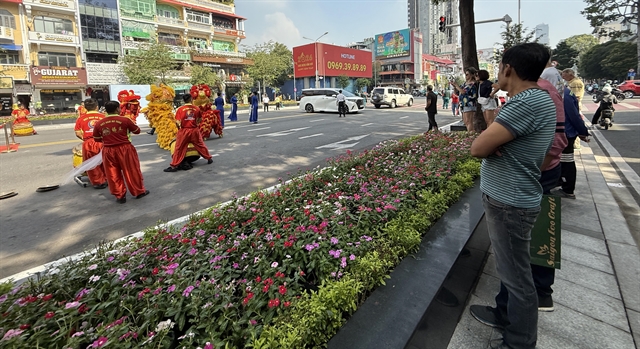 |
| Locals and foreign tourists enjoy a lion and dragon dance performance on Lê Lợi Street in downtown HCM City on December 31 last year. — VNS Photo Thu Hằng |
International spotlight
The traditional Lunar New Year atmosphere in HCM City has become even more vibrant as the 2026 International Lion and Dragon Dance Competition – Chợ Lớn Cup returns at its largest scale ever with nearly 50 top troupes taking part, including three leading international troupes for the first time.
According to the HCM City Kylin, Lion and Dragon Dance Federation, one of the event’s organisers, the competition is part of annual activities aimed at celebrating the new year.
It aims to encourage a sporting spirit and create a joyful atmosphere ahead of the festive season, according to Nguyễn Ngọc Tú, deputy president and general secretary of the federation.
Nguyễn Hữu Đăng has dedicated a decade to the Hùng Dũng Đường troupe. His journey reflects the sacrifices required to master the Mai Hoa Thung (or Plum Blossom Poles), one of the most demanding specialty acts.
Đăng and his partner Diệp Vĩnh Phong have trained for more than a year to challenge themselves on the Plum Blossom Poles, the ultimate test requiring high-pole jumping and precise balance. At least 5-7 poles, from 1.2 - 2.5 metres in height, are arranged in a symbolic flower pattern on compact stages.
“Despite suffering injuries such as broken arms or legs during training, I never stop,” Đăng said. “I continue to pursue my passion, dedicating myself completely to the art.”
“The competition is about more than just winning a trophy. We want to showcase the beauty of this rigorous sport and create a joyful atmosphere of peace and good fortune.”
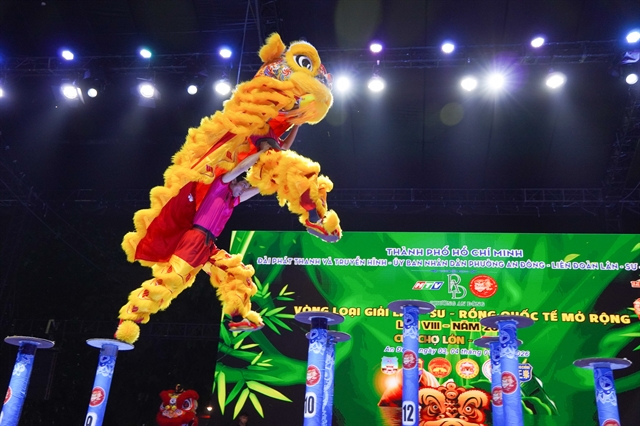 |
| Nguyễn Hữu Đăng and his partner Diệp Vĩnh Phong compete in a high-pole lion dance at the 2026 International Lion and Dragon Dance Competition on January 3. — Photo courtesy of the HCM City Lion and Dragon Dance Federation |
Thousands of locals and tourists came to the An Đông Ward Cultural and Sports Centre to enjoy the performances in the competition, which kicked off on January 3.
Nguyễn Minh Trí, 23, of Tân Nhựt Commune, said: “Lion and dragon dance is an art form I truly love because it has been part of traditional cultural events and festivals for a very long time, and I see it becoming increasingly popular among young people like me.
“I really enjoy the thrill of the Mai Hoa Thung jumps, as well as the movements in lion and dragon dances, which are very captivating. I was also very excited watching the dancers leap between the poles.
“I was extremely nervous when they reached the 21st pole, the highest one. I trembled along with them, praying for their safe ascent and descent.”
He was in awe of the incredible coordination required between the two performers.
“It brings joy and happiness to people in the new year.”
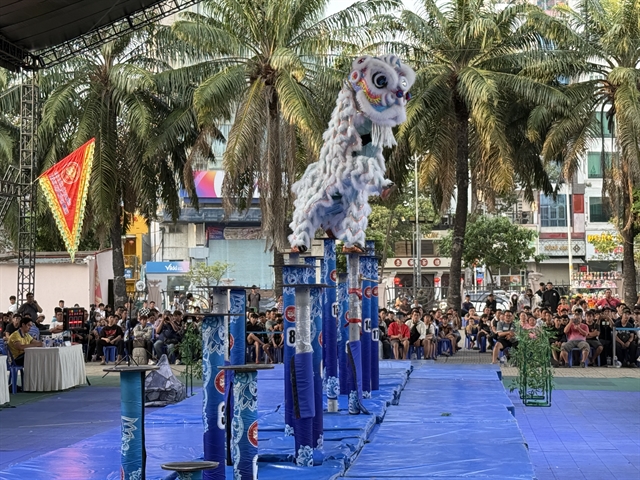 |
| Thousands of locals and tourists gather at the An Đông Ward Cultural and Sports Centre to enjoy the performances at the 2026 International Lion and Dragon Dance Competition on January 3. — VNS Photo Thu Hằng |
People’s Artist Lương Tấn Hằng, deputy president of the Việt Nam Kylin, Lion and Dragon Dance Federation, said the annual tournament contributed to the development of the art form, promoted the preservation of techniques and brought the dances closer to the community.
"Many young athletes show great passion for the sport and creativity in performance content, but are not yet fully conversant with international competition rules," he said.
He expressed hope that would change soon, creating a foundation to elevate the sport to new heights.
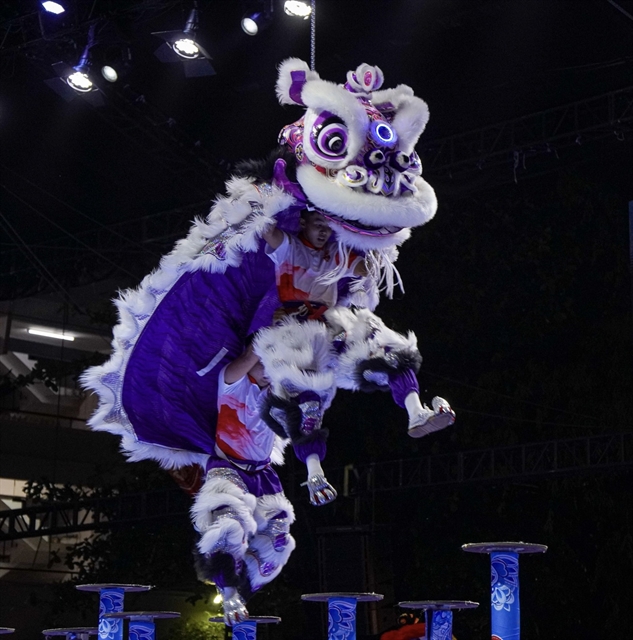 |
| A performance at the 2026 International Lion and Dragon Dance Competition that kicked off on January 3. — Photo courtesy of the HCM City Lion and Dragon Dance Federation |
Preserving the roar
Lion dance performances, sports competitions and heritage preservation are the three pillars supporting the development of this tradition in Việt Nam, Bửu of the Thắng Nghĩa Đường says.
Beyond performances, his troupe is also focused on heritage preservation and the development of cultural tourism, he adds.
Thắng Nghĩa Tổ Quán (Sing Yi Ancestral Hall), established in 2018, is a unique cultural space dedicated to the history of Thái Lý Phật (Choy Li Fut) martial arts and the traditional art of kylin, lion and dragon dance.
In 2022 the Vietnam Records Organisation (VietKings) recognised the site for its contribution to preserving the Choy Li Fut martial arts lineage.
In late 2023 a specialised tour programme titled Dấu Ấn Thắng Nghĩa (The Mark of Thắng Nghĩa) was launched, offering a distinctive cultural and martial arts experience in Chợ Lớn.
The programme allows visitors to learn about Choy Li Fut martial arts and the art of kylin, lion and dragon dance.
They can watch lion dance performances, enjoy martial arts demonstrations and try their hand at martial arts themselves.
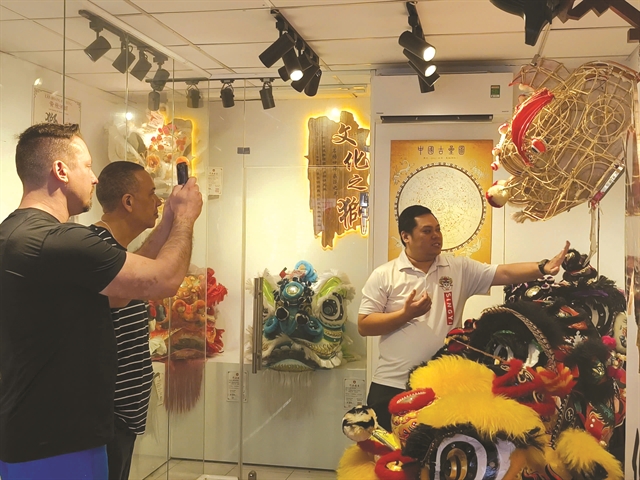 |
| Foreigners learn about the art of lion and dragon dance at Thắng Nghĩa Tổ Quán (Singyi Ancestral Hall). — Photo courtesy of Thắng Nghĩa Tổ Quán |
The programme has been integrated into the city’s “Chợ Lớn Discovery” tours to serve both domestic and international visitors, Bửu says.
The troupe is also collaborating with schools and travel firms to help locals and tourists gain a deeper understanding of the art form and to inspire a love for it among young people.
By inspiring the next generation to carry on this passion, the graceful movements of lion and dragon dance will continue to animate the city’s streets in the time to come — keeping the spirit of Tết alive, one drumbeat at a time. — VNS
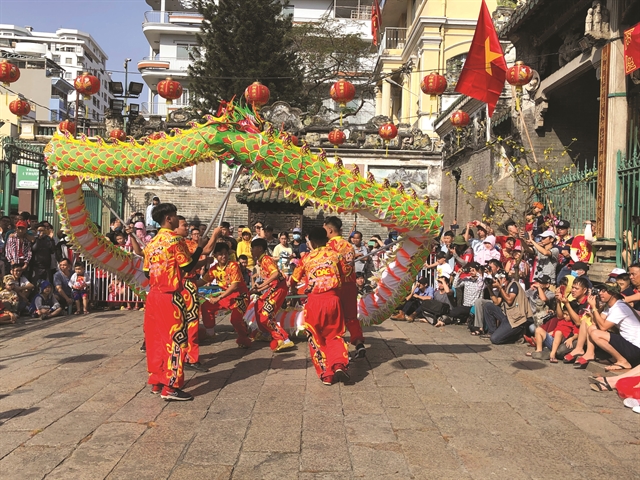 |
| Locals and foreigners enjoy a lion and dragon dance performance at Bà Thiên Hậu (Lady Thiên Hậu) Pagoda in HCM City during the Tết holidays. — VNS Photo Thu Hằng |
Features
 Features
 Features
 Features
 Features
 Features
 Features
 Features
 Features
 Features
 Features
 Features
 Features
 Features
 Features