 Features

Digitalisation helps streamline cargo clearance
1.
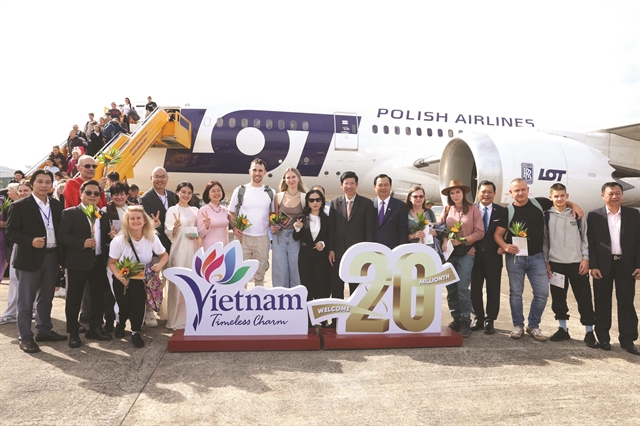 |
| RECORD TO BE PROUD OF: The ceremony marking Việt Nam’s 20-millionth international visitor at Phú Quốc International Airport on December 15. VNA/VNS Photo |
In 2025, travel to Việt Nam felt unhurried again. Long-haul visitors lingered, domestic travellers rediscovered familiar routes, and airports across the country quietly filled with the rhythms of movement returning to normal.
Việt Nam’s tourism industry staged a decisive comeback in 2025, not only recovering from the shock of the pandemic but surpassing its pre-crisis peak on almost every major indicator, according to official data.
For the first time, the country welcomed 21.5 million international visitors, breaking the previous record of 18 million set in 2019.
Total tourism revenue also crossed a historic threshold, exceeding VNĐ1 quadrillion (about US$38 billion), equivalent to roughly 8.8 per cent of GDP.
The rebound placed Việt Nam among the world’s fastest-growing tourism markets. International arrivals grew by approximately 21 per cent, far outpacing the global average of 5 per cent and the Asia–Pacific average of 8 per cent.
 |
| MODERN TOURING: Visitors join a “net-zero tour” in the southern province of Vĩnh Long, reflecting Việt Nam’s shift toward low emission and sustainable tourism experiences. |
While global tourism has recovered to around 90 per cent of pre-pandemic levels, Việt Nam’s recovery is estimated at 110 per cent.
The year’s most emblematic moment came on December 15, when Việt Nam welcomed its 20-millionth international visitor at Phú Quốc International Airport.
The guest, Karolina Agnieszka from Poland, became a symbolic marker of the country’s renewed pull as a long-haul destination.
The milestone capped a year in which Việt Nam steadily rebuilt confidence among travellers, airlines and tour operators, even as the global economy remained clouded by inflation, geopolitical tensions and uneven recovery across key markets.
Much of the surge was driven by sweeping visa reforms introduced from late 2023 and felt fully in 2025. The country expanded visa-free entry, rolled out 90-day e-visas for all nationalities, and extended permitted stays to 45 days for citizens of multiple countries.
"Việt Nam is moving from a reactive strategy toward an active, market-building approach, aimed at improving visa policy and air connectivity," said Phan Linh Chi, deputy director of the National Authority of Tourism (NAT).
 |
| GLITZ AND GLAMOUR: The opening ceremony of National Tourism Year 2025 in Huế marked a major push to position the former imperial capital as a top cultural and heritage destination. |
The reforms made it easier for visitors, particularly from Europe, North America and Australia, to plan longer, higher-spending trips.
If international arrivals supplied the headline figures, domestic tourism provided the sector’s stabilising force. Việt Nam recorded about 135 million domestic trips in 2025, up roughly 22 per cent from the previous year and nearly 1.6 times the level seen in 2019.
Domestic travellers increasingly opted for independent travel and weekend breaks, supported by promotional campaigns, new tourism products and improving transport infrastructure. Demand broadened across beach resorts, eco-tourism, cultural experiences and food-focused travel.
Crucially, spending and length of stay rose alongside volumes. In Hà Nội, for example, tourism revenue rose by 21.5 per cent to around VNĐ135 trillion ($5.1 billion), partly because visitors stayed longer and spent more per trip.
Shifting source markets
Data from the first 11 months of the year shows clear shifts in visitor source markets. Northeast Asia remained the backbone of inbound tourism.
South Korea delivered nearly 4 million visitors, while China recorded a strong rebound with about 4.8 million arrivals, reaffirming its position as a key source market.
European arrivals grew sharply, benefiting from visa exemptions and longer stays. Russia saw one of the most dramatic rebounds, with arrivals up nearly 191 per cent year-on-year.
Traditional Western European markets such as the UK, France and Germany maintained double-digit growth.
 |
| STILL ON TOP: A Cuban tourist takes selfies at Hạ Long Bay. VNA/VNS Photo |
Growth was also visible in non-traditional markets. Poland recorded a 41.7 per cent increase, reflecting Việt Nam’s push into Central and Eastern Europe, while India emerged as a fast-rising market, up 47.2 per cent, supported by new direct flights and demand from the weddings and events travel segment.
The tourism rebound unfolded alongside a major transformation in transport infrastructure. By December, Việt Nam had completed over 3,000 kilometres of expressways, linking regions from the northern border to the southern tip of the Mekong Delta.
The opening of key sections, including the Cần Thơ - Cà Mau Expressway, dramatically shortened travel times and turned once-remote destinations into viable weekend trips.
Coastal roads and east-west corridors also made it easier for travellers to combine highlands and beach destinations within a single journey.
While Long Thành International Airport had yet to open to passengers, construction progress already triggered investment in hotels, logistics and entertainment across southern Việt Nam, with the industry positioning itself for another surge when the airport becomes operational.
Beyond established hubs, several provinces and cities recorded breakout years. Huế City, host of National Tourism Year 2025, welcomed 6.3 million visitors, up more than 60 per cent, and generated over VNĐ13 trillion ($494 million) in tourism revenue.
More than 170 festivals and events reinforced Huế’s identity as a cultural and historical centre while supporting new night-time and digital tourism products.
Hà Nội consolidated its position as northern Việt Nam’s tourism engine, receiving 33.7 million visitors, including 7.8 million international arrivals, and expanding its night-time economy through pedestrian zones, cultural programming and cycling tours.
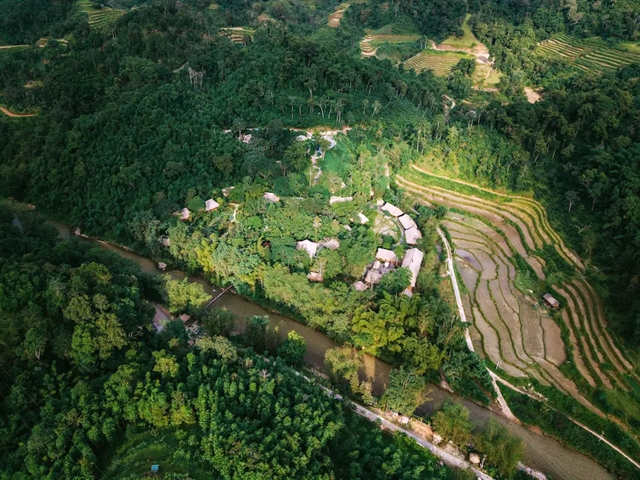
Việt Nam also gained international recognition for community-based tourism, with Lô Lô Chải and Quỳnh Sơn villages named among the world’s best tourism villages, bringing the country’s total to five.
Fresh programmes
A defining feature of 2025 was a shift from growth by volume to growth by depth, anchored in green and digital transformation.
"Net-zero tours" moved from pilot concepts to commercial products, particularly in central Việt Nam. Tour operators introduced low-emission transport, reduced plastic use and carbon-offset activities.
 |
| HERITAGE-lED: Traditional houses on Đồng Văn Karst Plateau, recognised in 2025 as the world’s leading regional cultural destination, showcase the enduring heritage of Việt Nam’s northern highlands. VNA/VNS Photos |
A representative of Realistic Asia said the company was rolling out green tourism programmes to cut carbon emissions and reduce waste.
"We prioritise partners that use green energy such as solar power and LED systems, limit plastic waste, and encourage guests to travel by electric vehicles or rail instead of fuel-powered cars," the representative said.
The firm also deducts $20 from every tour sold to contribute to a sustainable development fund supporting disadvantaged children, rural infrastructure projects, cancer patients and disaster relief.
"We want customers to see the meaning of each journey they take," the representative said.
On the digital front, the country launched Visit Vietnam, its first national tourism data platform. According to Phạm Văn Thủy, also deputy director of the NAT, the platform signals a broader shift in sector governance.
"Visit Vietnam represents a shift in development thinking – a way of preparing for a future based on data, technology and artificial intelligence," he said. "When data becomes the foundation, Việt Nam’s tourism will be better positioned to improve competitiveness and attract higher-value visitor segments."
Việt Nam’s resurgence was reflected in a wave of international awards and rankings underscoring the country’s rising global profile.
At the World Travel Awards 2025, Việt Nam recorded one of its strongest performances to date, winning 16 top global titles. The country was named World’s Leading Heritage Destination for the sixth time and Asia’s Leading Destination for the seventh.
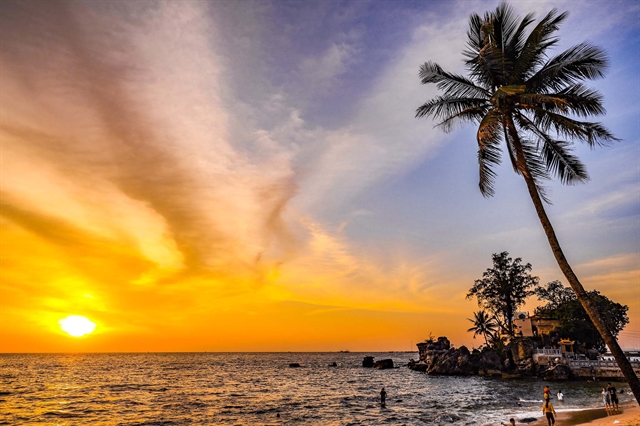
Individual destinations also gained global recognition. Phú Quốc was named the world’s leading nature island destination, while Tam Đảo earned the title of world’s leading town destination.
Đồng Văn Karst Plateau was recognised as the world’s leading regional cultural destination, and Mộc Châu as a leading regional nature destination, highlighting the growing diversity of Việt Nam’s tourism offer beyond traditional hotspots.
Việt Nam’s culinary profile rose sharply alongside its destination branding. TasteAtlas ranked Vietnamese cuisine 16th among the world’s top 100 cuisines in 2025, an improvement of three places from the previous year.
Condé Nast Traveller placed Việt Nam fourth globally for cuisine, while the World Culinary Awards named the country Asia’s Best Culinary Destination 2025.
Time Out included Việt Nam in its list of the world’s 20 most exciting winter destinations for 2025–2026, citing food as a central draw.
Tourism planners say the growing international recognition of Vietnamese cuisine, from street food to regional specialities, is playing an increasingly strategic role in attracting long-haul, higher-spending visitors and encouraging longer stays.
Buoyed by the 2025 performance, Việt Nam’s tourism authorities have set ambitious targets for 2026: 25 million international visitors, 150 million domestic trips, and revenue of around VNĐ1.12 quadrillion ($43 billion).
Officials say the next phase will focus more on sustainability, competitiveness and value, with businesses and local communities placed at the centre of tourism development. VNS
Features
 Features
 Features
 Features
 Features
 Features
 Features
 Features
 Features
 Features
 Features
 Features
 Features
 Features
 Features