 Features
Việt Nam backs open, rules-based multilateral trading system: Deputy FM
1.
 |
| For the Giáy, a pair of handmade shoes is far more than an accessory—it carries memory, ritual and communal identity in every stitch. VNA/VNS Photo |
In Việt Nam’s northern highlands, a fading shoemaking tradition of the Giáy people is finding new footsteps forward, as Gen Z youths work alongside artisans to preserve cultural memory – one stitch, one story, one pair of shoes at a time.
The Giáy, one of Việt Nam’s 54 ethnic groups, reside mainly in the northern provinces of Lào Cai, Hà Giang, Lai Châu and Cao Bằng. Their villages stretch along valleys and fertile stream banks ideal for wet-rice cultivation.
In recent years, social and economic shifts across the northern highlands have posed challenges to traditional livelihoods. Still, many Giáy communities quietly safeguard their identity, adapting where necessary while holding fast to core traditions.
Their heritage – from language and ritual to everyday craftsmanship – remains an essential part of Việt Nam’s diverse cultural mosaic. And for the Giáy, few objects embody that heritage as fully as a pair of handmade shoes.
More than an accessory, the shoes carry memory, ritual and communal spirit, each stitch forming a link between past and present.
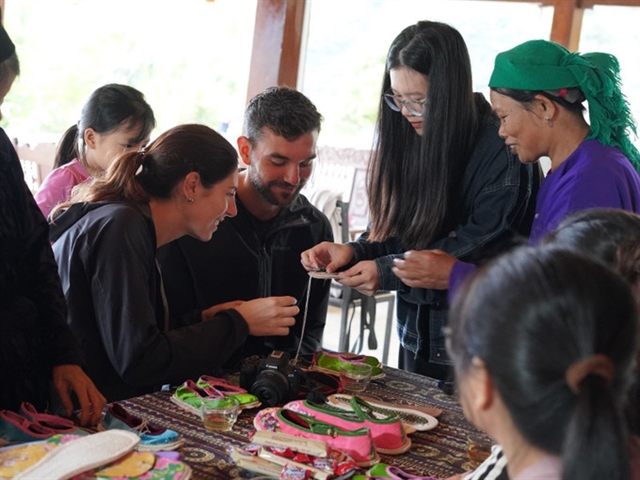 |
| Shoemaking workshops, souvenir crafts and homestay experiences rooted in the tradition offer a way to preserve heritage while supporting local livelihoods. VNA/VNS Photo |
Walking the tradition
From weddings, where a bride steps into her husband’s home in a new pair of shoes symbolising affection and blessings, to the final rituals of life, Giáy shoes serve as meaningful markers of personal and communal identity.
Each stitch and piece of fabric reflects a shared belief: through every harvest and along every mountain path, the Giáy carry their heritage with them. Among the community’s cultural treasures, these handcrafted shoes stand out as symbols of skill, resilience and a philosophy of living closely tied to the land.
Yet the craft is fading. Shoemaking demands patience and precision, and ever fewer young people are willing – or able – to continue it.
Motivated by this cultural fragility, a group of Gen Z youths launched the project “Dáng giày nét Giáy” (The Feature and Soul of Giáy Shoes).
“We feel a special connection with the culture and people of the former province of Hà Giang (now part of Tuyên Quang),” project leader Bùi Quỳnh Hương said. “One member of our team was born there and grew up with memories of peaceful villages and the spiritual values preserved across generations. Those stories stayed with us.”
Hương recalled her first meeting with shoemakers. “Their eyes were calm yet devoted. Their pride showed not in words but in how they handled each piece of fabric, each stitch. That was when we realised the shoes are not merely commodities – they are the spirit of a community holding onto its identity.”
The team also saw opportunities for cultural development as tourism grows among young travellers. Shoe workshops, souvenir crafting and homestay activities tied to the tradition could both promote heritage and support local livelihoods.
“It was the harmony between cultural beauty, development potential and the artisans’ dedication that inspired us to focus on Giáy shoes,” Hương said.
The project’s message – “Touch and feel the values that have nurtured the soul of a land” – extends beyond presenting a handmade item. Each stitch carries not only labour but identity, memory and place.
Youth as cultural bridges
Preserving that spirit, however, has not been easy.
“Our biggest struggle is preserving the original spirit of Giáy culture while creating experiences that resonate with young people," Hương admitted. "Balancing old values with new approaches requires respect, understanding and close collaboration with the community.”
To achieve this, the team listened carefully to master artisans, verified stories and searched for ways to tell them authentically.
Fieldwork in Hà Giang became an ethnographic journey marked by steep passes, unpredictable weather and long treks to remote villages.
“Documentation on the shoemaking craft is scarce,” Hương said. “We pieced together knowledge from villagers’ stories, direct observation and hours of conversation. These challenges deepened our understanding and strengthened our commitment.”
Trying the craft themselves proved transformative.
“When we attempted to make parts of the shoes, we realised the craft is far more complex than it appears,” said Vũ Huyền Trang, in charge of project communications. “What seem like simple steps demand meticulousness, patience and skill.”
Hearing the artisans’ worries – “Few young people learn the craft now. The elders are ageing. We don’t know who will continue this work” – only strengthened the team’s resolve.
Participant Nông Mỹ Phương Thảo from Hà Nội recalled her excitement after attending a workshop. “Holding a tiny shoe keychain crafted with the same techniques as a full pair made me appreciate the dedication behind the tradition. I’m grateful the team brought this craft from Tuyên Quang to Hà Nội. Now, I hope to visit the Giáy community and own a pair myself.”
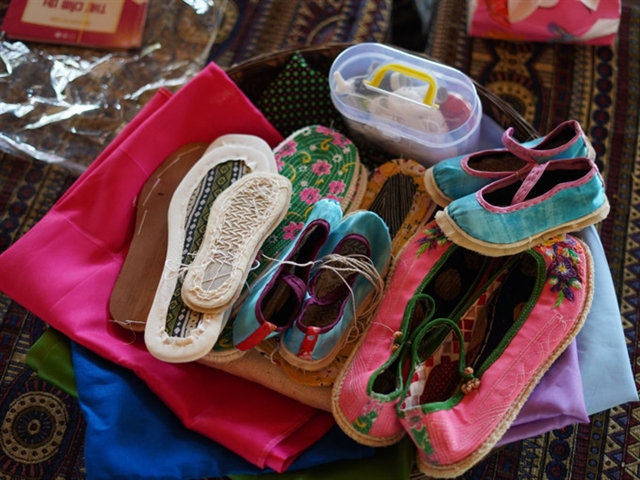 |
| Through embroidered Giáy shoes, traditional objects become emotional touchpoints, connecting young audiences to living culture. VNA/VNS Photo |
Youth heritage storytellers
In the digital age, Gen Z – dynamic, creative and unafraid to experiment – are emerging as sensitive storytellers of heritage. Through embroidered Giáy shoes, traditional products become emotional touchpoints, allowing young people to experience and reinterpret culture in their own language.
Trang noted that preservation today would go beyond conservation. It involves learning, retelling and sharing stories through exhibitions, workshops and digital media – acting as bridges between local traditions and modern life.
Lê Thị Thoa, lecturer in Brand Management at the School of Interdisciplinary Sciences and Arts, sees this shift as deeply encouraging.
“Projects like Giáy shoes show that young people are not indifferent to traditional culture,” she said. “They simply lack opportunities to truly touch it.”
She hopes such initiatives will move perceptions beyond seeing cultural products as ordinary objects, toward recognising their “soul”—the customs, worldview and way of life they embody.
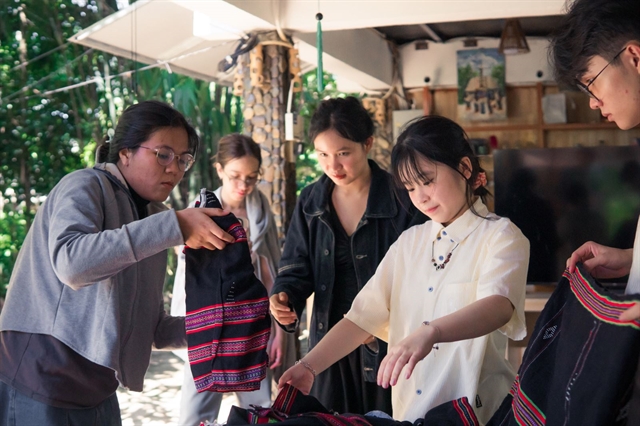
Understanding, she added, must come first. The project succeeded because students left the classroom, travelled to Đồng Văn, lived with the community and sewed alongside artisans. Stories heard from living witnesses move people in ways textbooks cannot.
“I hope each young participant becomes a cultural ambassador, carrying forward the stories of villages and people through their own generational lens. They can integrate these elements into artistic or applied products for both domestic and international audiences, strengthening Việt Nam’s cultural identity,” she added.
To make cultural materials like Giáy heritage resonate with young people today, Thoa highlighted two key principles, namely understanding and co-creation.
Understanding requires real research and lived experience. The Giáy shoes project succeeded, she said, because students left the classroom, travelled to Đồng Văn, lived with the ethnic community and even sewed alongside artisans. Stories heard directly from “living witnesses” would move people in ways textbooks cannot.
She also noted the special contribution of a team member originally from Đồng Văn, whose pride and passion helped bring Giáy culture naturally into the project’s communication work.
Co-creation matters too. Tradition should not remain behind glass. Turning shoemaking techniques into workshops, keychains, accessories and contemporary displays gives heritage a renewed presence.
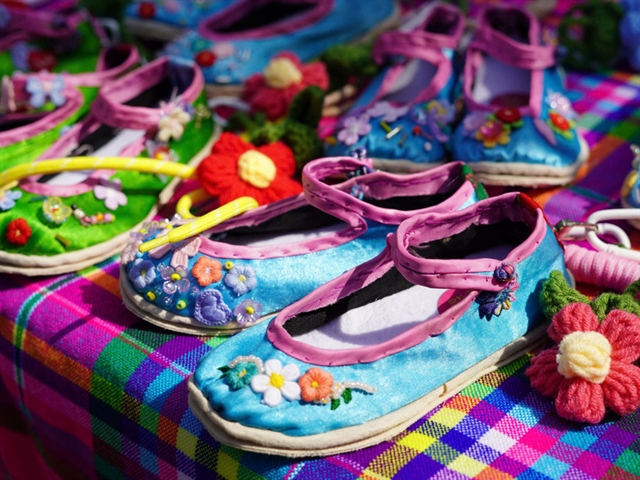 |
| Understanding and co-creation help transform Giáy heritage into cultural experiences that resonate with young people today. VNA/VNS Photo |
In today’s landscape, Thoa believes young people are becoming vital “cultural translators”—transforming layered ethnic values into images, experiences and stories that speak to a new generation, while keeping the heart of tradition intact. VNS
Features
 Features
 Features
 Features
 Features
 Features
 Features
 Features
 Features
 Features
 Features
 Features
 Features
 Features
 Features