 Features
Việt Nam–Germany Strategic Partnership deepens across multiple sectors after 15 years
1.
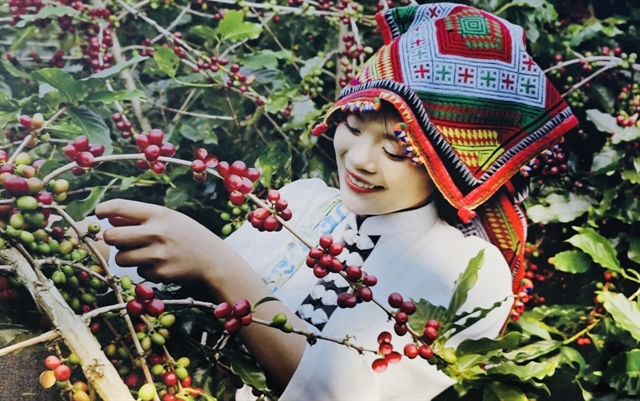 |
| Chiềng An Ward possesses natural conditions particularly suitable for Arabica coffee.farming. VNA/VNS Photo |
Chiềng An Ward in the northern province of Sơn La is turning its Arabica coffee heritage into a springboard for tourism, using festivals and cultural events to bring new life to the community.
Its recent Coffee Festival offered more than a showcase of beans and flavours — it signalled the ward’s broader ambition to build a sustainable economy where agriculture, culture, and tourism grow together.
Beyond a cultural and agricultural activity, the event reflects the locality’s orientation in branding and economic development through tourism in the Northwest region.
Coffee roots
Chiềng An Ward possesses natural conditions particularly suitable for Arabica coffee farming: an altitude of 750 - 800 metres, a cool climate, and basalt soil that creates a deep, delicate aroma in the coffee.
Following the administrative reorganisation, Chiềng An covers an area of 149 square kilometres, with a population of 20,300, becoming one of the largest administrative units in the province.
From this foundation, coffee has become an “economic lever”, shaping a unique brand for the region.
The ward currently has 1,987 hectares of coffee, with an average yield of 8–10 tonnes per hectare, translating to around 15,496 tonnes per year and generating revenue of approximately VNĐ433.8 billion (US$16.45 million)
Coffee has become the key income source, contributing to poverty reduction and improving the livelihoods of Thai, Mông, and Dao ethnic communities.
Notably, Chiềng An is the first locality in Sơn La to operate a Cascara tea production line, which processes dried coffee husks.
This marks a significant shift from raw production to value-added processing, supporting the goal of sustainable agricultural development.
Nghiêm Văn Tuấn, chairman of the Chiềng An Ward People’s Committee (the ward's administration), said that the festival created new opportunities to attract additional investment projects in the coffee sector, from production and processing to commercial services and tourism.
It also helped promote the locality’s distinctive agricultural image and laid the foundation for developing speciality products and community-based tourism.
Lò Minh Hùng, permanent deputy secretary of the Communist Party Committee of Sơn La Province, noted that the coffee festival was helping to position the “Sơn La Arabica - the Favour of the Northwest” brand on the global coffee map, bringing stories of livelihoods, culture, and the daily life of local ethnic communities closer to visitors.
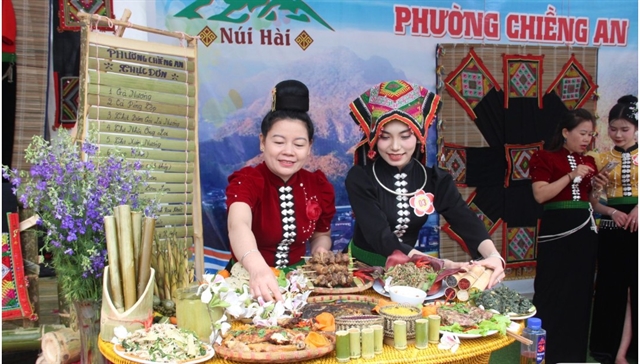 |
| Traditional meal of the Thai ethnic group in Chiềng An. —VNA/VNS Photo |
Tourism potential
Beyond production, Chiềng An is implementing a strategy to develop eco-agricultural tourism centred on coffee, with festivals serving as the highlight.
According to Lương Duy Doanh of Fivestar Travel, the expansion of “farm-to-cup” experience chains is opening new opportunities for Chiềng An: simultaneously boosting the economy, shaping its brand identity, and promoting local tourism.
His company is coordinating with Hà Nội-based tour operators to survey potential tourism routes in the area, including community-based tourism in ethnic Thai villages.
“Around February 2026, the locality will host an international marathon alongside local seasonal flower festivals, creating further connections and promoting local tourism,” Doanh said.
In the near future, Chiềng An is expected not only to remain a major raw-material area but also to develop into a distinctive coffee tourism destination of the Northwest, where visitors can fully experience the flavour of Arabica coffee amid the unique cultural landscape of the region’s ethnic communities. VNS
Features
 Features
 Features
 Features
 Features
 Features
 Features
 Features
 Features
 Features
 Features
 Features
 Features
 Features
 Features