 Features
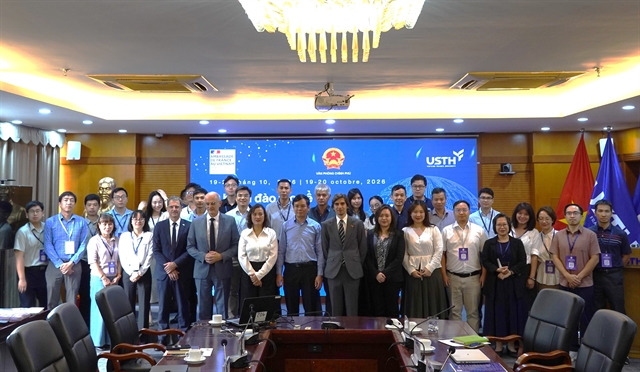
France-supported training course on semiconductor development held for State officials
1.
 |
| “Cơ Tu-Gether” is a key programme within the Đà Nẵng Heritage Festival 2025, bringing Cơ Tu culture into an immersive public experience. VNA/VNS Photo |
Amid the fast pace of Đà Nẵng’s urban development, the echo of gongs, the sacred sky-offering dance and the fragrant smoke of traditional craft houses are being revived through the passion of a young generation determined to protect the cultural identity of the Cơ Tu ethnic people.
In Đà Nẵng, a city known for its rapid urban expansion and its constant push toward modernity, a quieter movement has emerged, not through construction cranes or new skylines but by the determination of young people who fear losing something irreplaceable.
As concrete roads stretch deeper into the mountains and high-rise buildings multiply along the coast, a different kind of energy has taken hold among a group of Gen Z creators deeply committed to preserving the cultural heritage of the Cơ Tu community.
Their project, “Cơ Tu-Gether”, blends traditional knowledge with contemporary storytelling to create an experience that reconnects young urbanites with the spiritual and artistic life of the Cơ Tu.
The initiative forms a central part of “Đà Nẵng Heritage Festival 2025”, but it is more than an event. It is a long-term vision shaped by patience, listening and collaboration.
Carrying the message “A small village walk, a thousand stories told”, the project is designed to open pathways for young people to encounter heritage not as a relic but as something alive, fragile and profoundly human.
Through village visits, interactive exhibitions, craft workshops and digital communication, the project seeks to preserve traditions while making them accessible to contemporary audiences.
 |
| The “Cơ Tu-Gether” project blends traditional knowledge with modern storytelling, helping young urban audiences connect with heritage. VNA/VNS Photo |
Listening first
The project team, a diverse group of designers, students, filmmakers, and cultural workers, began by visiting Hòa Bắc Commune, where many Cơ Tu families have lived for generations. They made a deliberate choice to avoid rushing into documentation, instead prioritising relationships and trust.
As project leader Nguyễn Thị Phương Na explained, “We spent hours listening to elders before even thinking about cameras or storyboards. Every gesture, every tale has emotional weight. We wanted to understand that depth before retelling anything.”
Her description of the team as “a patchwork of skills stitched together by the same love for heritage” reflects their belief that the work must be rooted in the community’s voice rather than through external interpretations.
Their shared goal was to ensure that Cơ Tu culture would not be reduced to an aesthetic backdrop or a simplified tourist attraction, but instead remain anchored in the lives of the people who hold it.
Cơ Tu-Gether unfolds in three interconnected stages, the first of which uses digital media to introduce foundational aspects of Cơ Tu culture.
Short-form videos, interviews and online lessons help explain the meanings behind textile patterns, farming rituals or ceremonial dances in ways that resonate with younger audiences accustomed to fast information.
Photographer Trần Hữu Khôi emphasised that this approach aimed to change how young people perceive ethnic heritage.
“Many young people think ethnic culture belongs to museums,” he said. “We want them to see its beauty in everyday life, the laugh of an artisan, the markings on a shield, the colours in a woven band.”
Through these digital pieces, viewers catch glimpses of artisans at work, elders recounting memories, or tools used to craft musical instruments, all presented without dramatisation. The intention is to show that heritage is not a staged performance but a daily reality.
Culture in play
The second stage is the heart of the festival: an experiential space curated jointly by the creative team and Cơ Tu artisans.
Instead of conventional displays, the area becomes a living environment where tools, clothing, ritual objects and food are placed within reach of those visiting.
The sound of looms, the smell of wood shavings and the rhythm of traditional activities turn the space into an immersive encounter.
Na explained the impact of hands-on experience, noting, “When someone spends five minutes trying to weave a straight line, they suddenly understand the value of a piece that takes months.”
This simple moment of struggle – thread slipping and edges wobbling – gives visitors a window into the discipline and artistry behind each finished piece.
Veteran weavers demonstrate techniques while students attempt their first uneven rows. Woodcarvers guide trembling hands as participants try to copy the bold strokes of ancestral motifs.
The third stage, still in progress, is a digital archive that will gather oral histories, photographs, notes and interviews collected during field visits.
Na said the purpose was to make cultural knowledge available even to those who cannot travel to the village: “Not everyone can go to the village,” she noted, “but they should still be able to learn from the people who keep the culture alive.”
This archive aims to preserve both information and tone, the cadence of elders’ voices, the texture of their memories, and the laughter that fills a home during storytelling sessions.
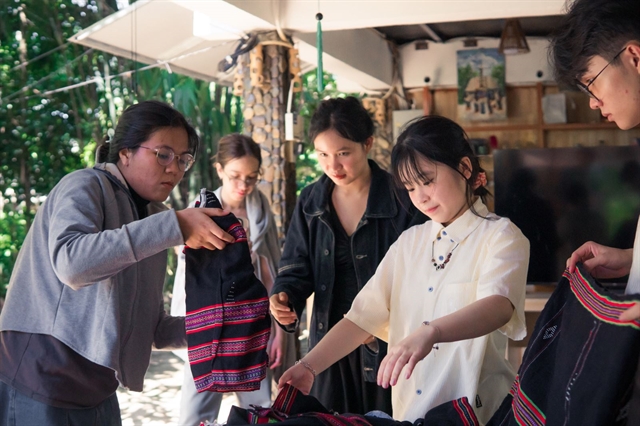 |
| The project ensures Cơ Tu culture is not simplified for tourism but remains rooted in the voices, practices and memories of local artisans. VNA/VNS Photo |
Touching the craft
For many festival attendees, their time with the artisans left a lasting emotional impression.
University student Lê Thị Ngọc Minh described receiving a handwoven scarf from a weaver who explained each motif. “She explained the pattern symbolising mountains and rivers,” Minh recalled. “In that instant, it felt like Cơ Tu history touched my skin.”
Content creator Nguyễn Việt Hưng felt similarly moved. He admired that the project avoided staging scenes for dramatic effect.
As he put it, Cơ Tu-Gether was “one of the few cultural initiatives that lets the community speak for itself.”
What impressed him most was the authenticity of interactions: “Nothing was arranged for the camera. We met real people speaking from their own memories. That honesty is what draws young audiences today.”
For the villagers themselves, the project brought a sense of renewed pride. Community representative ALăng Như expressed concern about traditions fading in a fast-paced world, but she also described the joy of receiving curious visitors.
“Sometimes we worry that our traditions might fade because the world moves too fast,” she said. “But when young people ask questions, genuine, thoughtful questions, we feel encouraged to keep teaching.”
Artisans echoed this sense of encouragement.
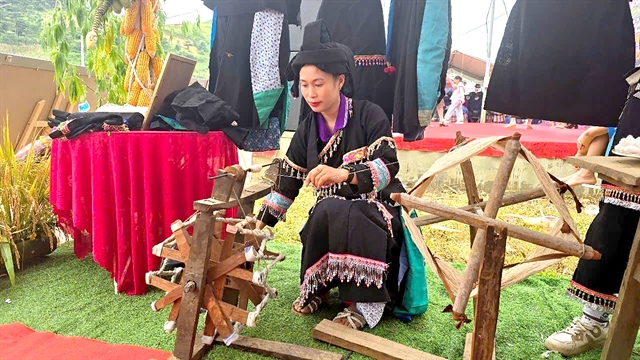
Weaver ALăng Mỹ, who has practised brocade weaving for forty years, admitted she once feared her craft might disappear as younger people left for work elsewhere. But watching students attempt their first weaving sparked new hope.
“Our young people leave the village for better jobs,” she said. “But when I saw students struggling to control the loom, laughing at their crooked lines, I felt hope. Curiosity is the first step to inheritance.”
Woodcarver Bh’riu Hạnh appreciated the chance to explain the symbolism behind traditional carvings.
“People usually see patterns and think they’re just decoration,” he said. “But each one carries a message. When the young organisers took time to record these stories carefully, it felt like a promise that nothing would be forgotten.”
Stories that breathe
Preservation is not limited to traditional crafts.
Rapper Huỳnh Hạ is one of several young Cơ Tu artists creating new forms of cultural expression by merging ancestral rhythms with contemporary music.
“Rap may sound modern, but it’s storytelling. If our language appears in music young people enjoy, it stays in their hearts. That’s another kind of preservation,” he said.
His performances at community tourism events have drawn attention to how heritage can evolve without losing its core.
 |
| The success of Cơ Tu-Gether comes from genuine partnership with the community and respectful documentation of cultural knowledge. VNA/VNS Photo |
City cultural officials believe the project demonstrates what youth-led initiatives can accomplish.
Dương Lê Phương, head of Đà Nẵng’s Cultural Management Division, highlighted the strengths young creators bring: “They’re fluent in visual language and digital platforms. They know how to create emotional resonance quickly. When these skills are paired with cultural sensitivity, heritage becomes far more accessible.”
But she also emphasised the need for genuine respect: “Heritage is not content to be packaged,” she said. “It is a lived experience. The success of Cơ Tu-Gether comes from its respect for the community.”
Heritage renewed
The Đà Nẵng Museum, which collaborates with the team, holds a similar view.
Its deputy director noted that young creators offered unique interpretive power for their peers: “They don’t only present information, they reinterpret it through modern aesthetics. That kind of translation is essential in a fast-changing society.”
Within the project team, momentum remains strong even as the festival concludes.
Communications specialist Lê Thị Thanh Trung noted the group’s flexible creative approach, saying: “We use animation for some stories, photo essays for others, and short films when necessary. Different narratives require different formats, and Gen Z is comfortable shifting between them.”
Volunteer coordinator Nguyễn Quốc Bảo recalled long evenings listening to elders’ stories: “We didn’t just gain information; we gained trust,” he said. “That relationship is what gives weight to everything we later produce.”
Looking ahead, the team plans to build a comprehensive website filled with articles, artisan interviews, tourism information and educational materials.
Na emphasised their long-term commitment: “We want a resource that lives and evolves,” she said. “The goal is long-term preservation, not a one-off event.”
Through shared effort, curiosity and respect, the young creators of Cơ Tu-Gether and the Cơ Tu community have together ensured that heritage is not simply safeguarded but revitalised, rooted in the past and expressed anew in modern life. VNS
Features
 Features
 Features
 Features
 Features
 Features
 Features
 Features
 Features
 Features
 Features
 Features
 Features
 Features
 Features