 Features

VN-Index ends lower despite liquidity hit over $1 billion
1.
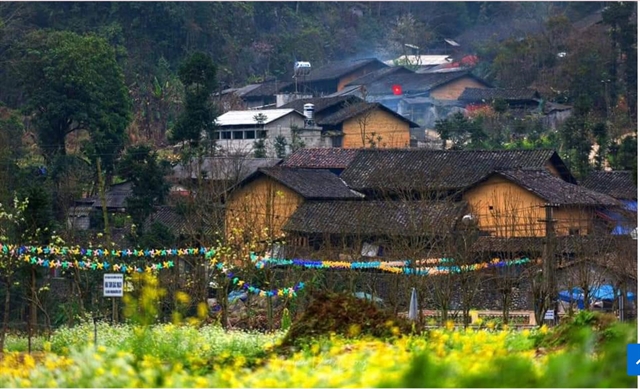 |
| The tranquil beauty of Lũng Cẩm Village. — Photo tuyengiao.hagiang.gov.vn |
TUYÊN QUANG — In the rocky highlands of northern Việt Nam, Lũng Cẩm Village endures as a living archive of Mông culture. Set in Sủng Là Commune in the northern mountain province of Tuyên Quang along the route of the Đồng Văn Karst Plateau UNESCO Global Geopark, the settlement has transformed into a model of community-based tourism — one where preservation, not reinvention, defines development.
For generations, the tranquil and beautiful village has been home primarily to the Mông ethnic community, alongside several Hoa, Nùng and Giáy households, creating a rich tapestry of traditional culture and diverse lifestyles.
The local Mông rammed earth houses with thick yellow walls are encircled by hand-built stone fences crafted over generations, while expansive flower fields add to the area’s natural splendour.
Historical records from Sủng Là Commune indicate that Lũng Cẩm is a long-established settlement of local ethnic communities, with cultivated fields, a stable way of life and numerous traditional rituals still preserved today. This enduring commitment to safeguarding customs and village life has allowed the locality to retain its old atmosphere — a quality many other areas on the rocky plateau no longer possess.
"Lũng Cẩm has strength in tourism development due not only to its naturally beautiful landscape but also its original intactness," Nguyễn Văn Thơ, chairman of the People’s Committee (Administration) of Sủng Là Commune, said.
"The locals engage in tourism without sacrificing their architecture or customs. Local authorities only provide infrastructure support and skills training, while preserving the cultural identity is the responsibility of the community, who are proactive and determined to do so."
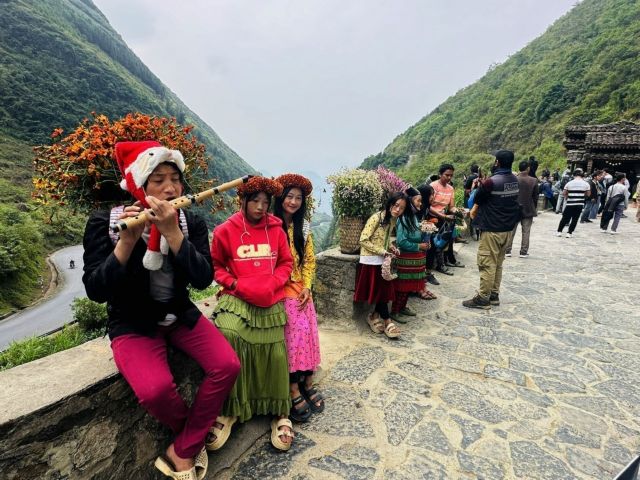 |
| Mông ethnic youth carrying baskets of flowers stand by the entrance to Lũng Cẩm to warmly and cheerfully welcome visitors. — VNA/VNS Photo Minh Tâm |
Living heritage
Venturing deeper into Lũng Cẩm, visitors can sense traditional life unfolding at every turn. Kitchens glow with open fires as smoke drifts upwards carrying the scent of freshly harvested maize. The steady rhythm of cloth-weaving handlooms echoes each afternoon, while children play on wooden porches, offering a glimpse of a way of life that has endured for generations.
Each season lends the village a distinct character. Spring arrives in a flourish of apricot and plum blossom. Summer spreads a carpet of green across terraced rice fields. Autumn ripens into golden harvests, while winter cloaks the valley in a veil of mist.
Lũng Cẩm also remains a rare stronghold of traditional customs, folk songs and handicrafts. During festivals, the sound of flutes and drums played by local men blends with the vibrant attire of Mông women, forming a vivid cultural tableau set against the rugged mountains.
Among the village’s most recognised landmarks is the Mua family’s traditional house, selected as a principal setting for the acclaimed 2006 film Chuyện Của Pao. Produced through collaboration between Vietnamese and international filmmakers, the film portrays the lives and culture of ethnic communities, particularly the Mông.
Poetic yet grounded in realism, the film was edited by Phillip Noyce and shot by cinematographer Cordelia Beresford. Through its depiction of cultural life in the northern mountains, it explores aspirations for freedom and happiness.
The production received four Golden Kite Awards and a Special Asia Pacific Screen Award. Its sweeping frames captured the striking hues of the northern landscape -- the gold of flowering brassica, the white of orchid trees and the green of maize fields.
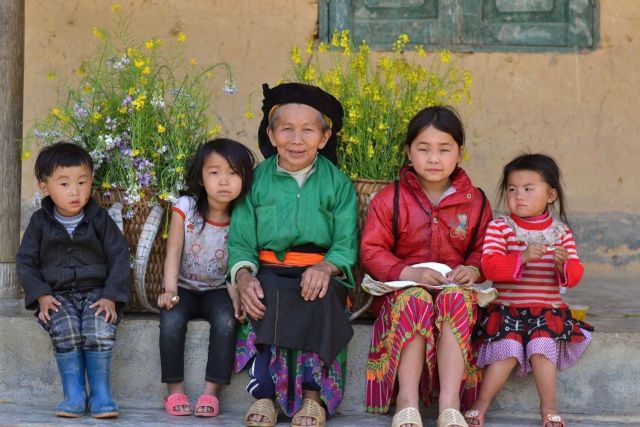 |
| A Mông elderly woman and children sit in front of their traditional rammed-earth house in Lũng Cẩm. —VNA/VNS Photo Minh Tâm. |
Preserving identity
Despite the passage of time and the effects of weather, the Mua family’s house retains its rustic charm. A stone-paved courtyard, a hand-operated maize mill by the gate, a moss-covered yin-yang tiled roof and a kitchen with maize seeds hanging in the attic all speak to generations of careful preservation.
Nguyễn Hải Yến, a tourist from Hà Nội, was particularly struck by the village’s landscape and its living cultural heritage.
"The visit leaves me with a very special experience. Everything is so simple and familiar that I feel like life in the movie is continuing there," she said.
Alongside protecting the landscape and cultural identity, villagers have actively developed community tourism. They build homestays, showcase traditional cuisine, produce handloom fabrics, and make buckwheat cakes and maize wine with leaf yeast. All products use local ingredients and reflect the community’s commitment to preserving its culture.
Sủng Là Commune chief Thơ said the village welcomed tens of thousands of tourists every year.
“Tourism has made a significant contribution to improving local incomes, creating stable jobs in the village, reducing poverty, and helping people raise awareness about preserving the environment and cultural identity,” he said.
Vàng Sè Vàng, a senior villager, added: "The rammed earth houses, stone fences and linen skirts of the Mông women are not just objects, but the soul of the village. When visitors come to Lũng Cẩm, the first thing we want to show them is our orderliness and kindness passed down from our ancestors."
He emphasised the importance of preserving tradition while developing tourism.
“We know the most valuable thing is to make our culture known to more people. But villagers also understand that tourism must be authentic and rooted in our traditions so that visitors will want to return," he said.
Tourism developers in Sủng Là are now connecting Lũng Cẩm with nearby destinations such as Phó Bảng, the Vương family mansion and the Lũng Cú flagpole to create a seamless cultural, historical and scenic experience.
The commune continues to invest in transportation infrastructure, tourism skills training and livelihood support to establish Lũng Cẩm as a model cultural destination of the Đồng Văn Karst Plateau.
Quiet and unpretentious, Lũng Cẩm offers an authentic glimpse into life in Việt Nam’s mountainous regions, its untouched beauty, rustic charm and rich ethnic traditions harmonising with pristine nature.
The village is a gem of the northern highlands, where simple living, enduring cultural values and natural splendour combine.
For travellers exploring the rocky landscape of the UNESCO Global Geopark Đồng Văn Karst Plateau in the former Hà Giang (now part of enlarged Tuyên Quang Province), Lũng Cẩm is a place to pause, listen and experience the local culture firsthand, surrounded by peaceful valleys and majestic mountains.
The Đồng Văn Karst Plateau itself is a testament to hundreds of millions of years of geological history. It was named Asia’s Leading Cultural Destination 2025 by the World Travel Awards.
UNESCO reaffirmed the plateau’s Global Geopark status in 2014, 2019 and most recently in 2023 during its 10th International Conference in Morocco, marking three consecutive recognitions of the region’s outstanding achievements.
As the Đồng Văn Karst Plateau continues to earn international recognition, villages like Lũng Cẩm remind visitors what that status truly represents. Beyond dramatic limestone peaks and geological history lies a living cultural landscape shaped by generations. In preserving its rammed-earth homes, stone fences and ancestral customs, Lũng Cẩm embodies the spirit of a geopark — where nature and human heritage are safeguarded together for the future.-- VNS
Features
 Features
 Features
 Features
 Features
 Features
 Features
 Features
 Features
 Features
 Features
 Features
 Features
 Features
 Features