 Economy


Top Vietnamese leader meets with Belgian Senate Speaker, House President
1.
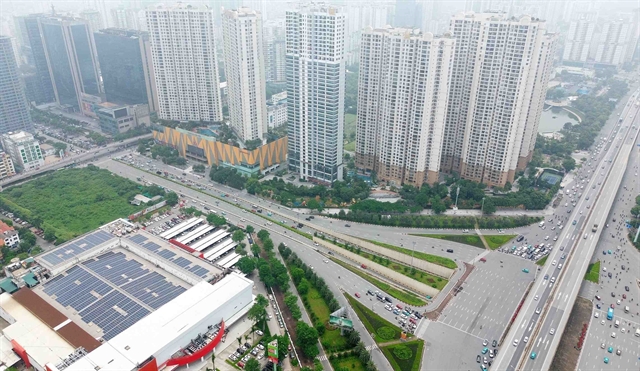 |
| A view of Hà Nội. Data from Batdongsan.com.vn shows that buyers purchasing apartments for short-term speculation now account for only around 4 per cent of the market. VNA/VNS Photo |
HÀ NỘI — Hà Nội’s once red-hot apartment market is showing clear signs of cooling, with slowing liquidity and cautious buyers forcing many short-term investors to retreat after years of rapid gains.
The shift has made it increasingly difficult for speculative investors to sell properties quickly, as weakening demand and rising holding costs squeeze profits and leave many assets sitting unsold for weeks.
Since the start of 2026, Phạm Đức Tuấn, a short-term investor in Hà Nội’s apartment market, has begun each morning checking messages from real estate brokers on his phone.
The 90-square-metre apartment he bought in the Mễ Trì area in mid-2025, expecting a quick return, has remained unsold on property listing platforms for weeks.
“During 2024-25, I only needed to post a listing for a few days before buyers started calling nonstop, some even willing to pay hundreds of millions of dong above the asking price just to secure the unit,” Tuấn told vnBusiness.vn.
“At that moment, I bought three apartments in quick succession because prices kept climbing and liquidity was strong. But after the 2026 Lunar New Year, the market changed very quickly. Buyers became cautious, investors disappeared, and genuine homebuyers started waiting for prices to correct.”
Rising loan interest, management fees and frozen cash flow tied up in unsold properties have forced Tuấn to reconsider his strategy. Instead of targeting profits of VNĐ300-400 million per apartment, he now hopes simply to break even and recover his capital.
“The longer I hold, the more exhausting it becomes. The market is no longer as easy to profit from as before,” said the investor from Hải Phòng.
His experience reflects broader trends in Hà Nội’s apartment market, where speculative short-term investors are rapidly withdrawing after several years of strong growth.
Data from Batdongsan.com.vn showed buyers purchasing apartments for short-term speculation now account for only around 4 per cent of the market, down sharply from 30-40 per cent in previous years.
Meanwhile, roughly 67 per cent of transactions are driven by genuine housing demand, while nearly 30 per cent involve rental investment.
The figures point to a structural market shift, with speculative capital gradually being replaced by long-term investment and owner-occupier demand.
For years, short-term apartment trading was a major driver of soaring prices and high liquidity in Hà Nội’s housing market.
However, apartment prices have now risen far faster than incomes for many residents, making it increasingly difficult for short-term investors to secure profitable exits.
Persistently high interest rates have also sharply increased borrowing costs, reducing the appeal of speculative investment and pushing opportunistic investors out of the market.
Defensive sentiment
Đồng Quang Cảnh, senior sales manager at Batdongsan.com.vn, said investment flows were increasingly shifting towards assets with more sustainable and practical value.
According to Cảnh, many buyers now prioritise secondary-market apartments that are completed, ready for occupancy and more affordable.
The trend has also shifted demand away from Hà Nội’s urban core, with buyers expanding searches to suburban districts and neighbouring provinces such as Hưng Yên and Bắc Ninh in search of homes better suited to their budgets.
Market data reflects the slowdown clearly. According to One Mount Group, total secondary real estate transactions in Hà Nội reached around 11,100 units in the first quarter of 2026, down 50 per cent from the previous quarter.
The apartment segment alone recorded about 4,000 resale transactions, representing a 60 per cent quarterly decline and a 26 per cent drop year-on-year.
Trần Minh Tiến, director of the Market Research and Customer Insight Centre at One Mount Group, said the market had clearly slowed down after a prolonged period of overheating.
“The market is entering a more selective phase. Short-term speculative capital is weakening, giving way to genuine housing demand and long-term asset accumulation,” said Tiến.
At brokerage offices in areas such as Mỹ Đình, Đại Mô, Đông Anh and Gia Lâm, once considered apartment hotspots, the slowdown is becoming increasingly visible.
Many brokers said buyer traffic had dropped sharply after the Lunar New Year and nearly stalled following the April 30 holiday period.
Trần Văn Lâm, a broker specialising in apartment sales in Gia Lâm, said there were weeks when his agency failed to close a single deal.
“In the past, buyers only needed to view a few projects before deciding to buy. Now they conduct extensive research but rarely make decisions because they are waiting for prices to fall,” he said.
He added that short-term speculators had almost disappeared from the market, while those still holding inventory had lowered profit expectations significantly.
“Many apartment owners who once expected profits of several hundred million dong are now simply hoping to break even or make minimal gains to recover their cash flow,” Lâm said. “The greatest pressure is currently on investors using financial leverage.”
Analysts expect the market to increasingly favour developers with strong financial capacity, long-term strategies and projects aligned with genuine housing demand.
Over the longer term, the market’s return to serving genuine housing demand could help stabilise prices and reduce speculative bubbles. — VNS
Economy
 Economy
 Economy
 Economy
 Economy
 Economy
 Economy
 Economy
 Economy
 Economy
 Economy
 Economy
 Economy
 Economy
 Economy