SBV to curb property price inflation, enforce lending rate rules
1.
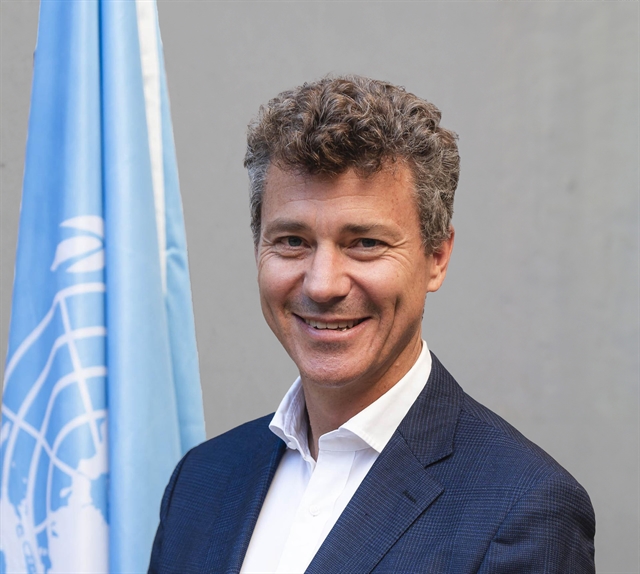 |
| UNESCO Representative to Việt Nam Jonathan Wallace Baker. Photo courtesy of UNESCO |
As Việt Nam and the United Nations Educational, Scientific and Cultural Organisation (UNESCO) mark 50 years of partnership (1976–2026), cooperation between the two sides is entering what both describe as a new strategic phase. In an interview with Việt Nam News reporter Khánh Linh, UNESCO Representative to Việt Nam Jonathan Wallace Baker talks about Việt Nam’s growing role within UNESCO, preparations for the next stage of cooperation and how culture, knowledge and innovation can drive long-term development goals.
This year, 2026, marks the 50th anniversary of Việt Nam’s membership in UNESCO. How do you assess Việt Nam’s transformation over the past five decades and what defines its role today as a proactive and trusted strategic partner?
Over the past five decades, Việt Nam has undergone a significant socio-economic transformation. It has become a lower-middle-income economy and is progressing steadily towards upper-middle-income status while making substantial progress in poverty reduction, education, healthcare and access to basic services.
This progress has been accompanied by a strong commitment to sustainable development. Through its Voluntary National Review process, Việt Nam has reaffirmed its commitment to advancing the Sustainable Development Goals and to the principle of leaving no one behind. The country has also set long-term objectives, including achieving high-income status by 2045 and net-zero emissions by 2050.
Within UNESCO, Việt Nam has become an increasingly active participant in multilateral cooperation and global governance. The country serves in several major UNESCO governance mechanisms and was recently re-elected as Vice-President of the UNESCO 43rd General Conference, reflecting the trust and confidence of member states.
Việt Nam’s role today is shaped by its efforts to connect national development priorities with broader global agendas. In education, the country is advancing reforms to strengthen quality, inclusion, lifelong learning, digitalisation and teacher development.
In science, Việt Nam has expanded its engagement through biosphere reserves, geoparks, regional scientific cooperation and work on AI ethics.
In culture, it has strengthened heritage conservation, cultural industries and community-based approaches to sustainable management.
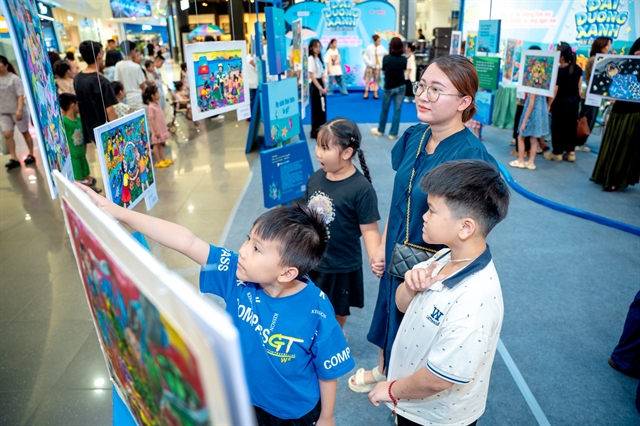 |
| Children take part in activities at the Blue Ocean Festival, organised by UNESCO and VNIES in Hà Nội on May 24, 2026, to promote ocean conservation awareness. Photo courtesy of UNESCO |
UNESCO sees Việt Nam as a constructive and reliable partner that promotes international cooperation and contributes to shared global objectives.
As Việt Nam enters a new development phase following the 14th National Party Congress, with strong priorities in innovation, digital transformation, education and cultural development, how can UNESCO most effectively support the country in delivering these strategic goals?
Looking ahead, the UNESCO Office in Hà Nội will focus on programmes with long-term, systemic impact that support Việt Nam’s ambition to become an innovative, inclusive and resilient high-income country.
First, we will continue supporting Việt Nam’s education reforms, with an emphasis on lifelong learning ecosystems, teacher development, inclusive and gender-responsive policies, well-being in schools, digital and green skills, strengthened education data systems and innovation in teaching and learning.
Second, UNESCO will continue to strengthen our support in fostering science, technology and innovation for sustainable development in the new context.
Building on Việt Nam’s network of 11 biosphere reserves and three UNESCO Global Geoparks, UNESCO will continue supporting the country in strengthening conservation governance, biodiversity monitoring, ecosystem restoration, climate adaptation and sustainable livelihoods for local communities living in and around UNESCO-designated sites.
We will also foster ethical and human-centred approaches to emerging technologies, including artificial intelligence (AI).
Third, we will strengthen culture as a driver of sustainable development by supporting Việt Nam to advance cultural and creative industries, improve heritage management using international standards and promote sustainable, community-based tourism at UNESCO-designated sites. We will also help expand networks such as the UNESCO Creative Cities Network and foster inclusive participation of youth and women in cultural development.
Fourth, we will advance communication and information priorities, including media and information literacy, digital skills and safer, more inclusive information environments.
Across these areas, UNESCO will continue gender equality, youth empowerment, inclusion of ethnic communities, digital transformation and resilience to climate-related risks as integral dimensions of sustainable development. We believe these priorities are not separate from development but essential to ensuring that growth remains inclusive, human-centred and future-oriented.
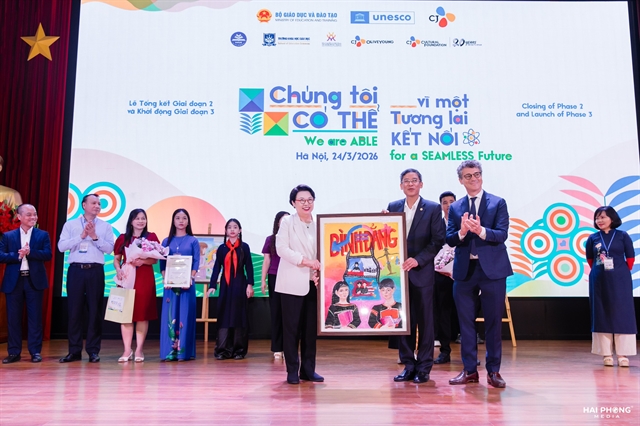 |
| The closing ceremony of the second phase of the “We Are ABLE for a Seamless Future” project marks three years of UNESCO-led efforts to promote STEAM education in partnership with education authorities, universities, businesses and local communities in Việt Nam. Photo courtesy of UNESCO |
At the same time, UNESCO will continue supporting Việt Nam through technical cooperation, knowledge-sharing and policy dialogue, helping translate global standards into practical national action.
In recent years, UNESCO has supported key national processes, including the Education Development Strategic Plan 2021–2030, Việt Nam’s first Teachers’ Law, the application of the AI Readiness Assessment Methodology that informed the country’s AI Law and technical inputs to the revised Law on Cultural Heritage.
Moving forward, we remain committed to accompanying Việt Nam in shaping policies and partnerships that place people, creativity, knowledge and sustainability at the centre of development.
Việt Nam has a growing portfolio of UNESCO-designated sites. How can UNESCO support the country in sustainable management and the development of heritage-based economies?
UNESCO can support Việt Nam in two closely connected areas: strengthening the sustainable management of UNESCO-designated sites and helping ensure that heritage and biodiversity contribute to inclusive and resilient local development.
On heritage management, UNESCO continues to work with national and local partners to strengthen technical capacity and align conservation practices with international standards.
This includes strengthening regulatory frameworks and institutional capacities, as well as applying updated Operational Guidelines and international instruments, supporting tools such as Heritage Impact Assessments, strengthening coordination among site managers and experts, promoting sustainable tourism approaches and strengthening the resilience of heritage sites to climate change and natural disasters.
UNESCO also sees strong potential for Việt Nam to further develop heritage-based economies through culture, tourism and creative industries.
The experience of Tràng An, for example, shows how heritage conservation can be linked with community livelihoods, local tourism services and small cultural businesses. UNESCO has supported similar initiatives through capacity-building, digital skills and market access for heritage-based SMEs.
UNESCO also places strong emphasis on supporting ethnic minority communities, ensuring they are active partners and beneficiaries of heritage conservation and development.
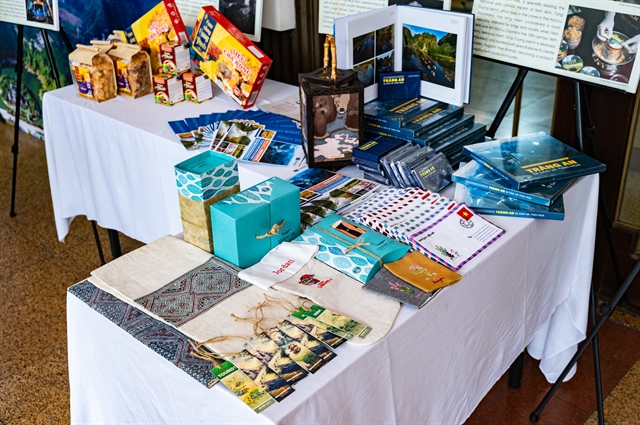 |
| UNESCO presented the display “Tràng An - A Living Heritage Space” at the Hà Nội Post Office on 27-28 December 2025, offering the public an intimate perspective on the Tràng An Landscape Complex through products, cultural practices, and community stories. Photo courtesy of UNESCO |
UNESCO further supports the development of cultural and creative industries through strengthened policy frameworks, public–private collaboration and expanded opportunities for youth and women in cultural entrepreneurship.
This approach also extends beyond heritage sites. Việt Nam’s network of biosphere reserves and UNESCO Global Geoparks provides important opportunities to link conservation with sustainable livelihoods, environmental education, scientific research and climate resilience.
UNESCO will continue supporting efforts related to biodiversity monitoring, ecosystem restoration, climate adaptation and nature-based solutions, particularly as Việt Nam faces increasing challenges linked to climate change and natural disasters.
Looking ahead, cooperation can further expand through heritage education for youth, joint research, support for creative ecosystems and stronger connections between UNESCO-designated sites and international cultural networks, including the Creative Cities Network.
Việt Nam has proposed the International Decade of Culture for Sustainable Development (2026–2037) and is strengthening its engagement in UNESCO’s governance mechanisms. What role can Việt Nam play in advancing UNESCO’s global agenda in the years ahead?
UNESCO sees Việt Nam as an increasingly important and constructive partner in advancing multilateral cooperation.
Việt Nam’s initiative for the International Decade of Culture for Sustainable Development is particularly significant. This reflects growing international recognition of culture in addressing global challenges, raising awareness, strengthening political will, mobilising resources and promoting investment in cultural and creative industries.
In recent years, Việt Nam has shown that it can translate these ideas into practical action. The country has actively integrated culture into development policies, such as Resolution No. 80-NQ/TW, and promoted approaches that balance heritage preservation with economic and community development.
Việt Nam is also increasingly contributing as a bridge-builder within the multilateral system. Its active role in UNESCO’s Executive Board, the World Heritage Committee and other institutional bodies reflects growing trust from member states and recognition of Việt Nam’s constructive, consensus-oriented diplomacy.
Việt Nam can continue to play an active leadership role in advancing the International Decade by contributing to its implementation framework, promoting international dialogue, mobilising partnerships and sharing good practices on culture-driven development.
At a time when the world is facing growing uncertainty, polarisation and rapid technological change, UNESCO believes Việt Nam can help reinforce the importance of international cooperation, cultural diversity, inclusion and people-centred development. — VNS
 Opinion
 Opinion
 Opinion
.jpg) Opinion
Opinion
 Opinion
 Opinion
 Opinion
 Opinion
 Opinion
 Opinion
 Opinion
 Opinion
 Opinion
 Opinion