 Society

Top Vietnamese leader meets with Belgian Senate Speaker, House President
1.
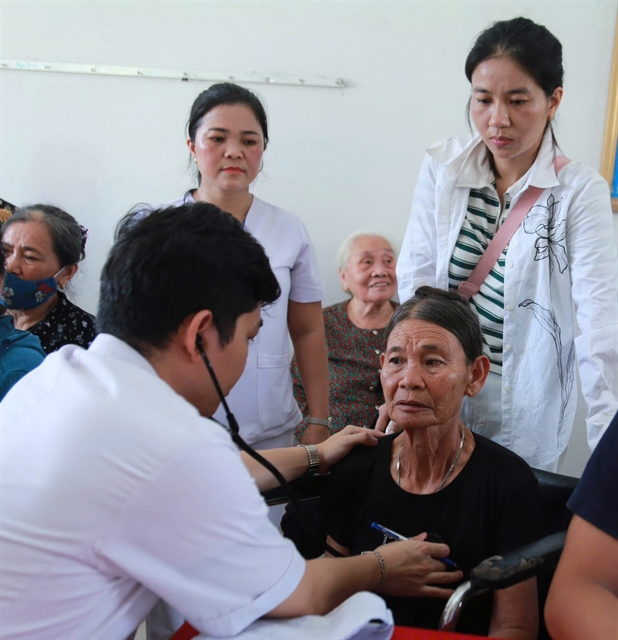 |
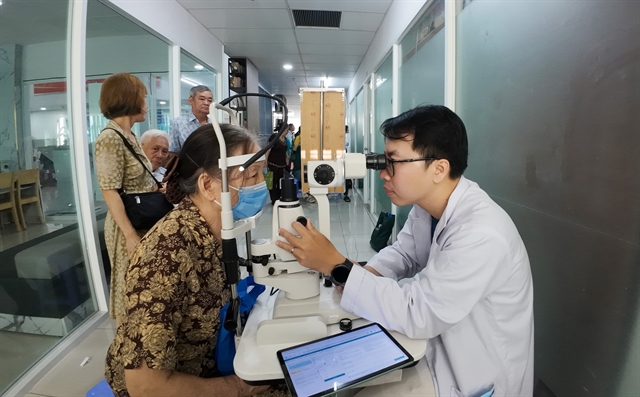
| The free medical examination programme enables many people in Nghệ An Province to access specialised healthcare services near their homes. — Photo suckhoedoisong.vn |
NGHỆ AN — The ability to have health checks near your home, supported by doctors and modern equipment, has given many people in Nghệ An Province more opportunities to detect illnesses early, while raising hopes for a healthcare system that draws ever closer to the community.
Taking part in a free screening programme in Tân Kỳ Commune, 78-year-old Nguyễn Thị Hòa could not hide her pleasure as she held the result slip in her hand following an examination.
For many years she only sought medical attention when she felt unwell. So having regular health checks near her home made her feel a real change in how the authorities care for people, especially the elderly.
“What pleases me most is that old people like us are receiving more attention than before," Hòa said.
"Being checked each year close to home, at no cost, and with doctors giving detailed advice makes me feel very reassured.”
At nearly 80, she believes the greatest value of these checks is not the free service, but the chance to find illnesses early.
“Many diseases are easier to treat if found early. If you wait until you’re in pain to go to hospital, it’s often too late,” she added.
The screening programme is also changing attitudes among younger people.
Trần Văn Hiếu, 27, a bank employee, admitted that he used to pay little attention to routine health checks because he thought he was young and at low risk.
Only after taking part in the screening, receiving doctors’ advice and seeing his test results, did he realise that many daily habits could harm his health if not corrected.
“I used to think health checks were for older people. After this event I see that young people should have regular checks too, so they can know their health status and change unhealthy habits earlier,” Hiếu said.
Hiếu said the most valuable aspect of the programme was not only the free checks but that it would help change awareness, encouraging people to look after their health proactively rather than only going to hospital once ill.
That change, he added, had spread to his family. His grandparents and relatives had become more proactive about routine checks, because everyone understands the best time to manage health is while you are still well.
Managing health
The Nghệ An Oncology Hospital on July 11 coordinated with local authorities to run a free health screening, focusing on early detection of thyroid, breast, cervical and prostate cancers for residents of Tân Kỳ Commune.
The hospital did not just send doctors to the community; it also transported ultrasound machines, colposcopy equipment and other specialised devices to set up directly at the screening site.
Residents received clinical examinations, ultrasound scans, cervical inspections, health counselling and guidance for follow-up care. Screening detected numerous abnormal cases early, and those people were advised to be referred for specialist assessment.
The programme attracted more than 400 local participants.
According to Associate Professor Ngô Vi Tiến, deputy director of the Nghệ An Oncology Hospital, regular health checks not only help detect disease early but also change people’s health-care habits.
“If disease is found at an early stage, the chance of successful treatment is higher, costs are lower and patients’ quality of life is considerably improved,” Tiến said.
Under the provincial plan, population-wide health checks in Nghệ An will be rolled out across all communes and wards with the aim that every resident will be examined at least once a year and have an electronic health record created.
Examination results will be uploaded to the electronic health book integrated in the VNeID app, making it easier for people to track their health while helping health facilities manage care continuously and avoid only treating patients when illnesses become severe.
The programme prioritises the elderly, resistance war contributors, people with disabilities, households classified as poor or near-poor, those with chronic diseases, and residents of remote or ethnic groups areas.
Professor Lê Thị Hoài Chung, director of the Nghệ An Department of Health, said the campaign’s goal went beyond free check-up events.
“What we aim for is to gradually build a disease map of the province and manage citizens’ health across the life course to detect illnesses early, reduce treatment costs and improve quality of life,” Chung said.
As people left after the screening, each person held a result slip with expert guidance on diet, exercise and follow-up appointments. It was more than a free health check; it was a sign that health services are moving gradually closer to every resident, starting at the grassroots. — VNS
Society
 Society
 Society
 Society
 Society
 Society
 Society
 Society
 Society
 Society
 Society
 Society
 Society
 Society
 Society