 Society
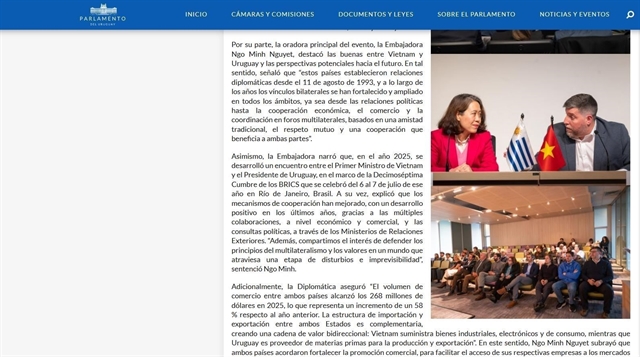
Uruguayan parliament highlights Việt Nam’s role, bilateral cooperation prospects
1.
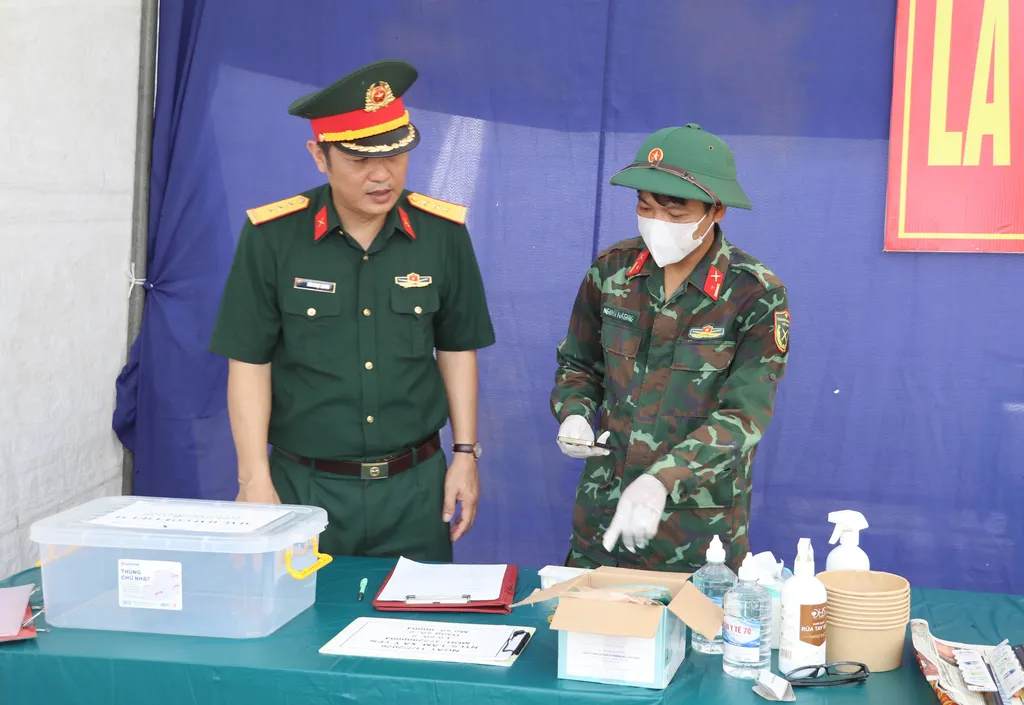 |
| Officials collect DNA samples at the Ý Yên Commune Martyrs' Cemetery in Ninh Bình Province as part of the nationwide campaign to identify the remains of fallen soldiers. VNA/VNS Photos |
NINH BÌNH – More than five decades after Nguyễn Xuân Tuấn was killed on the southern battlefield, his family is still searching for the place where he was laid to rest.
Over the years, they have travelled across the country, followed countless leads and clung to every fragment of information that might reveal where the young soldier rests. Yet each journey has ended without certainty.
Now, a nationwide DNA identification campaign is offering what may be their best chance yet to finally bring him home.
For Tuấn's family, the war never truly ended.
Across Việt Nam, thousands of families share the same hope. Although the conflict ended decades ago, many still do not know where their loved ones are buried. Behind every unidentified grave lies a family that has waited years, sometimes generations, for answers.
The Government's 500-day campaign to accelerate the search, recovery and identification of martyrs' remains lacking identifying information is aiming to change that through the collection of DNA samples and the application of modern forensic technology.
Waiting for answers
Nguyễn Xuân Tuấn, from Ý Yên Commune in Ninh Bình Province, was killed in 1973 while serving on the southern battlefield.
Nearly half a century later, his family has yet to bring his remains back to his hometown.
More than ten years ago, relatives received information suggesting that Tuấn might have been buried in a cemetery in southern Việt Nam. But without reliable evidence to verify the claim, they could not proceed with repatriating his remains.
When the 500-day campaign was launched, the family immediately registered to provide information and DNA samples from surviving relatives to support the identification process.
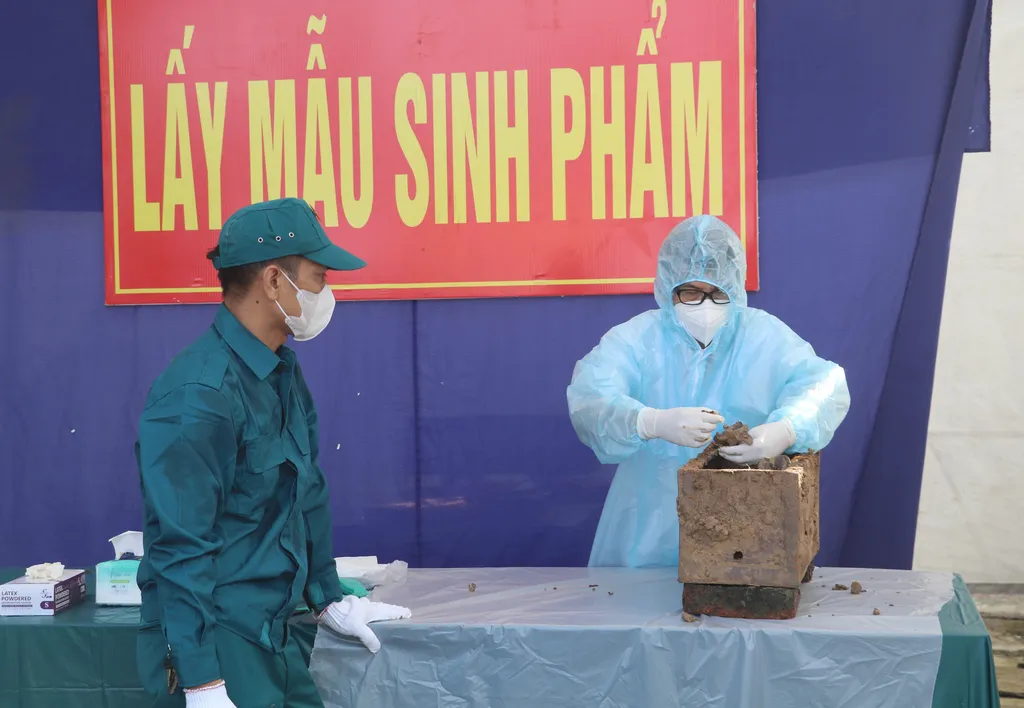 |
| Officials collect DNA samples at the Ý Yên Commune Martyrs' Cemetery in Ninh Bình Province as part of the nationwide campaign to identify the remains of fallen soldiers. |
For them, science has become the missing link after decades of uncertainty.
"We have always hoped to find my brother's exact resting place so that we can finally bring him home," said Nguyễn Huy Tôn, Tuấn's younger brother.
"Although many years have passed, our love and longing for him have never changed. Providing DNA samples gives us hope and a scientific basis for identifying his remains."
Advances in DNA technology are giving new hope to families whose loved ones could not previously be identified through military records or traditional methods.
A shared promise
The search extends far beyond the families themselves.
Veterans who survived the war continue to help trace missing comrades, sharing memories, verifying wartime records and piecing together fragments of information that might lead to long-lost burial sites.
For them, every identified grave represents another comrade finally returning home.
Bùi Sĩ Hải, head of the Veterans' Association chapter in Thanh Lịch Village, Ý Yên Commune, said he and fellow veterans regularly exchange information and assist authorities in verifying historical records.
"Every DNA sample collected and every piece of information verified carries the hope of restoring a fallen soldier's name and returning them to their homeland," Hải said.
"For those left behind, this journey is not simply about waiting. It is about responsibility, remembrance and the hope that one day those who sacrificed their lives for the nation will finally return to their families."
Science meets remembrance
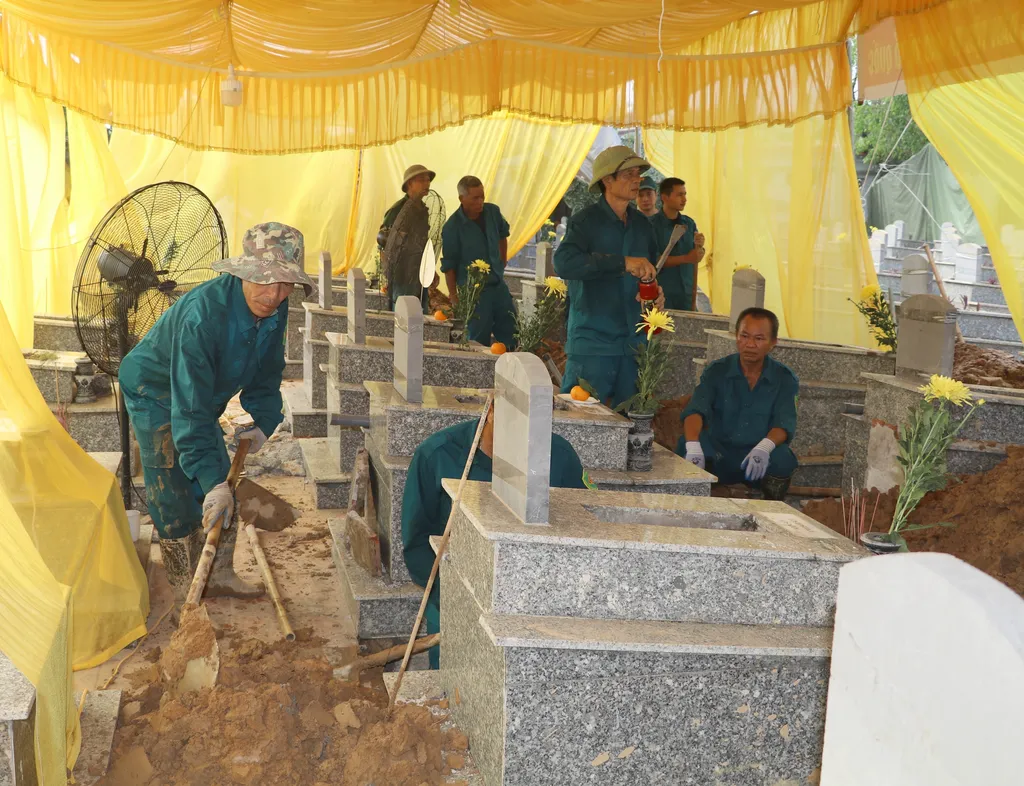 |
| Officials exhume the remains of unidentified martyrs to collect biological samples at the Yên Mô Commune Martyrs' Cemetery in Ninh Bình Province. |
Ý Yên Commune has seven martyrs' cemeteries containing 1,077 graves.
Of these, 145 remain unidentified and are spread across six cemeteries, including Yên Bằng, Yên Quang, Yên Hồng, the former Lâm Township, Yên Khánh and Yên Phong. Five unidentified graves are located at the former Lâm Township Martyrs' Cemetery alone.
As soon as the campaign began, local authorities reviewed records, prepared equipment and coordinated with military and forensic teams to begin collecting biological samples from unidentified remains.
At the former Lâm Township Martyrs' Cemetery, specialists carefully collected samples from five graves while following strict technical procedures covering excavation, documentation, preservation and transfer.
Lieutenant Colonel Đàm Ngọc Quang, commander of the Ý Yên Commune Military Command, said the biological samples would now be transferred for analysis while information on the remains would be digitised to support future identification.
The commune aims to complete DNA sampling from all 145 unidentified graves by July 25.
"Behind every biological sample is a family that has waited years for news of a loved one," Quang said.
"This is far more than a technical task. Every step is carried out with the greatest sense of responsibility because we are helping restore the names and hometowns of those who gave their lives for the nation."
Nguyễn Hùng Mạnh, Secretary of the Ý Yên Commune Party Committee, said the campaign reflected both the responsibility and gratitude of today's generation towards those who made the ultimate sacrifice.
The commune has mobilised its entire political system while working closely with specialist agencies to accelerate the programme without compromising scientific accuracy.
Bringing them home
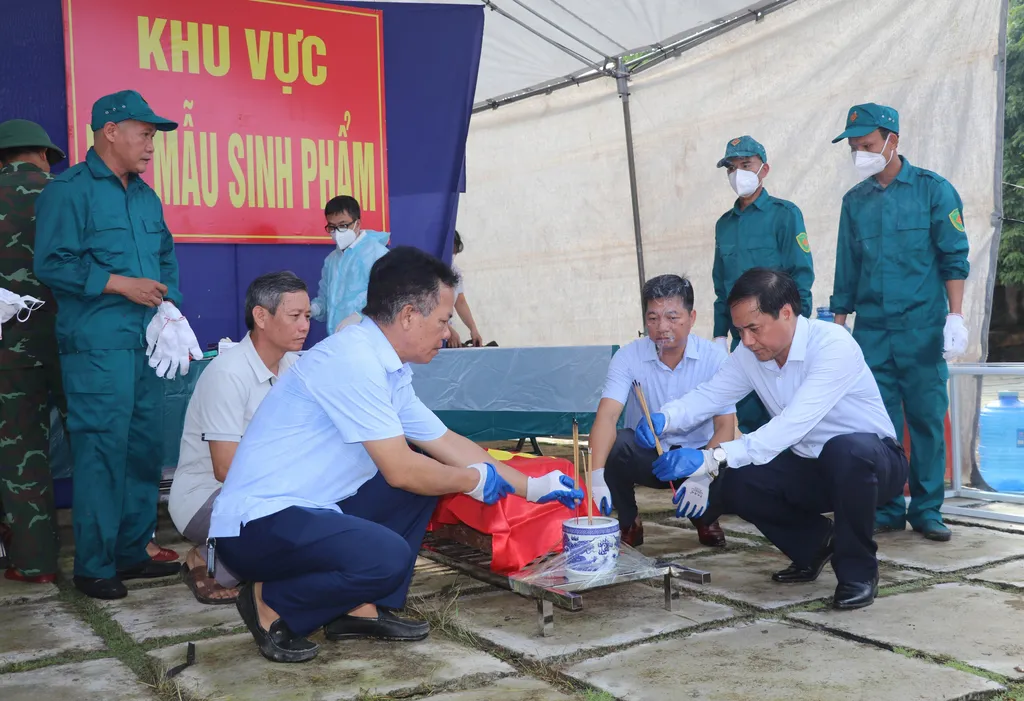 |
| Leaders of the Ý Yên Commune People's Committee offer incense in tribute to fallen soldiers at the commune's martyrs' cemetery in Ninh Bình Province. |
According to Ninh Bình Province's Steering Committee 515, the province still has 19,465 martyrs whose remains have yet to be found and reinterred.
The figure highlights the scale of a task that continues decades after the guns fell silent.
For families like Tuấn's, however, the campaign is measured not in statistics but in hope.
Every DNA sample offers another chance to answer questions that have lingered for generations. Every successful identification restores not only a name to a grave, but also a son, a brother or a husband to the family that has never stopped waiting.
As the nationwide campaign gathers momentum, thousands of Vietnamese families are hoping that, at long last, those who never returned from war will finally find their way home. VNS
Society
 Society
 Society
 Society
 Society
 Society
 Society
 Society
 Society
 Society
 Society
 Society
 Society
 Society
 Society