 Society
Việt Nam unveils youthful squad for AIMAG 2026 futsal campaign
1.
|
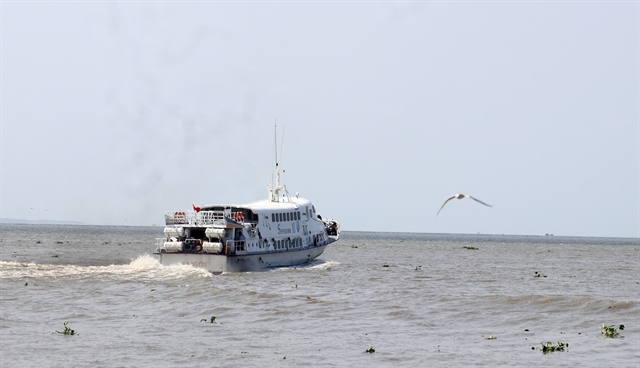
| A high-speed boat transporting passengers in the southwestern sea area of An Giang Province. Port authorities nationwide have been asked to review vehicles' and service providers' compliance with waterways safety regulations. — VNA/VNS Photo Lê Huy Hải |
HÀ NỘI — The Việt Nam Maritime and Waterway Administration has required units under its jurisdiction to tighten waterway safety following the canoe capsize that killed 15 foreign tourists in the southern province of An Giang on July 11.
The request was sent to maritime and waterway port authorities and sub-departments nationwide in a directive issued by the administration’s director Lê Đỗ Mười on July 12.
The Kiên Giang Maritime Port Authority, which oversees certain water areas within the territories of the An Giang and Cà Mau provinces, was asked to continue close coordination with the local authorities, border guards, coast guards and police to identify the cause of the accident, aid post-accident recovery, and review shortcomings in tourism management.
It was also tasked with supporting the victims and reviewing all tourist vessel information including registration number, technical safety, owner’s civil liability insurance, passenger’s insurance, and their operating conditions.
Vehicles or operators that do not meet safety requirements must be proposed for temporary suspension, according to the directive.
Maritime port authorities and sub-departments nationwide were asked to strictly follow instructions from the Government and the Ministry of Construction to ensure waterway traffic order and safety, maintain regular supervision, and promptly address shortcomings and safety risks.
They must also review safety conditions in their areas, especially those with similar conditions to where the accident occurred, and routes that transport passengers from the mainland to islands.
Inspection priority should be given to the routes from Khánh Hòa Province to Lý Sơn (in Quảng Ngãi Province), Côn Đảo Special Zone (in Hồ Chí Minh City), Cát Bà (in Hải Phòng City) and Hạ Long Bay (in Quảng Ninh Province), the directive said.
Safety compliance of waterborne passenger transport providers in extreme weather must be inspected, focusing on the technical conditions of the vessels, life-saving and rescue equipment and communication systems, and professional qualifications of crew members.
Passenger control, pick-up and drop-off procedures at ports and wharves must also be reviewed, as well as the operation of the Automatic Identification System (AIS) and vessel tracking devices. Those that do not meet the conditions required for operations must be suspended.
The Việt Nam Maritime Search and Rescue Co-ordination Centre was asked to maintain their duty 24 hours a day, seven days a week, with forces and equipment ready to respond when needed.
It should also continue to assist post-accident recovery, and review rescue capabilities on key passenger transport routes such as Lý Sơn, Côn Đảo, Cát Bà, Hạ Long Bay and Phú Quốc, and propose to increase rescue equipment and facilities in areas with limitations.
Heightened State management
The directive requested for State management at ports and wharves to be thoroughly reviewed, focussing on their infrastructure, operating conditions, and coordination between management agencies to ensure there is no overlap or omission of responsibilities. Management inadequacies must be identified and handled immediately.
Departments of Construction in cities and provinces must coordinate with their respective port authorities and sub-departments to inspect passenger waterborne transport routes, and review the licensing of waterway terminals and related State management tasks.
They must also review organisations and individuals engaged in the passenger transport business in their areas, and handle or report cases that do not meet safety conditions.
Difficulties and obstacles beyond their authority must be reported to their respective provincial People's Committees. — VNS
Society
 Society
 Society
 Society
 Society
 Society
 Society
 Society
 Society
 Society
 Society
 Society
 Society
 Society
 Society
.jpg)



