 Society

Lotte, Phát Đạt combine strengths in Thu Thiem project
1.
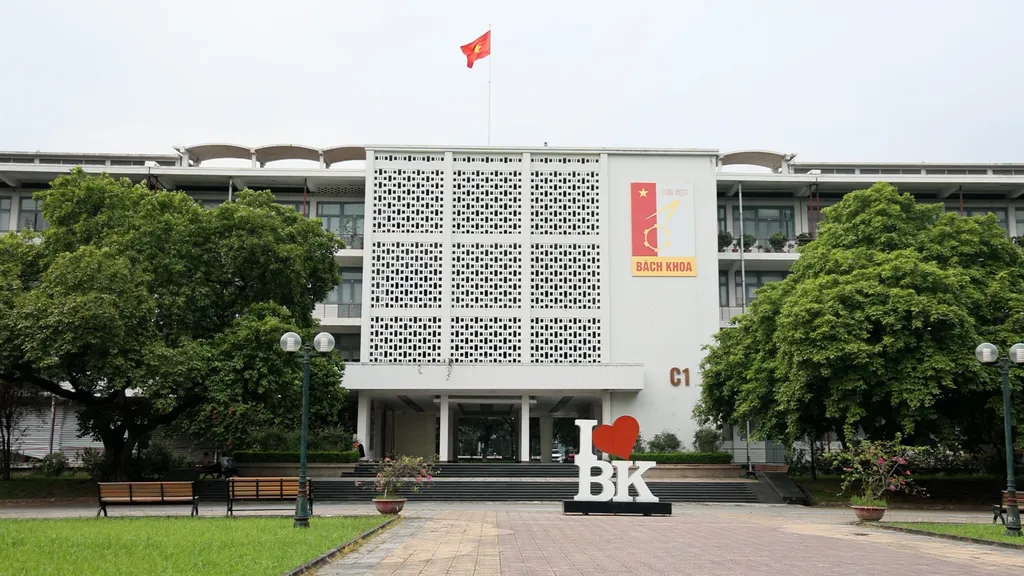 |
| Hà Nội University of Science and Technology is one of the top universities in Việt Nam. VNS Photo Hải Anh |
Professor Vũ Văn Yêm, Vice President of Hà Nội University of Science and Technology (HUST), spoke to Việt Nam News reporter Lê Hương about the university's development strategy and its programme to attract Vietnamese academics working overseas back to the country.
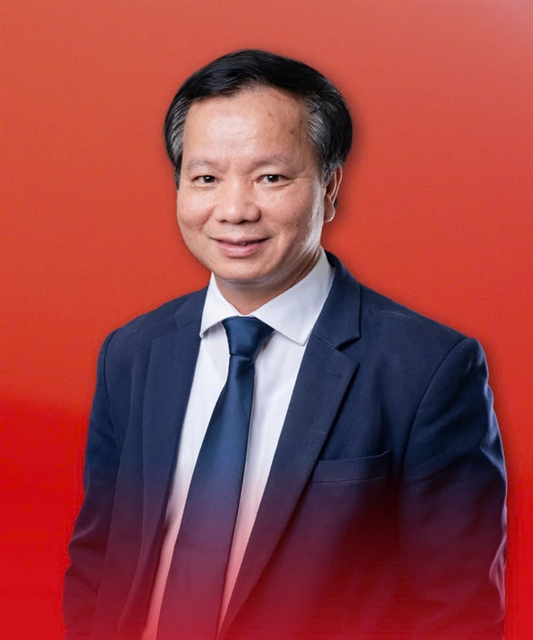 |
| Professor Vũ Văn Yêm, Vice President of Hà Nội University of Technology. Photos Nhật Minh |
How has HUST implemented its talent attraction policy?
Since 2023, we have launched a programme to recruit outstanding academics to join HUST. Over the past two years, we have recruited around 14 young Vietnamese PhDs who returned from overseas to work at the university.
Following the adoption of Resolution 57 and Resolution 71, we expanded the initiative into HUST Talent, which has been in operation since November 2025. The programme not only targets outstanding young lecturers but also leading scientists, industry experts, overseas Vietnamese scholars and international experts through both long-term and short-term collaborations.
To date, the programme has attracted 14 scientists, one leading researcher and 13 outstanding young PhDs, who have joined the university on a long-term basis. HUST conducts recruitment on a monthly basis and will continue reviewing and refining its policies through 2030 to further strengthen its ability to attract top talent.
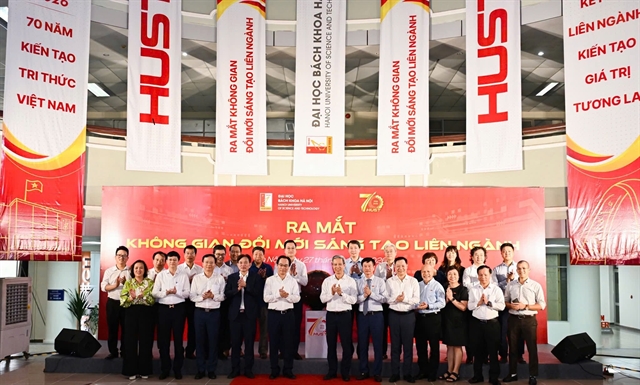 |
| Hà Nội University of Science and Technology launches its Innovation Space in the presence of Minister of Education and Training Hoàng Minh Sơn (fifth from the left, front row) on June 27, 2026. |
How do you assess Việt Nam's research environment compared with leading universities around the world?
Việt Nam's higher education environment has improved significantly in recent years. Universities have invested more in infrastructure and laboratories, modernised their curricula and, through greater institutional autonomy, have become more proactive in enhancing quality to attract outstanding faculty members and students.
However, there is still a considerable gap between Vietnamese universities and leading institutions in the region and worldwide. The main challenges lie in the availability of advanced laboratories and specialised research facilities, as well as income policies, working conditions, administrative procedures and support mechanisms for researchers.
I believe that with the Government's push for greater university autonomy and its broader policy direction, Việt Nam's research environment will undergo major improvements in the coming years.
Reforms in administration, modern research infrastructure and performance-based remuneration will make the country much more attractive to talented scientists.
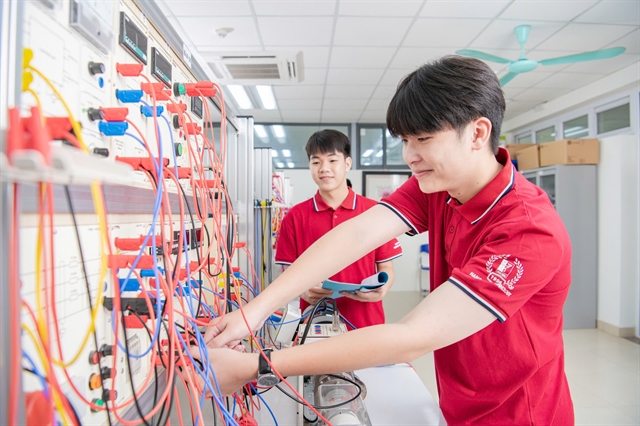 |
| Students conduct practical training in the Electrical Machines and Electromechanical Energy Conversion Laboratory. |
What is needed to achieve real breakthroughs?
Breakthroughs require efforts from both the Government and higher education institutions.
From the Government's perspective, it is essential to continue improving the regulatory framework to grant universities genuine autonomy while introducing stronger support for postgraduate education.
Master's and doctoral students should receive scholarships and living allowances so they can devote themselves fully to research.
The Government should also prioritise investment in advanced laboratories and strategic technologies instead of spreading resources too thinly.
Policies on salaries, visas and employment contracts for international experts also need to be further improved.
For universities, each institution must clearly define its mission, focus on its strengths, develop long-term laboratory plans, strengthen partnerships with businesses and international universities and improve governance to create an attractive working environment for researchers.
Which fields will HUST prioritise in attracting talent in the coming years?
We are focusing on strategic technology areas, including artificial intelligence (AI), cybersecurity, digital security, telecommunications, 5G and 6G technologies, space technology and automation.
These are all areas in which HUST has strong capabilities and which have been identified as strategic priorities for the university's future development.
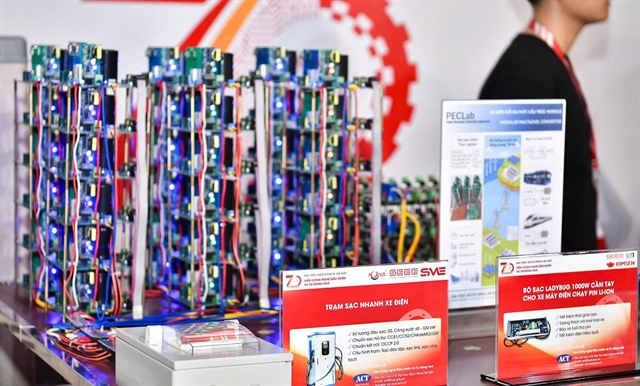 |
| An automated fast-charging station developed by a research team from the School of Electrical and Electronic Engineering. |
What are HUST's strategic priorities for the 2025–2035 period?
The university has identified three strategic pillars.
The first is to make breakthroughs in science, technology and innovation, in line with HUST's role as Việt Nam's leading technical university and the Government's strategic technology agenda.
The second is to expand our development space.
In addition to our existing campus, we are developing a second campus in Hưng Yên Province to build an innovation ecosystem capable of attracting businesses, investors and research partners.
At the same time, we are modernising laboratories and strengthening university–industry collaboration.
The third pillar is attracting and developing talent.
Beyond recruiting outstanding academics and researchers, we are placing greater emphasis on attracting gifted high school students, outstanding university students and postgraduate candidates to build a high-quality talent pipeline for the future.
How is HUST preparing human resources for emerging fields such as AI, semiconductors and the green transition?
These are all areas of HUST's traditional strength.
We are restructuring our academic programmes to focus on excellence and talent development, with particular emphasis on core technologies such as AI, semiconductors, electronics, telecommunications, robotics, automation, quantum technology, space technology, biotechnology, advanced materials and energy.
At the same time, we are making substantial investments in research and teaching laboratories to ensure students gain both theoretical knowledge and practical experience.
Close collaboration with industry is also a key component of our strategy, helping align education with real-world demands while strengthening cooperation among the Government, universities and businesses.
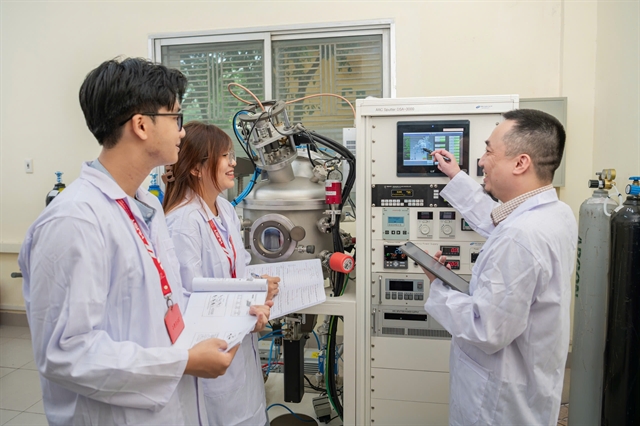 |
| A research team works at the Composite Materials Laboratory. |
How can research results be brought from laboratories to the marketplace?
There is always a gap between research and commercialisation, regardless of the country.
To narrow this gap, HUST requires research projects to address the actual needs of businesses and local communities.
The university has also introduced policies encouraging lecturers to commercialise their research while reforming performance evaluation and remuneration systems to reward practical impact.
In addition, we are strengthening partnerships with businesses in education, research and technology transfer to build a stronger innovation ecosystem and accelerate the commercial application of research outcomes.
What opportunities and challenges does university autonomy bring?
University autonomy is the right policy, but it must go hand in hand with accountability.
In the past, autonomy was often understood to mean that universities had to become entirely financially self-sufficient. That perception has now changed.
Public universities will continue to receive government funding based on their missions while enjoying greater institutional autonomy.
The biggest challenge today is the increasingly intense competition with leading universities across the region and the world in attracting outstanding academics, researchers and students.
Without a clear strategy and an attractive working environment, universities will struggle to recruit and retain top talent.
If you could choose just one core value to inspire HUST's lecturers and students, what would it be?
I would choose a single word: - excellence.
In an increasingly competitive global environment, only excellence creates distinction and enables a university to lead.
Excellence is also the core value that HUST strives for in education, research and the development of high-quality human resources. VNS
 |
| An overview 3D-model of HUST's campus in Hưng Yên Province. |
Society
 Society
 Society
 Society
 Society
 Society
 Society
 Society
 Society
 Society
 Society
 Society
 Society
 Society
 Society