 Politics & Law

Lotte, Phát Đạt combine strengths in Thu Thiem project
1.
|
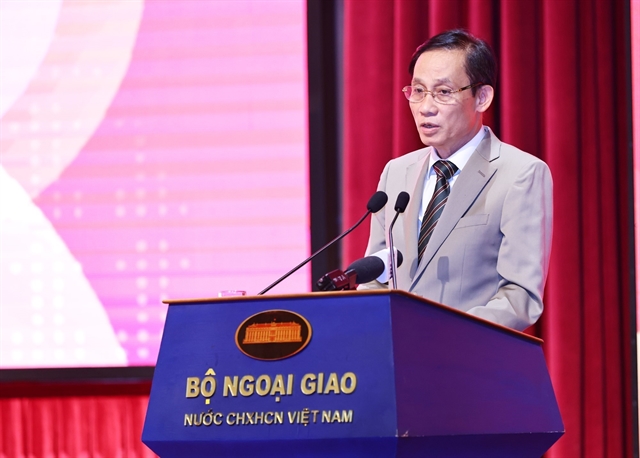
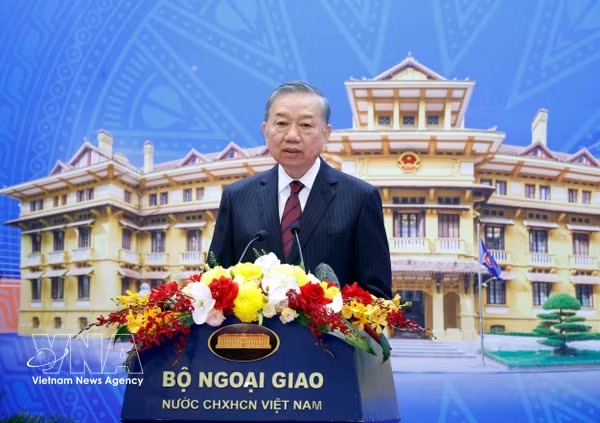
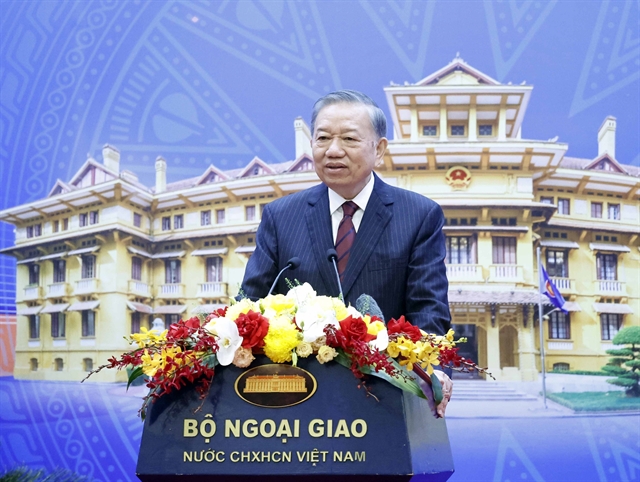
| Politburo member and Minister of Foreign Affairs Lê Hoài Trung delivers a speech at the 22nd National Conference on Local External Affairs in Hà Nội on Sunday. — VNA/VNS Photo Minh Đức |
HÀ NỘI — Việt Nam’s overseas representative missions should take a more proactive role in supporting local authorities at home, maximising their function as a bridge between provinces and international partners.
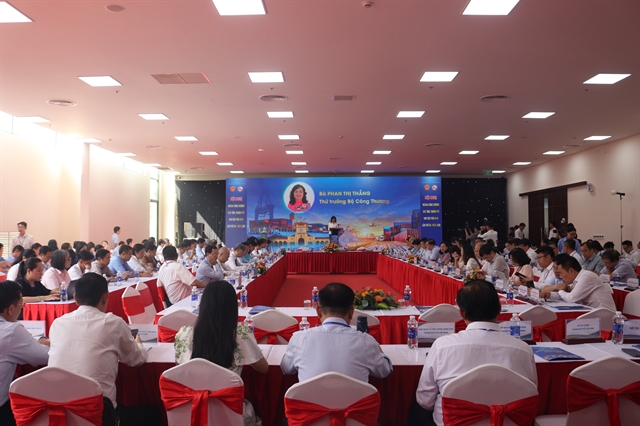
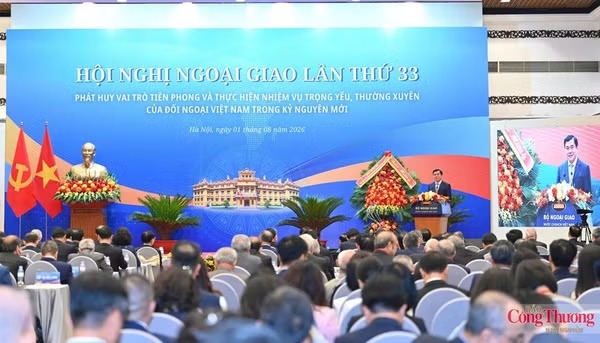
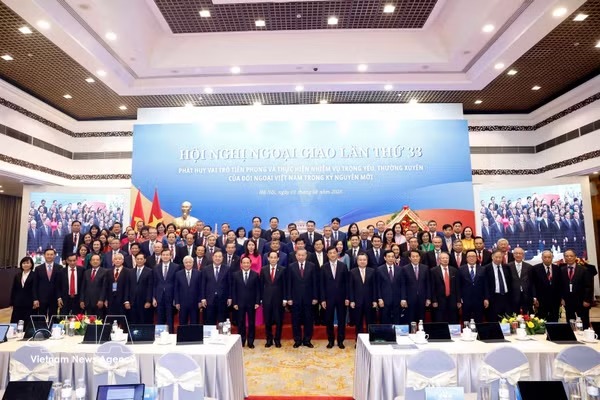
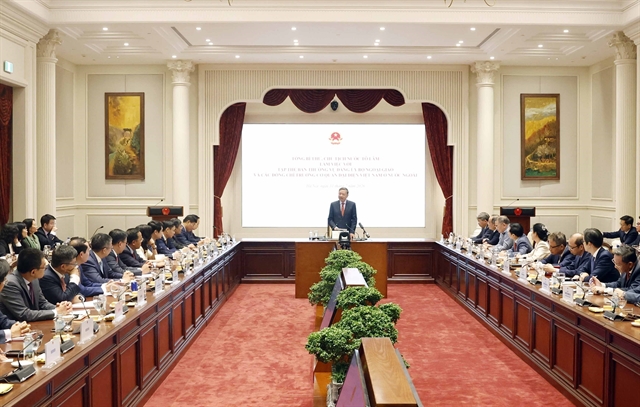
Politburo member and Minister of Foreign Affairs Lê Hoài Trung made the remarks when he chaired the 22nd National Conference on Local External Affairs, held under the theme 'Elevating local external affairs and effectively mobilising international resources for development' as part of the 33rd Diplomatic Conference in Hà Nội on Sunday.
Trung also called on local administrations to create favourable conditions for more systematic, well-planned and targeted cooperation tailored to the practical circumstances of each overseas mission.
The 22nd conference marked the first nationwide forum on local external affairs since the 14th National Party Congress, and the first to be held in the country’s new era of development.
It aims to forge a common understanding and set out strategic directions and practical solutions to strengthen local external relations, contributing to the implementation of the Party’s foreign policy adopted at the congress, Politburo Resolution 06-NQ/TW, and the country’s long-term development objectives.
Trung highlighted Việt Nam’s significant achievements in recent years, noting that the country’s growing capabilities, international standing and global reputation have created unprecedented opportunities for development.
He said the country has now entered a new stage of growth with far more concrete and practical requirements, however.
Development goals are no longer broad aspirations, but tasks that must be translated into tangible outcomes, he said.
The minister added: “This requires every level of administration, every sector and every locality to adopt new thinking, new approaches and a stronger sense of determination.”
Trung emphasised the need to identify new ways of transforming diplomatic advantages into concrete programmes, projects and development resources.
With Việt Nam enjoying an increasingly prominent position on the international stage, and with many countries attaching greater importance to relations with Việt Nam and seeking to expand cooperation, the issue is no longer whether opportunities exist, but how to convert those opportunities into meaningful development results, according to Trung.
“Localities that fail to capitalise on favourable international conditions risk missing valuable development opportunities,” he said.
He called for local external affairs to become more proactive, more professional and more closely aligned with socio-economic development priorities.
According to the minister, achieving this would require substantial reforms to coordination mechanisms between central and local authorities, between the Ministry of Foreign Affairs and other ministries and agencies, and between Việt Nam’s overseas representative missions and provincial administrations.
He urged local authorities to further strengthen coordination with the ministry and Việt Nam’s diplomatic missions abroad in a practical and results-oriented manner.
Conference participants were encouraged to focus discussions on three key areas: clearly defining the role of external affairs within each locality’s development strategy; proposing effective implementation models and working methods; and recommending improvements to institutional frameworks, coordination mechanisms, workforce development and organisational structures to enhance local external affairs in the years ahead.
Trung also expressed the hope that localities would identify difficulties in carrying out existing regulations, mechanisms and policies, enabling the ministry to refine its guidance, remove institutional bottlenecks and provide stronger support for local external affairs and international integration.
Presenting the keynote report on local external affairs at the conference, Deputy Minister of Foreign Affairs Ngô Lê Văn said the work has continued apace despite global uncertainties and significant institutional reforms at home.
Awareness of the role of foreign affairs in local development has steadily improved, while the scope of activities has expanded and coordination between central and local authorities has become stronger, he said.
Văn said five major developments have been reported.
First, local external affairs have been carried out in a relatively coordinated manner, helping to maintain a peaceful environment, safeguard national interests and strengthen ties with international partners.
Development-oriented diplomacy has also received greater emphasis, with international resources being mobilised across a broader range of sectors.
In another development, cultural diplomacy, educational cooperation, external communications, consular affairs and work relating to overseas Vietnamese have continued to advance in line with local development needs.
Coordination between the ministry, Việt Nam’s overseas representative missions and local authorities has also been reinforced, while implementation capacity has gradually improved.
Finally, collaboration and information-sharing has yet to become fully consistent. In some cases, identifying local needs, preparing proposals, seeking partners, implementing cooperation projects and evaluating outcomes remains fragmented, with responsibilities and focal points insufficiently defined.
Despite these achievements, Văn acknowledged that local external affairs continue to face longstanding shortcomings, alongside new challenges arising from deeper international integration, the restructuring of administrative units and the introduction of the two-tier local government model.
Drawing on these experiences, Văn outlined three key lessons.
According to the deputy minister, strong leadership and effective coordination are essential to quality local external affairs.
Meanwhile, thorough preparation and clear priorities underpin successful international cooperation, and sustained coordination, clear responsibilities and regular follow-ups are crucial to ensuring that agreements deliver tangible results.
Looking ahead to the next two years, Văn said local external affairs would continue to follow the foreign policy directions adopted at the 14th National Party Congress and set out in Politburo Resolution 06-NQ/TW, while supporting the country’s broader development agenda.
Priority would be given to improving policy advice, strengthening management and implementation of external affairs, promoting socio-economic development, safeguarding national defence and security, and enhancing the international standing of localities.
He outlined four priorities: improving the quality of local external affairs planning and implementation; enhancing the effectiveness of international cooperation; strengthening management and coordination; and consolidating organisational structures, improving staff capacity and gradually modernising local external affairs. — VNS
Politics & Law
 Politics & Law
 Politics & Law
 Politics & Law
 Politics & Law
 Politics & Law
 Politics & Law
 Politics & Law
 Politics & Law
 Politics & Law
 Politics & Law
 Politics & Law
 Politics & Law
 Politics & Law
 Politics & Law