 Society
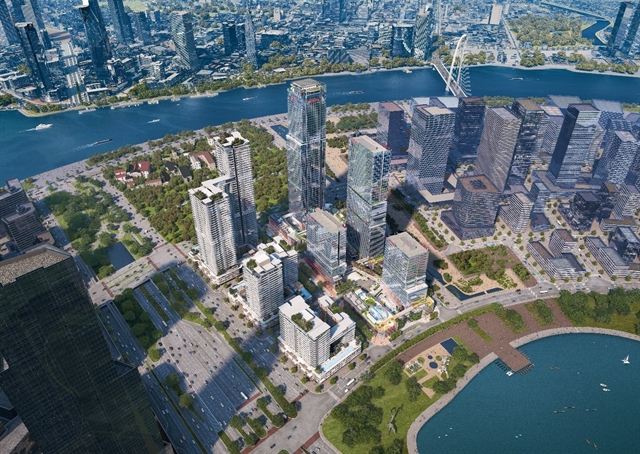
Lotte, Phát Đạt combine strengths in Thu Thiem project
1.
|
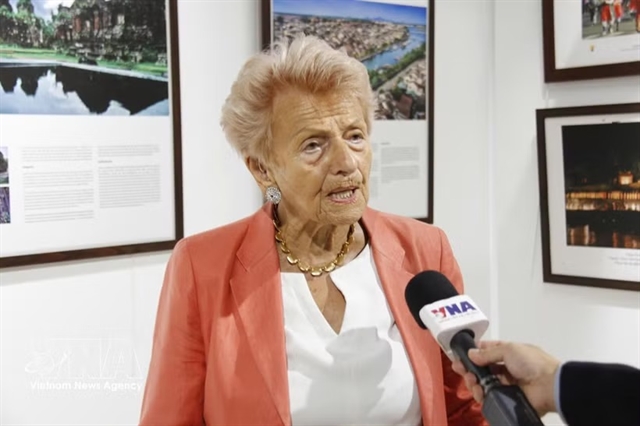
| Hélène Luc, French Honorary Senator and Honorary President of the France-Việt Nam Friendship Association, talks to Vietnam News Agency correspondents in Paris. VNA/VNS Photo |
PARIS — Việt Nam-France relations are entering a new phase with opportunities to translate high-level orientations and agreements into concrete cooperation programmes while expanding bilateral ties in economy, science and technology, education, culture and people-to-people exchanges.
French friends, intellectuals, scholars and representatives of the Vietnamese community in France shared their views with the Vietnam News Agency on the sidelines of a meeting between General Secretary of the Communist Party of Việt Nam Central Committee and President Tô Lâm and the Vietnamese community and French friends in Paris.
Hélène Luc, French Honorary Senator and Honorary President of the France-Việt Nam Friendship Association (AAFV), said for bilateral relations to develop sustainably, cooperation cannot be limited to governments and businesses but must also extend to the people.
She called for greater "people-to-people diplomacy" by encouraging local authorities, schools, universities, hospitals and organisations in the two countries to establish direct links, particularly among young people. Hélène Luc proposed that the French Government establish a dedicated mechanism for France-Việt Nam youth exchanges, similar to the model between France and Germany, with more favourable conditions for young people to study, travel and interact in each other's countries.
She also said bilateral cooperation should evolve alongside Việt Nam's development, with greater emphasis on digital and high technologies, aviation and other advanced fields where France has strengths.
Former member of the French National Assembly Stéphanie Đỗ, who is also Chairwoman of the Together for France Party, said Việt Nam-France relations are at one of their strongest points, marked by unprecedented depth in strategic cooperation as well as friendship and trust.
She said the favourable political foundation is creating opportunities for businesses, with meetings during the visit enabling enterprises from both sides to identify future cooperation areas. However, the key challenge is turning orientations and agreements into concrete projects and results.
Language remains an obstacle, Stéphanie Đỗ noted, stressing that people fluent in both French and Vietnamese and familiar with the two cultures can serve as valuable bridges for businesses. She proposed establishing a joint Việt Nam-France coordination mechanism to support, monitor and accelerate cooperation projects and translate agreements into tangible outcomes.
Dr. Võ Toàn Trung, head of the Department of Neurological Rehabilitation at Bullion Hospital in France, said the upgrade of bilateral ties to a comprehensive strategic partnership has shifted cooperation towards greater depth and substance.
He noted significant collaboration potential in training, research, technology transfer, transport, nuclear energy, biotechnology and agriculture – areas that match French strengths and Việt Nam's development needs.
Assoc. Prof. Dr. Trần Lê Hùng, a young Vietnamese intellectual researching and teaching in France, stressed that the results of the visit should be translated into practical action. The number of documents signed is less important than how commitments are implemented and whether they produce measurable results, he said.
Hùng highlighted a large pool of highly qualified Vietnamese intellectuals in France who wish to contribute to national development. He suggested building joint research networks linking institutes, universities, businesses and educational establishments in the two countries, enabling Vietnamese experts in France and French specialists to work together on Việt Nam's development challenges.
Culture was also highlighted as an important pillar. Writer and cultural researcher Trần Thu Dung, Chairwoman of the Aurore Association, said Việt Nam's position has changed profoundly since President Hồ Chí Minh's visit to France in 1946, creating new opportunities for cooperation in science-technology, culture and other fields.
She stressed that science-technology and culture should develop hand in hand, while greater efforts are needed to connect Vietnamese experts working at leading global technology corporations and research institutions with Việt Nam's development needs.
Vũ Nguyệt Anh, Chairwoman of Assovie Việt Nam, said cultural exchanges should receive greater attention alongside economic and political cooperation. She called for more opportunities to promote and honour Vietnamese culture in France, helping Vietnamese communities in France and Europe strengthen their connections to and pride in their cultural identity. — VNA/VNS
Society
 Society
 Society
 Society
 Society
 Society
 Society
 Society
 Society
 Society
 Society
 Society
 Society
 Society
 Society