 Society

Polish PM’s Việt Nam visit to strengthen bilateral ties: Ambassador
1.
 |
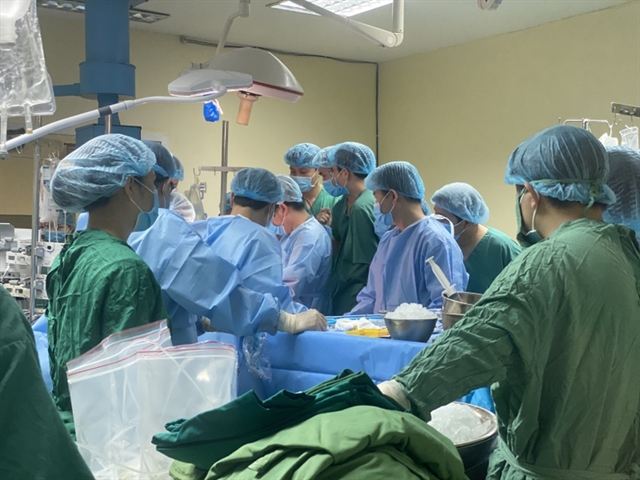
| In the first eight months of 2026 alone, 46 cases of organ donation from brain-dead donors were recorded across the country. — Photo courtesy of the centre |
HÀ NỘI — The Ministry of Health has proposed numerous amendments to the draft Law on Donation, Procurement and Transplantation of Human Tissues and Body Parts and Donation of Cadavers, aimed at removing legal barriers and increasing the supply of donated organs.
According to experts, the Law on Donation, Procurement and Transplantation of Human Tissues and Body Parts and Donation of Cadavers has played a crucial role in establishing the legal framework for these activities over the past two decades.
However, experts said, the law now requires amendments to meet practical needs.
Statistics from the health ministry showed a significant increase in organ donations from brain-dead donors since 2024. The number of such cases rose from 42 nationwide in 2024 to 66 in 2025. In the first eight months of 2026 alone, 46 cases of organ donation from brain-dead donors were recorded across the country.
"However, the current supply of organs still falls short of meeting the actual needs of the many patients awaiting transplants," said Dr Nguyễn Hoàng Phúc, deputy director of the National Coordinating Centre for Human Organ Transplantation.
 |
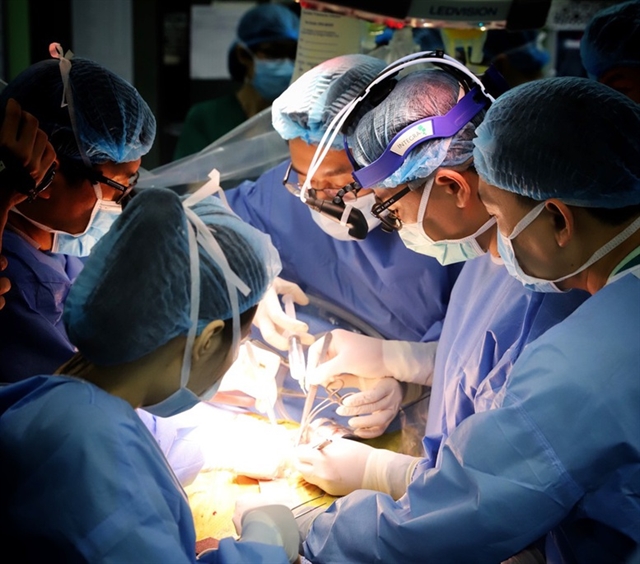
| Dr Nguyễn Hoàng Phúc, deputy director of the National Coordinating Centre for Human Organ Transplantation. — Photo courtesy of the centre |
In the draft Law on the Donation, Procurement and Transplantation of Human Tissues and Body Parts and the Donation of Cadavers (amended), the Ministry of Health has proposed eight new policies to increase organ supply and establish a more effective legal framework.
Of these, the ministry's proposal to expand the age range for organ donors, specifically allowing individuals under 18 to donate tissues and organs following brain death, has attracted the public’s attention.
"Current law restricts organ donation registration to individuals aged 18 or older who possess full civil legal capacity. This prevents the procurement of organs from brain-dead children," Dr Phúc said.
The draft amendment proposes allowing the procurement of tissues and organs from donors under the age of 18, provided the individual had expressed such a wish before death and their family consents. This measure helps address the significant current demand for organ transplants among children.
"This regulation aims to respect the donor's right to self-determination and avoid placing pressure on the family if the deceased had not expressed such an intention," Dr Phúc explained.
“Allowing children under the age of 18 to donate organs, provided they expressed such a wish before passing away, not only helps save the lives of other paediatric patients, but is also viewed from a societal perspective as enabling them to perform a final, noble act, allowing a part of their life to live on."
Another proposal under the draft is to raise the minimum age for non-related living donors to 25. This measure aims to ensure that donors are physically mature, lead stable lives and possess the capacity for careful deliberation, preventing impulsive decisions.
"The rationale for raising the age limit to 25 is to curb the illicit organ trade that has already occurred. By age 25, donors are considered mature, with stable employment and family situations, and are better able to make well-considered choices, avoiding impulsive decisions driven by a lack of awareness or financial pressure," Dr Phuc said.
According to the deputy director, both Vietnamese and international regulations do not encourage living organ donation, focusing instead on promoting the use of organs from brain-dead donors.
In cases of organ donation between blood relatives (such as family members like parents, siblings or children), the minimum age requirement remains 15 years old.
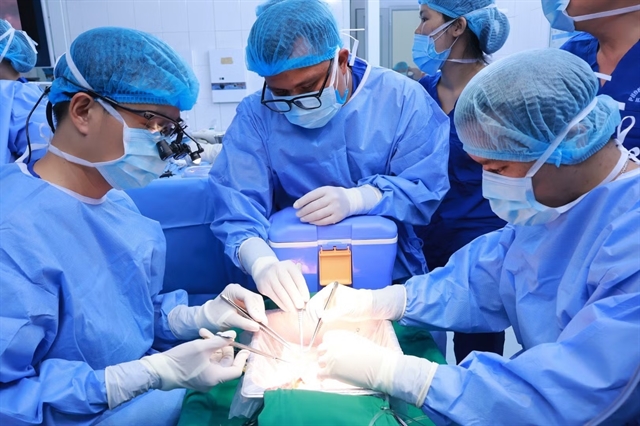 |
| Doctors perform a kidney transplant from a brain-dead donor. — Photo courtesy of the centre |
The new draft law also adds individuals who have suffered circulatory death (cardiac death), in addition to those declared brain-dead, as potential organ and tissue donors. This change will significantly expand the pool of available organs, mirroring a successful model used in Spain.
Another policy involves establishing a sustainable financial mechanism in which the State budget and health insurance cover costs associated with communication, counselling, resuscitation, brain-death diagnosis and the transport of tissues and organs. This relieves hospitals involved in donation and transplantation from financial burdens.
To increase the supply of donor organs, under the draft priority benefits could also be granted to donors' families. For instance, first-degree heirs of a brain-dead donor would receive priority placement on the national transplant waiting list should they themselves suffer from organ failure.
According to statistics from the National Coordinating Centre for Human Organ Transplantation, after nearly 40 years of development, Việt Nam has still only recorded about 308 cases of organ donation from brain-dead donors.
Meanwhile, there are currently about 50,000 patients nationwide awaiting organ transplants, including approximately 40,000 patients undergoing haemodialysis. Currently, about 70 per cent of the organ supply comes from living donors, while only 30 per cent comes from brain-dead donors. — VNS
Society
 Society
 Society
 Society
 Society
 Society
 Society
 Society
 Society
 Society
 Society
 Society
 Society
 Society
 Society


.jpg)