 Society
Cần Thơ expands digital transformation to improve public services
1.
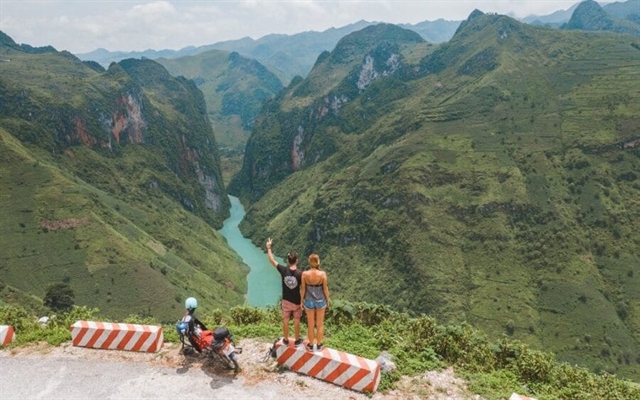 |
| Hà Giang Loop with its breathtaking views has been attracting an increasing number of foreign tourists, especially among the younger people. |
TUYÊN QUANG — Authorities in the northern province of Tuyên Quang are moving to tighten oversight of motorbike-based tourism, following mounting safety concerns along popular routes such as the Hà Giang Loop.
The Tuyên Quang Department of Culture, Sports and Tourism has issued a directive requiring travel agencies, transport operators, and motorbike rental providers to strictly comply with safety regulations, after inspections revealed persistent risks in experiential motorbike tours.
While the department didn't specify the reason for the directive, but it came in the wake of a tragic accident in Hà Giang Loop that claimed the life of a 19-year-old British tourist Orla Wates.
Her death made national and international headlines after her family decided to donate her organs for critically ill patients awaiting transplants in Việt Nam.
Per Tuyên Quang's directive, travel firms are now required to adhere strictly to agreed itineraries and ensure the safety of tourists’ lives, health and property throughout each journey.
Authorities have also mandated the retention of full documentation, including travel contracts, passenger lists, insurance coverage, and related records for inspection and post-tour audits.
Before departure, operators must prepare detailed plans tailored to terrain and risk levels. These plans must clearly set out routes, rest stops, accommodation, vehicles, personnel and emergency response arrangements, including rescue and technical support.
Tourists must also be briefed in advance on safety regulations, compulsory protective gear, emergency contacts and basic handling skills for hazardous situations.
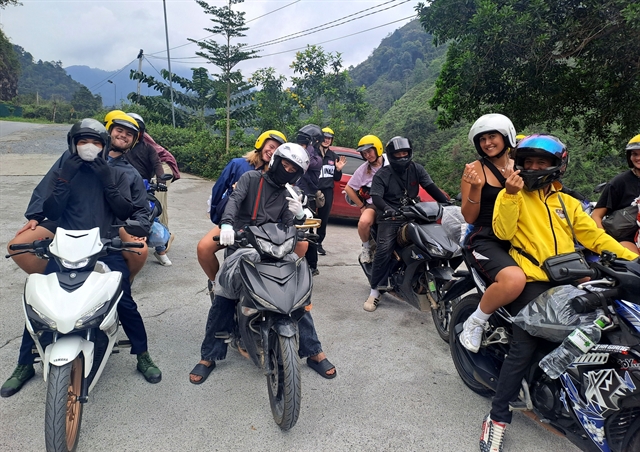 |
| Foreign tourists can choose to rent motorbikes to ride the Hà Giang Loop themselves or use an "easy-rider" (pillion riding) service. — VNA/VNS Photo |
Transport providers and motorbike rental services must ensure both vehicles and drivers meet road safety requirements. Bikes must undergo regular maintenance and be equipped with helmets and necessary safety gear.
Crucially, firms not licensed as travel agencies are prohibited from organising or selling tours under any form. They may not assemble tour groups, design itineraries, or market travel packages independently.
All services must be delivered under formal agreements with licensed tour operators, specifying drivers, routes, stops and responsibilities in case of incidents. Unauthorised changes to itineraries or personnel are strictly forbidden.
Communal and ward-level authorities have been tasked with strengthening oversight of tourism-related businesses. They are expected to detect and report violations, including illegal tour operations, lack of licensed guides, and missing insurance or documentation.
Cases involving safety risks or accidents must be promptly reported to provincial authorities and police for coordinated handling.
The Hà Giang Loop, a roughly 350km circuit of at-times treacherous mountain roads, has surged in popularity among foreign tourists in recent years. The route cuts across steep mountain passes and deep valleys, including the Đồng Văn Karst Plateau Geopark, making it both visually spectacular and technically demanding.
Tuyên Quang currently has around 27,000 tourism-related workers, of whom nearly 9,000 have received formal training and just over 3,000 have undergone retraining. The province counts 331 tour guides, including international, domestic and on-site guides. — VNS
Society
 Society
 Society
 Society
 Society
.jpg) Society
Society
.jpg) Society
Society
 Society
 Society
 Society
 Society
 Society
 Society
 Society
 Society