 Society
European higher education week opens new opportunities
1.
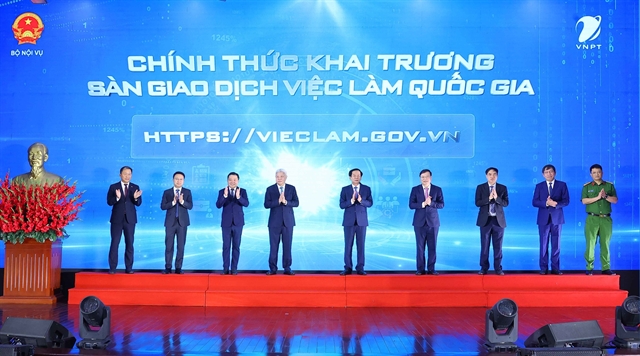 |
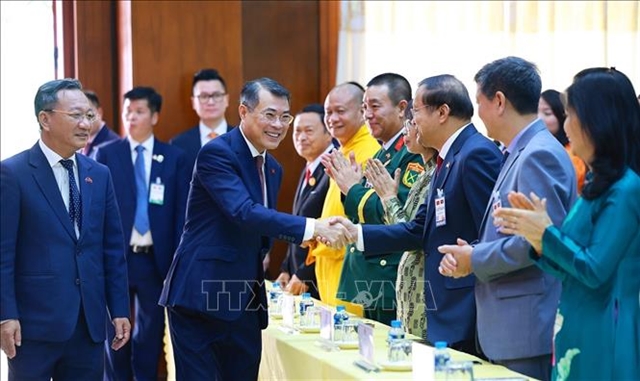
| Participants at the opening ceremony of the National Employment Exchange on Tuesday in Hà Nội. — VNA/VNS Photo Văn Điệp |
HÀ NỘI — The Ministry of Home Affairs on Tuesday officially launched the National Employment Exchange https://vieclam.gov.vn/, a digital platform connecting more than 53.6 million workers with nearly one million enterprises nationwide, in a major push to modernise Việt Nam’s labour market and accelerate its digital transformation agenda.
Positioned as a key piece of digital infrastructure, the exchange is designed to improve transparency and interoperability in the labour market while supporting the country’s wider digital transformation ambitions.
Speaking at the launch ceremony, Minister of Home Affairs Đỗ Thanh Bình said the rollout is “a major milestone in the roadmap to modernise and digitally transform the labour and employment sector.”
He said development of the platform began in May 2025 and went through a rigorous process, including extensive technical testing, information security checks and stress testing.
The system now meets requirements for data connectivity and interoperability, ensuring safety and security standards and readiness to serve both citizens and businesses.
Underscoring its significance, Bình said the national employment exchange would serve as “a critical digital infrastructure to ensure the labour market operates smoothly, transparently and in line with market principles, effectively connecting labour supply and demand.”
The platform’s launch reflects the ministry’s proactive, solutions-driven approach and determination to accelerate digital transformation with the aim of building a modern, citizen- and business-centred public administration.
The initiative aligns closely with the Politburo’s Resolution No. 57-NQ/TW dated December 22, 2024 on digital transformation.
As lead technology partner, Huỳnh Quang Liêm, chief executive of Vietnam Posts and Telecommunications (VNPT) Group, said the group was honoured to contribute to a nationally commissioned project.
Drawing on its experience in developing the National Database on public officials and civil servants, VNPT built the platform using modern architecture and benchmarking advanced international models.
The system is integrated with multiple data systems under the Ministry of Home Affairs, notably the National Population Database managed by the Ministry of Public Security.
"Today marks only the initial stage in shaping the technology and user experience for businesses, workers and regulators," Liêm said.
“For data to become truly clean, dynamic and trustworthy, sustained participation from all stakeholders is essential,” he added, pledging VNPT would continue to support stable, secure and seamless operations with capacity for future upgrades and expansion.
A sustainable bridge
The launch has been warmly welcomed by the domestic and international business community.
Representing foreign investors, Ko Tae Yeon, chairman of the Korea Chamber of Commerce in Việt Nam (Kocham), said the platform was an important starting point for the country’s employment services system.
Human resources are not merely a recruitment issue but directly influence product quality, delivery timelines and long-term investment strategies of foreign direct investment enterprises, according to the chairman.
He expects the platform to provide detailed data classification by sector, skill and region while maintaining close linkages with vocational training systems to ensure more effective matching.
If operated efficiently and built on reliable data, the exchange would help refine labour policies at national level and serve as a sustainable bridge between businesses and workers, he said.
From the perspective of key domestic manufacturing sectors, Lê Hằng, vice chairwoman of the Việt Nam Association of Seafood Exporters and Producers, highlighted the intense competition for labour facing the seafood industry.
Workforce shifts to sectors such as tourism, textiles and services have led to severe labour shortages in many processing plants.
“In this context, a national employment exchange with centralised data, inter-regional connectivity and real-time support will be an indispensable tool,” she said.
It would enable the seafood sector to better attract, allocate and stabilise its workforce, ensuring production supply chains remain uninterrupted.
Delivering value across all pillars
Under its design, the national employment exchange is expected to generate substantial value for all three pillars of the labour market: regulators, businesses and workers.
From the perspective of workers, the platform significantly broadens access to employment opportunities without geographical or informational constraints. A key technological highlight is the integration of advanced artificial intelligence (AI), which automatically analyses and recommends roles best suited to each individual’s skills, experience and preferences. Users are supported in creating professional profiles and can search for and apply for jobs online through a few simple steps.
For the business community, the exchange offers access to a vast nationwide talent pool. Instead of incurring high recruitment costs on private platforms or spending considerable time on manual screening, firms can now reach targeted candidates more efficiently, optimising costs and substantially reducing time to hire.
For state management agencies, the system serves as a powerful tool for market governance and regulation. Through real-time data flows, authorities can closely monitor labour market movements, improve the delivery of employment services and build a reliable data foundation for formulating policies on labour, employment and social security. — VNS
Society
 Society
 Society
 Society
 Society
 Society
 Society
 Society
 Society
 Society
 Society
 Society
 Society
 Society
 Society