 Society
Việt Nam highlights UNESCO’s role in promoting peace, inclusive development
1.
|
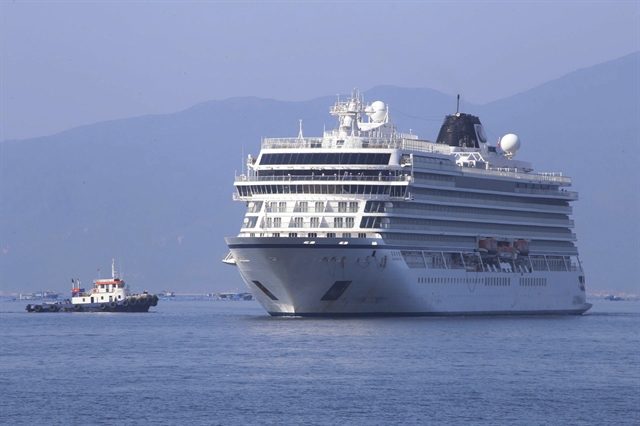
| The international cruise ship Viking Yidun enters Cam Ranh Bay in the central coastal province of Khánh Hòa. — VNA/VNS Photo |
HÀ NỘI — Captains of vessels transiting through Vietnamese waters will be responsible for managing crew members, passengers and cargo throughout the transit period, maintaining customs seals and safeguarding immigration documentation.
They must not allow anyone to board or disembark, permit other vessels to come alongside or carry out any other activities without prior approval from Vietnamese authorities.
Exceptions apply only to personnel, vehicles and equipment of specialised State management agencies operating at ports, marine pilots, officials performing clearance procedures and medical staff boarding vessels to provide emergency treatment to crew members or passengers.
The provisions are set out in Government Decree 289/2026 on security and public order management at seaport border gates managed by the Ministry of Public Security that was issued on Tuesday.
The decree will take effect on October 1. It regulates inspection and control procedures, supervision, the issuance of shore leave permits for crew members and boarding permits.
It also regulates the management of activities related to security and public order involving Vietnamese and foreign nationals, Vietnamese-registered and foreign-flagged vessels and other Vietnamese and foreign means of transport at seaport border gates managed by the Ministry of Public Security.
These include the ports of Mỹ Tho, Vĩnh Long, Cần Thơ and Hậu Giang.
The decree defines the sea border security and public order responsibilities of ministries, relevant agencies, the People's Committees of Cần Thơ City, Đồng Tháp Province and Vĩnh Long Province, along with specialised State management agencies at ports.
It does not apply to entry, exit, transit, port transfer or cargo import and export activities conducted for national defence or security purposes.
Under the new regulations, vessels in transit must complete transit clearance procedures upon entering Việt Nam's maritime border area.
Vessels transferring between Vietnamese ports are required to complete departure transfer procedures before leaving one seaport border gate for another and arrival transfer procedures upon reaching the destination port.
Inbound vessels, along with their crew and passengers, must complete immigration procedures at the first Vietnamese port of call after entering the country's maritime border area.
Foreign vessels departing Việt Nam and their crew and passengers must complete exit formalities at the final Vietnamese port before leaving the country's maritime boundary.
Vietnamese vessels departing the country, along with their crew and passengers, must also complete exit clearance procedures at the final seaport border gate before leaving Việt Nam's territorial waters.
New rules for international cruise ships
The decree also introduces specific procedures for international cruise ships.
International travel companies must submit passengers' tour itineraries, their international travel business licence (for the first cruise call at a Vietnamese port) and visa-related documents, where applicable, no later than 12 hours before the vessel arrives.
Port border police will issue visas to eligible passengers directly on board in accordance with Việt Nam's immigration laws.
For international cruise ships authorised to transport domestic tourists between Vietnamese ports, travel companies are required to provide travel itineraries, passenger manifests and other prescribed documents.
Foreign passengers must present valid passports or recognised international travel documents, while Vietnamese passengers must present either their national identity card or passport when disembarking.
The decree also authorises port border police, in coordination with the port authority, to conduct onboard inspections in certain circumstances, including the discovery of stowaways, suspected violations of security or public order laws, or indications that forged travel documents are being used.
Electronic procedures expanded
A notable feature of the decree is the expanded use of electronic clearance procedures through the Việt Nam National Single Window portal.
Electronic processing will apply to Vietnamese vessels entering or leaving the country, domestic coastal vessels, foreign vessels entering, exiting, transiting or transferring between ports, vessels authorised by Vietnamese authorities to operate, and foreign crew members serving on these vessels.
For Vietnamese fishing vessels and Vietnamese crew members, electronic procedures will be introduced once port border police and specialised management agencies have established the necessary information technology infrastructure and management systems.
Should the National Single Window portal become unavailable due to technical issues, organisations and individuals will be permitted to complete the required procedures manually. — VNS
Society
 Society
 Society
 Society
 Society
 Society
 Society
 Society
 Society
 Society
 Society
 Society
 Society
 Society
 Society