 Society
Việt Nam highlights UNESCO’s role in promoting peace, inclusive development
1.
|
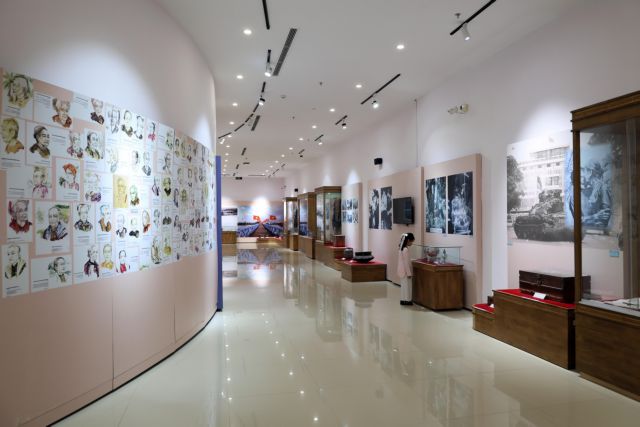
| The museum in Quảng Phú Ward, Đà Nẵng, displays a rich collection of documents and artefacts honouring Heroic Vietnamese Mothers from across the country. VNA/VNS Photo Đỗ Trưởng |
ĐÀ NẴNG — Faded letters, handwritten notes and treasured family keepsakes displayed at the museum inside the Heroic Vietnamese Mother Monument in Đà Nẵng offer visitors a deeply personal glimpse into the sacrifices made during Việt Nam's resistance wars, preserving stories of love, loss and an unwavering hope for national reunification.
Many of the museum's nearly 2,000 artefacts once belonged to Heroic Vietnamese Mothers whose sons were killed in action. Among the most moving exhibits are letters written by young soldiers during brief pauses along their journeys to the battlefield.
These fragile documents, often hastily penned during military marches, capture the voices of men and women in their late teens or early twenties who put aside their studies and personal dreams to answer the nation's call.
|
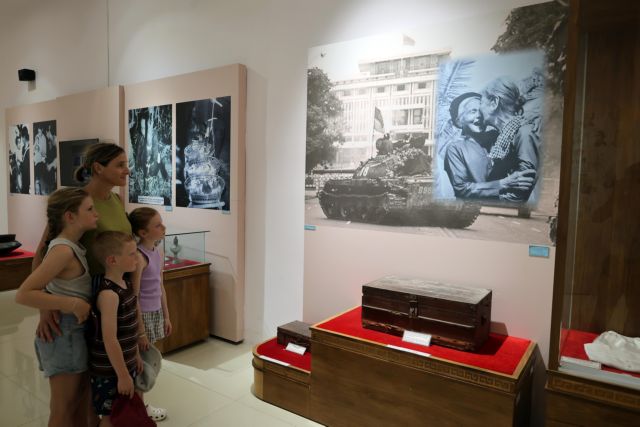
| International visitors explore historical documents and artefacts at the museum dedicated to Heroic Vietnamese Mothers in Đà Nẵng. VNA/VNS Photo Đỗ Trưởng |
One of the most poignant exhibits is a letter written by martyr Nghiêm Bắc Việt, a young man from Hà Nội, to his mother and family on December 15, 1967, while marching with his unit through Savannakhet Province in Laos.
Writing after 55 days on the road, he described the hardships he and his comrades had endured.
"It has been 55 days since I left to join the fighting. During those 55 days, I have faced countless hardships, difficult roads, steep mountain passes, blood and fire, but I have overcome them. I have completed three-fifths of the journey, and today we are resting for one day in Savannakhet. This Tết, I may be in Cambodia, celebrating my first Lunar New Year away from my family, my homeland and as a soldier."
He also sent a tender message to his younger siblings.
"I miss you all so much, but I cannot see your faces. If you miss me, just love one another and help our parents. I am living in Laos now and have so many stories to tell, but I will save them for the day our country is reunified."
According to museum guide Nguyễn Thị Trúc, the letter was carefully preserved for decades by Heroic Vietnamese Mother Nguyễn Thị Tiểu of Hà Nội in memory of her son, who was later killed in action.
She lost two sons during the war, and her family later donated the letter to the museum, where it is displayed alongside many others written by soldiers during their journeys through fierce bombardment.
Another powerful exhibit is a letter written in November 1972 by martyr Nguyễn Thanh Tịnh to her mother and older sister.
Tịnh, whose father and brother were also killed during the wars, wrote of her grief after witnessing the deaths of five comrades.
"The greater my sorrow, the deeper my hatred for the American aggressors. It gives me even greater strength to carry out my duties. I only hope I can soon repay this debt owed to my family and to so many comrades. The enemy may try to prolong the war, but we remember President Hồ Chí Minh's sacred testament all the more clearly. The greater the hardship, the more glorious the final victory will be."
During the war, letters were often the only means of communication between soldiers on the front lines and their families back home, including those separated by the division of the country. Many reflected an unshakable belief that peace and reunification would one day allow families to be together again.
A reminder of the value of peace
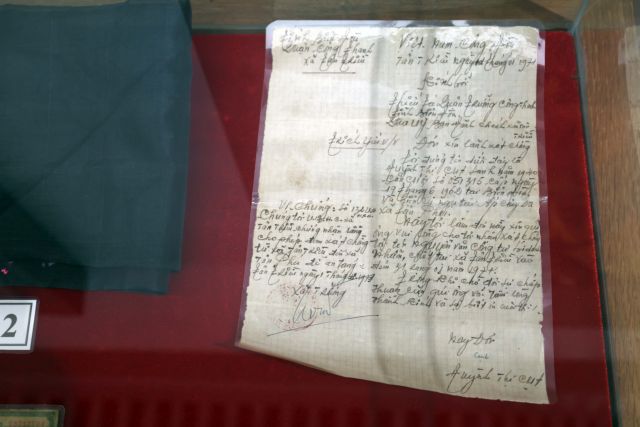
Another exhibit that leaves a lasting impression is a handwritten petition titled 'Request to Retrieve My Husband's Body'.
The document tells the tragic story of martyr Nguyễn Văn Công, the only son of Heroic Vietnamese Mother Nguyễn Thị Dần.
|
| The handwritten petition, 'Request to Retrieve My Husband's Body', on display at the museum. VNA/VNS Photo Đỗ Trưởng |
In late January 1971, after his position was exposed, Công was shot and killed by enemy forces. According to museum records, his body was subjected to brutal treatment intended to intimidate local communities.
Unable to bear the loss, his wife, Huỳnh Thị Cụt, wrote a formal request asking permission to recover her husband's remains for burial.
The petition reflects not only the immense suffering endured by wartime families, but also the brutality experienced by civilians and resistance fighters during the conflict.
Visiting the museum with her family, Sarah Maguire from Australia said the exhibition offers a powerful perspective on the human cost of war while highlighting the extraordinary resilience of Vietnamese women.
She said the artefacts help visitors understand both the cruelty of war and the strength of the women who kept their families and communities together through the country's darkest years.
According to Hoàng Thị Bích Hạnh, Director of the Đà Nẵng Management Board of Monuments and Landscapes, the exhibition space inside the monument houses nearly 2,000 artefacts, making it the country’s most comprehensive museum dedicated to Heroic Vietnamese Mothers.
Covering more than 16 hectares, the monument complex welcomes nearly 100,000 domestic and international visitors each year.
The national cultural monument was designed based on the likeness of Nguyễn Thị Thứ, a Heroic Vietnamese Mother who lost nine sons, a son-in-law and two grandsons during the wars against French colonial rule and the United States.
More than a place of remembrance, the monument serves as a space for historical education, where younger generations can reflect on the sacrifices of previous generations and gain a deeper appreciation of the enduring value of peace. — VNS
Society
 Society
 Society
 Society
 Society
 Society
 Society
 Society
 Society
 Society
 Society
 Society
 Society
 Society
 Society